


Featured Summary:
- EU list removal has moved closer after Namibia completed the reforms required to leave the FATF grey list.
- Anti-money laundering reforms strengthened supervision, enforcement and compliance across the financial system.
- Namibia’s FATF delisting changes international risk perception, but the separate EU removal process is not yet complete.
- Long-term credibility will depend on sustained enforcement rather than regulatory recognition alone.
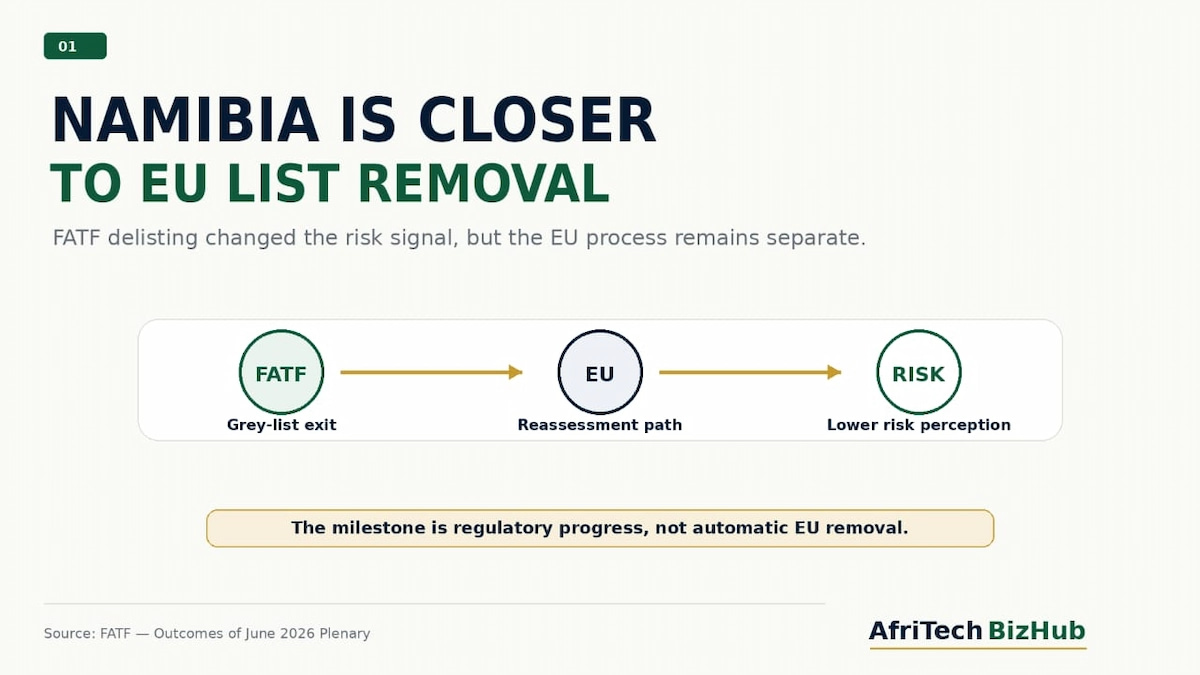
Namibia’s removal from the Financial Action Task Force grey list on June 19, 2026 marked an important regulatory milestone, but it did not automatically remove the country from the European Union’s list of high-risk third countries. t
The FATF decision recognised progress in correcting strategic weaknesses in Namibia’s anti-money laundering and counter-terrorist financing system, strengthening the case for a future EU reassessment.
The distinction matters for banks, investors and companies conducting cross-border transactions.
Namibia has completed the action plan that placed its financial system under increased international monitoring, while the EU list remains governed by a separate legal review process.
The larger test is whether improved regulation can produce sustained enforcement and lasting confidence among financial institutions and international partners.
Why Is Namibia Being Removed From the EU List?
Namibia moved closer to removal from the EU list by completing the corrective programme agreed with the FATF after its grey-listing in February 2024.
The programme targeted weaknesses in risk-based supervision, beneficial ownership information, financial intelligence, money laundering investigations and sanctions for regulatory breaches.
FATF’s June 2026 decision confirmed that Namibia had addressed the strategic deficiencies covered by that action plan and no longer required increased monitoring.
EU removal remains a separate decision because the European Commission updates its high-risk third-country framework through delegated legislation.
Namibia was added to the EU list in 2025 following its FATF designation, but leaving the FATF grey list provides the central regulatory basis for reassessment.
Any eventual removal would recognise stronger compliance with international standards rather than suggest that Financial Crime or Money laundering risks have disappeared.
How Did Anti-Money Laundering Reforms Secure EU Approval?
Namibia strengthened its Anti-money laundering system by moving beyond written policies towards more risk-based supervision and enforcement.
Regulators increased their focus on higher-risk financial and non-financial businesses, while accountable institutions faced clearer expectations for customer identification, beneficial ownership checks and suspicious transaction reporting.
Authorities also worked to improve the use of Financial intelligence in investigations and increase the effectiveness of sanctions for non-compliance.
Those reforms addressed the institutional weaknesses identified through international assessment rather than creating an entirely new financial-control system.
The FATF’s decision showed that Namibia had produced sufficient evidence that the required changes were being implemented and could be sustained.
That finding improves the country’s position before the European Commission, although formal EU approval will depend on the Commission completing its own assessment and legislative process.
Why Are Financial Intelligence Reports Still Raising Red Flags?
Suspicious transaction reports can continue rising after regulatory reforms because stronger monitoring identifies activity that previously might have escaped scrutiny.
Banks, insurers, legal professionals, estate agents and other accountable institutions are required to flag transactions that appear inconsistent with a customer’s profile or present indicators of illicit finance.
A report does not prove that a crime occurred; it gives the Financial Intelligence Centre information that can be analysed and, where appropriate, shared with law-enforcement agencies.
Continued reporting therefore does not contradict Namibia’s regulatory progress.
An effective Financial intelligence system should remain active after delisting because criminals adjust their methods as compliance controls improve.
The more important measures are whether reports contain useful information, whether authorities analyse them promptly and whether credible cases lead to investigation, prosecution, asset recovery or corrective supervisory action.
How Will Financial Institutions Handle Namibia After Delisting?
Financial institutions can begin reassessing Namibia’s risk profile following the FATF decision, particularly where internal compliance policies rely heavily on international monitoring classifications.
Reduced concern over strategic regulatory deficiencies can support correspondent banking relationships, cross-border payments and investment reviews by providing stronger evidence that Namibia’s control framework meets international expectations.
It can also reduce some of the administrative pressure associated with enhanced monitoring, although individual institutions will make their own risk assessments.
Removal from the EU list would carry a separate commercial benefit because EU-regulated institutions are required to apply enhanced measures when dealing with listed jurisdictions.
Until that legal change occurs, transactions involving Namibia can remain subject to additional customer checks, source-of-funds verification and senior compliance review within the European financial system.
Even after removal, banks will continue applying risk-based due diligence according to the customer, transaction, sector and geographic exposure involved.
Why Does Money Laundering Risk Persist Despite EU Delisting?
Regulatory recognition measures the strength of Namibia’s response to identified weaknesses, not permanent immunity from financial crime.
Money laundering networks can move between banks, property, trade, corporate structures and digital payment systems as authorities strengthen controls in one part of the economy.
Namibia will therefore need to maintain supervisory capacity, update sectoral risk assessments and ensure that enforcement keeps pace with changes in criminal behaviour.
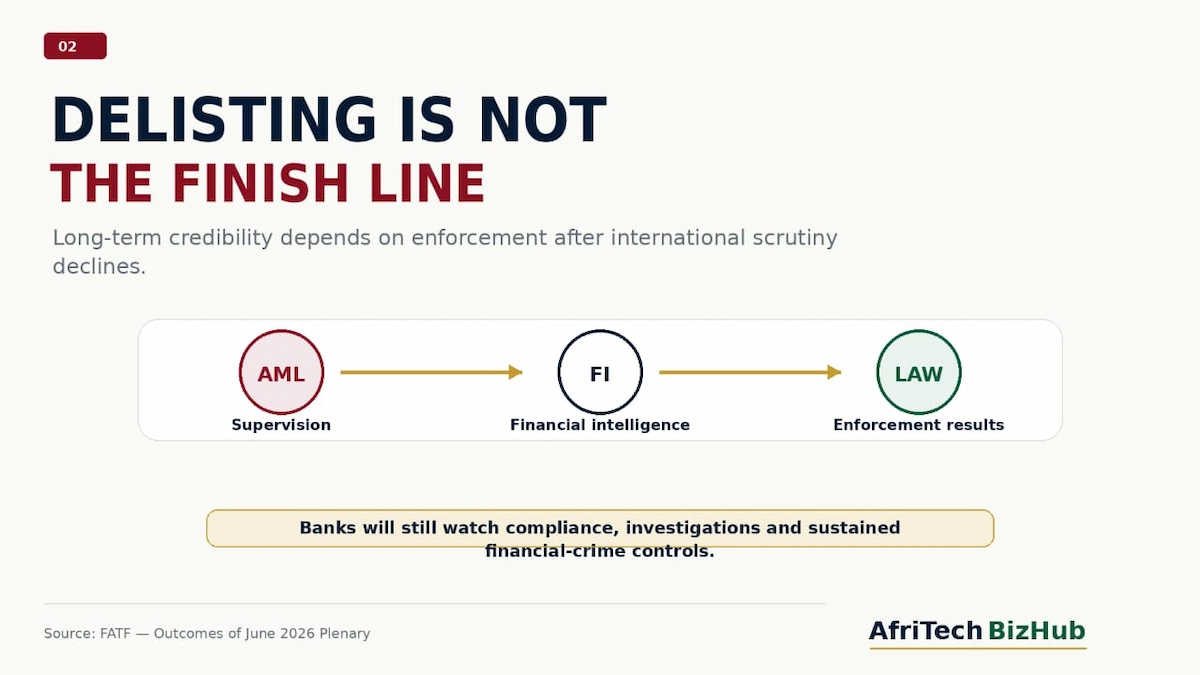
The long-term value of leaving the EU list will depend on whether stronger institutions continue producing credible results after international scrutiny declines.
Consistent inspections, accurate ownership records, effective investigations and proportionate sanctions would show that reform has become part of the financial system rather than a temporary response to grey-listing.
Namibia’s credibility will ultimately rest on the performance of its institutions, not the permanence of any single regulatory decision.


Recent Comments