

Featured Summary:
- Africa startup funding still dominates headlines, but some of the continent’s biggest capital movements are happening elsewhere
- AfDB, Afreximbank, AFC, and ATIDI are mobilising billions around trade, infrastructure, guarantees, and financial systems
- Startups aligned with payments, logistics, energy, trade, and industrial platforms are increasingly closer to where capital is flowing
- The emerging question is no longer whether capital exists, but which businesses are positioned to access it
The African startup ecosystem still measures success through venture capital rounds. That signal is becoming increasingly incomplete.
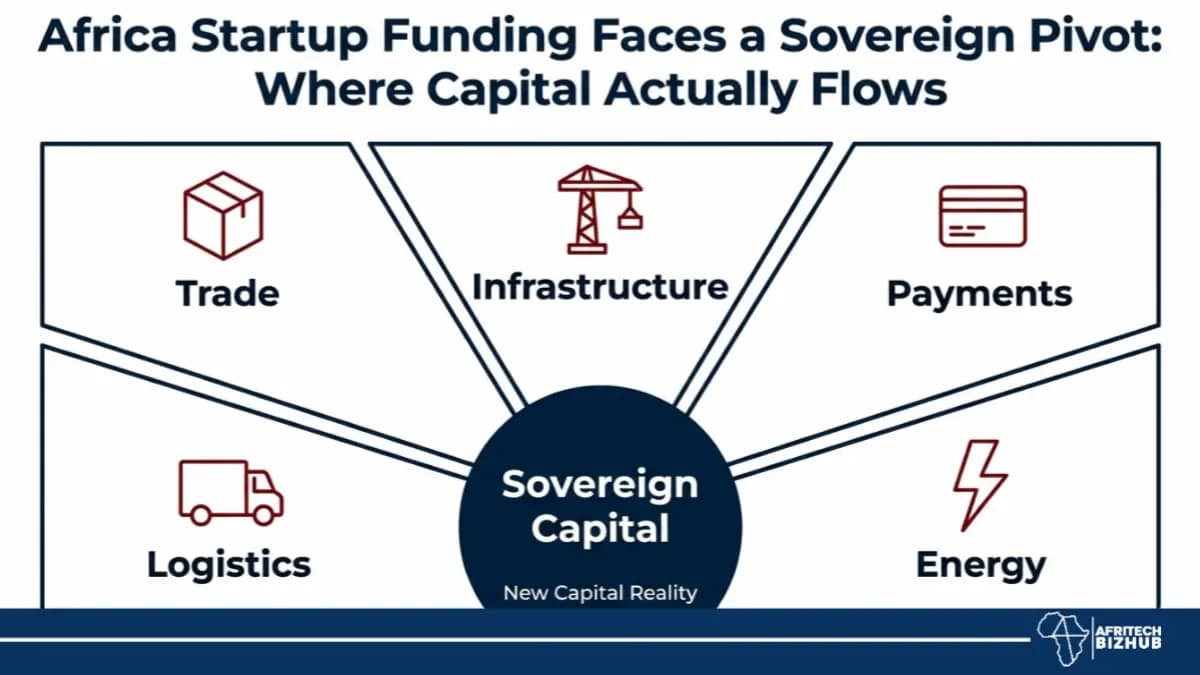
While startup funding remains under pressure, African financial institutions are mobilising billions through AfDB, AFC, Afreximbank, and ATIDI for trade corridors, logistics networks, energy infrastructure, guarantees, and industrial platforms.
The capital has not disappeared. It has changed destination. The question is no longer where the money is. It is where the money is going.
Is Startup Funding Still the Gateway for African Innovation?
For years, pre-seed and Series A funding defined Africa startup success.
Venture deals shaped headlines. Valuations shaped confidence. Startup funding became the most visible signal of innovation across the continent.
That signal now looks incomplete.
Some of Africa’s largest capital movements are increasingly occurring outside traditional startup funding.
African multilateral and sovereign institutions are mobilising billions toward infrastructure, payment rails, logistics corridors, trade facilitation, energy systems, guarantees, and industrial projects.
The reality is difficult to ignore: venture capital remains part of the story, but it no longer captures the full picture of where capital is moving in Africa.
Which Startups Can Access Sovereign-Backed Capital Today?
The capital moving through AfDB, AFC, Afreximbank, and ATIDI is not searching for the next consumer app.
That distinction is becoming increasingly important in Africa startup funding, where some of the continent’s largest pools of capital are flowing toward systems that solve trade, infrastructure, energy, logistics, and financial bottlenecks at scale.
That immediately narrows the field.
Startups building payment rails, trade-finance platforms, cross-border settlement systems, logistics technology, industrial digitisation tools, energy infrastructure solutions, and risk-management platforms sit closer to institutional mandates than businesses built primarily around consumer acquisition.
The pattern is becoming easier to spot.
African institutions are deploying capital into projects that move goods, move energy, move money, reduce risk, or improve industrial capacity.
Startups operating inside those systems are increasingly positioned closer to where sovereign-backed capital is flowing than startups operating outside them.
How Can Founders Position for Africa’s New Capital Reality?
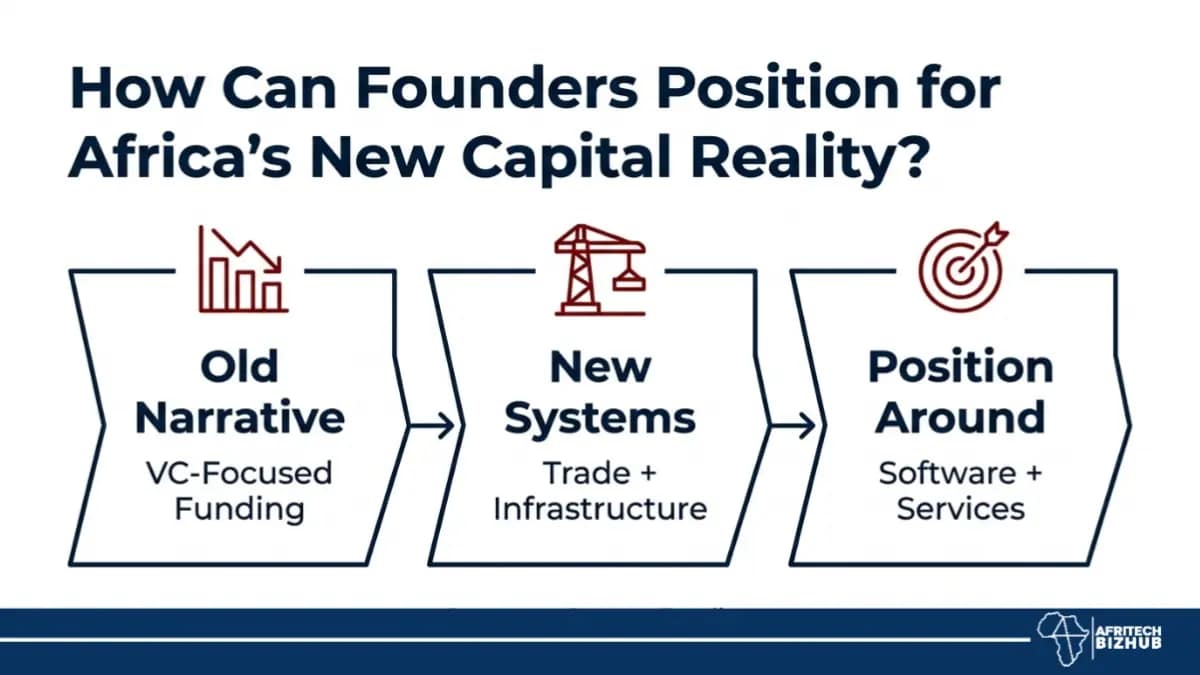
Knowing where capital is flowing and accessing it are not the same thing. That distinction is becoming increasingly important in Africa startup funding.
Founders do not necessarily need to build infrastructure themselves.
They need to understand where new infrastructure, trade systems, payment networks, logistics platforms, energy projects, and industrial investments are emerging.
The opportunity increasingly sits around the businesses, software, services, and operational layers those systems require.
The signal is straightforward. Capital is concentrating around larger economic systems.
Founders who position themselves around those systems may find themselves closer to where funding is moving than those still building around yesterday’s funding narrative.
Is Africa Startup Funding Still the Main Driver of Digital Growth?
For years, startup funding was treated as the primary engine of Africa’s digital economy.
The assumption was straightforward: fund enough startups and digital transformation would follow.
The World Bank’s Digital Economy for Africa framework takes a broader view. Digital infrastructure, digital platforms and digital financial services sit at the foundation of digital transformation.
Recent capital movements suggest some of Africa’s largest financing pools are increasingly being directed toward those foundations.
That does not make startups less important. It suggests that Africa’s digital economy may increasingly be built from the bottom up rather than the top down.
The systems are being financed first. The businesses that emerge from those systems may follow.
What Does Africa Startup Funding Reward Today?
The reality of Africa startup funding is becoming easier to understand.
Capital is increasingly rewarding businesses that solve identifiable economic problems rather than businesses built around funding narratives alone.
That does not mean every founder must build a bank, a logistics company, or an energy platform.
It means the businesses closest to real economic activity are increasingly becoming easier to justify, easier to scale, and easier to finance.
For founders, the signal is straightforward. Start with a problem that matters to trade, production, payments, energy, logistics, industry, or productivity. Then build from there.
The opportunity is no longer simply to create another startup. The opportunity is to build something the economy cannot easily operate without.


Recent Comments