

Featured Summary:
- Dangote Group is targeting a market value above $200 billion by 2030
- Dangote Refinery is valued near $47 billion and targets 1.4 million barrels a day by 2028
- Nigeria’s refined-product exports have surged as global supply disruptions tighten fuel markets
- Future value will depend on crude supply, refining margins and demand after today’s disruptions ease
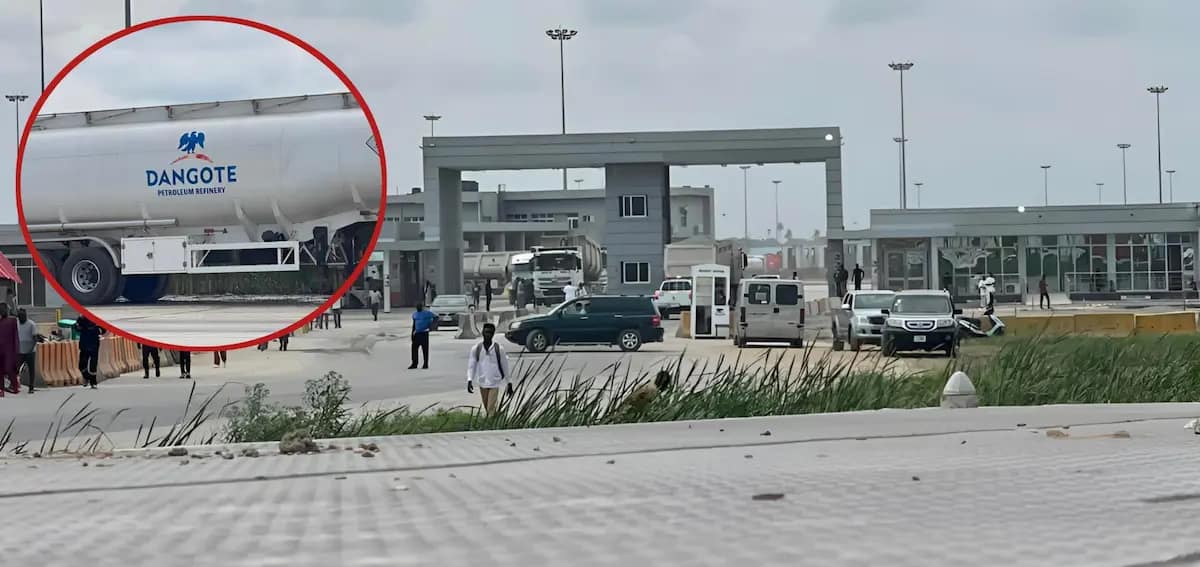
Dangote Group is targeting a market value above $200 billion by 2030 and $100 billion in annual revenue under Vision 2030. The refinery going into the IPO is being priced at about $47 billion.
The plant was designed for 650,000 barrels a day, has tested around 700,000 barrels a day and is being expanded toward 1.4 million barrels a day by 2028.
The offer is expected to sell 4.1 billion shares at 525 naira each and raise about 2.15 trillion naira, or roughly $1.63 billion, if fully subscribed.
Nigeria’s seaborne petroleum-product shipments averaged 561,000 barrels a day in the second quarter of 2026, with 350,000 barrels a day exported. In 2023, before Dangote began operating, exports averaged 46,000 barrels a day.
The IPO comes after a sharp rise in Nigeria’s refining output and fuel exports, with another major capacity increase already planned.
The $47 billion valuation is entering the market alongside higher production, stronger export volumes and a group expansion program running through 2030.
Global Fuel Shortages Have Strengthened Dangote’s Export Position
Global refinery throughput in July remained almost 5 million barrels a day below year-earlier levels. Disruptions to Middle East exports and damage to Russian refining capacity pushed Atlantic Basin margins to record highs.
Gulf output was still 8.3 million barrels a day below pre-war levels in July, while regional exports fell to about 15 million barrels a day despite alternative routes around the Strait of Hormuz.
Dangote increased output as those shortages widened. Processing around 700,000 barrels a day put more Nigerian fuel into international markets while buyers were replacing supply lost from the Middle East and Russia.
West African import demand remained firm at the same time global product supply tightened.
Gasoline, diesel and aviation-fuel buyers across the region faced fewer available cargoes, giving Nigerian barrels a wider market beyond domestic consumption.
Dangote’s export growth is being supported by a fuel market that remains short of replacement supply across both West Africa and the wider Atlantic Basin.
Dangote Is Taking the Refinery Model to East Africa
Dangote plans to break ground on a $17 billion refinery in Lamu, Kenya, on September 30, with processing capacity of about 700,000 barrels a day and construction expected to take roughly three years. Site work has already started, with soil testing, engineering and design underway.
The project places Dangote directly inside East Africa’s fuel market, where Kenya and neighboring economies still rely heavily on imported refined products.
The refinery is being designed to supply Kenya and surrounding countries, giving the group a second large processing operation outside Nigeria.
Kenya has been offered about a 10% stake, and other East African governments have also been invited to participate in the project.
Dangote has said the Lamu site was selected after weighing commercial and technical considerations across the region.
Afreximbank says Vision 2030 is built around adding industrial capacity across Dangote’s major businesses.
The Lamu refinery extends that expansion into East Africa and gives the group a direct position in a market still importing much of its fuel.
The energy business is no longer centered on Lekki alone. Dangote is now building refining capacity for both West and East African demand.
Record Refining Margins Are Lifting Dangote Into a Stronger Market
Global oil inventories had fallen by about 410 million barrels since the start of the war by July, while Atlantic Basin refining margins reached record levels as diesel, gasoline and jet-fuel supply tightened.
North Sea Dated crude ended July at $96.80 a barrel after trading near $105 during renewed hostilities. Fewer refined products reaching international markets kept selling conditions strong for plants operating at high throughput.
The IEA expects global oil demand to fall by 1.6 million barrels a day in 2026 before returning to growth and expanding by 2.4 million barrels a day in 2027.
Refinery runs are also expected to recover as Gulf exports and other disrupted capacity return.
A fuller supply picture would put more pressure on product margins and remove part of the scarcity now supporting refiners. Dangote’s crude sourcing, operating cost and export volumes then carry more weight in the business.
The refinery is benefiting from an unusually tight fuel market. Its longer-term performance will depend on how those economics hold once global supply improves.
Dangote Is Moving More of Africa’s Oil Value Chain Into Africa
African oil producers have spent decades exporting crude and buying back much of the fuel consumed at home. Nigeria is now changing that trade pattern by refining more crude domestically and shipping finished petroleum products beyond its own borders.
The planned Lamu refinery would carry that processing model into East Africa and place another large refining asset on the continent.
That expansion aligns with the long-running push from African development institutions to keep more value from natural resources inside African economies before export.
The Dangote Refinery IPO brings that industrial shift into the public market after the Lagos plant has already altered Nigeria’s fuel balance and export capacity.
More of Africa’s oil value chain is now being processed on the continent. Dangote’s next phase will be measured by how much of that scale is sustained as new capacity comes online and global fuel markets move away from today’s disruption.


Recent Comments