

Featured Summary:
- Africa finance is shifting from dependence on foreign lenders toward greater control over how global capital enters and is deployed across the continent
- The AFC’s record $2 billion syndicated loan shows that African institutions are increasingly attracting international capital rather than waiting for it
- AfDB, Afreximbank, ATIDI, and AFC are building a financial architecture that allows Africa to aggregate risk, mobilise capital, and fund infrastructure on more favourable terms
- The real story is not whether Africa can finance itself alone. It is whether African institutions can control the pipeline through which capital flows
A common misunderstanding has emerged in Africa finance.
The growing coordination between AfDB, Afreximbank, ATIDI, and other continental institutions is often interpreted as a sign that Africa is preparing to finance itself without external capital.
Recent events suggest something different.
Within days of the Brazzaville meetings, the African Development Bank strengthened ATIDI through a $125 million equity investment while the Africa Finance Corporation secured a record $2 billion syndicated loan from international lenders.
The signal is difficult to miss. African institutions are not withdrawing from global capital markets. They are positioning themselves to control how that capital enters, how risk is priced, and where money is deployed.
The shift matters because financial sovereignty is not built through isolation.
It is built through institutions strong enough to attract global liquidity without surrendering control of the pipeline.
Is Africa Still Dependent on Foreign Capital?
The debate is often framed incorrectly. Africa’s financing challenge is frequently presented as a choice between domestic capital and foreign capital.
Recent developments suggest the real issue lies elsewhere.
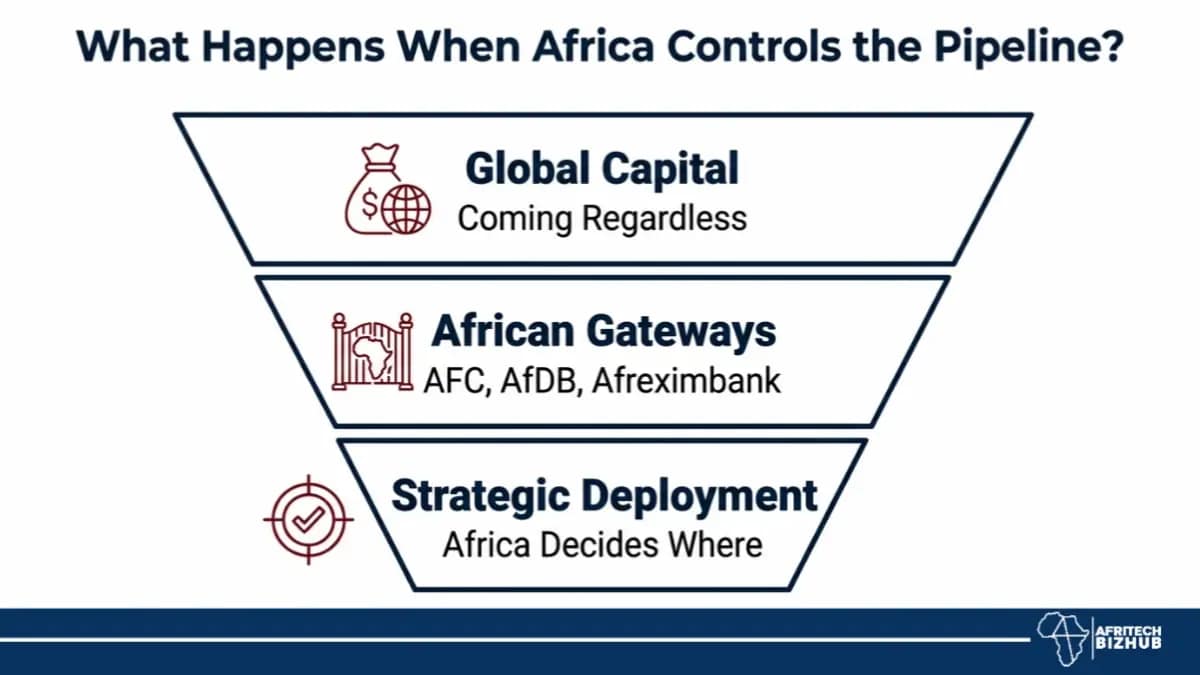
The AFC’s record $2 billion syndicated loan was raised from international lenders, yet the transaction did not place control of African infrastructure planning in foreign hands.
The opposite happened. Global liquidity moved through an African institution with an African mandate and an African project pipeline. The source of the capital matters. Control of allocation matters more.
That distinction is becoming increasingly important across Africa finance.
International capital remains abundant. What has historically been scarce is African control over the institutions that structure risk, aggregate projects, and determine where investment ultimately flows.
The significance of recent capital movements is not that Africa has stopped using foreign money. It is that African institutions are increasingly deciding how that money is deployed.
The shift changes the conversation.
Dependency is not measured by where capital originates. It is measured by who controls the balance sheet, who prices the risk, and who decides what gets built.
What Does Financial Sovereignty Actually Mean?
Financial sovereignty is often confused with self-sufficiency. They are not the same thing.
The world’s largest economies routinely attract foreign investment, issue debt, and access international capital markets.
Their strength comes from something else. They possess institutions capable of directing capital towards national priorities.
That distinction is becoming increasingly relevant across Africa finance.
For decades, much of the conversation focused on how to attract more money. The emerging challenge is how to govern it.
Capital can arrive in large volumes and still fail to transform an economy if local institutions lack the authority, coordination, or capacity to channel it effectively.
Recent developments point towards a different model.
Risk is increasingly being pooled through continental institutions. Capital is increasingly being aggregated through African balance sheets.
Infrastructure priorities are increasingly being identified by African institutions rather than external lenders.
The flow of money remains global. The decision-making process is becoming more local.
This is where the meaning of sovereignty changes.
It is not measured by the absence of foreign capital. It is measured by the ability to set priorities, structure opportunities, and determine outcomes.
The countries that shape capital flows rarely own all the capital. They own the institutions that direct it.
Why Is Africa Finance Corporation the Biggest Winner From This Shift?
Not every institution performs the same role within Africa’s financial architecture.
Some absorb risk. Some provide insurance. Some mobilise capital. AFC increasingly sits at the point where financing becomes infrastructure.
That position matters.
As continental institutions strengthen their ability to de-risk projects and attract capital, AFC gains access to larger pools of finance that can be deployed into power plants, transport corridors, ports, rail systems, and industrial infrastructure.
The institution operates closer to the asset than most development finance players.
The advantage is practical rather than symbolic.
Infrastructure projects fail when capital arrives slowly, risk remains unresolved, or institutions work in isolation.
Recent developments suggest those barriers are gradually being reduced.
AFC is emerging as one of the primary channels through which Africa’s financial architecture is converted into physical assets.
The real significance is not the size of the loan.
It is where the institution sits within the chain.
Capital may be raised elsewhere. Risk may be absorbed elsewhere. The infrastructure still has to be built.
Is Africa Building a Capital Market Instead of Chasing Capital?
For decades, discussions about African development started with the same assumption: the continent needed more money.
Recent events point towards a different question. What happens when the challenge shifts from raising capital to organising it?
The institutions emerging across Africa’s financial landscape increasingly resemble market builders rather than lenders of last resort.
Risk insurance, trade finance, infrastructure finance, development banking, and capital mobilisation are becoming more interconnected.
The objective is not simply to fund projects. It is to create a financial system capable of attracting larger pools of capital over time.
That distinction matters because capital rarely moves towards need alone. It moves towards structure.
The African Development Bank has repeatedly pointed to trillions of dollars held within African pension funds, insurance assets, sovereign vehicles, and institutional pools.
The issue is no longer whether capital exists. The issue is whether institutions exist that can channel it efficiently into productive assets.
The June 4 developments suggest the conversation is changing.
The story is no longer only about financing infrastructure. It is increasingly about building the financial architecture that makes infrastructure finance possible in the first place.
What Happens When Africa Controls the Pipeline?
The significance of Brazzaville was never that African institutions suddenly acquired unlimited capital.
The significance was that they are increasingly building the infrastructure of finance itself.
Risk management. Capital mobilisation. Project preparation. Insurance. Trade finance. Infrastructure finance. The pieces are beginning to connect.
That changes the direction of the conversation.
For decades, African development was often discussed through shortages: not enough capital, not enough lenders, not enough financing.
The emerging question is different. Can African institutions build systems strong enough to attract, direct, and deploy capital at scale?
The AFC’s record syndication provides one answer.
Global capital remains willing to finance African opportunities when credible institutions stand between investors and uncertainty.
The market signal is clear. Investability is no longer determined solely by individual projects. It is increasingly determined by the strength of the institutions surrounding them.
The next phase of Africa finance will not be defined by who has the largest balance sheet.
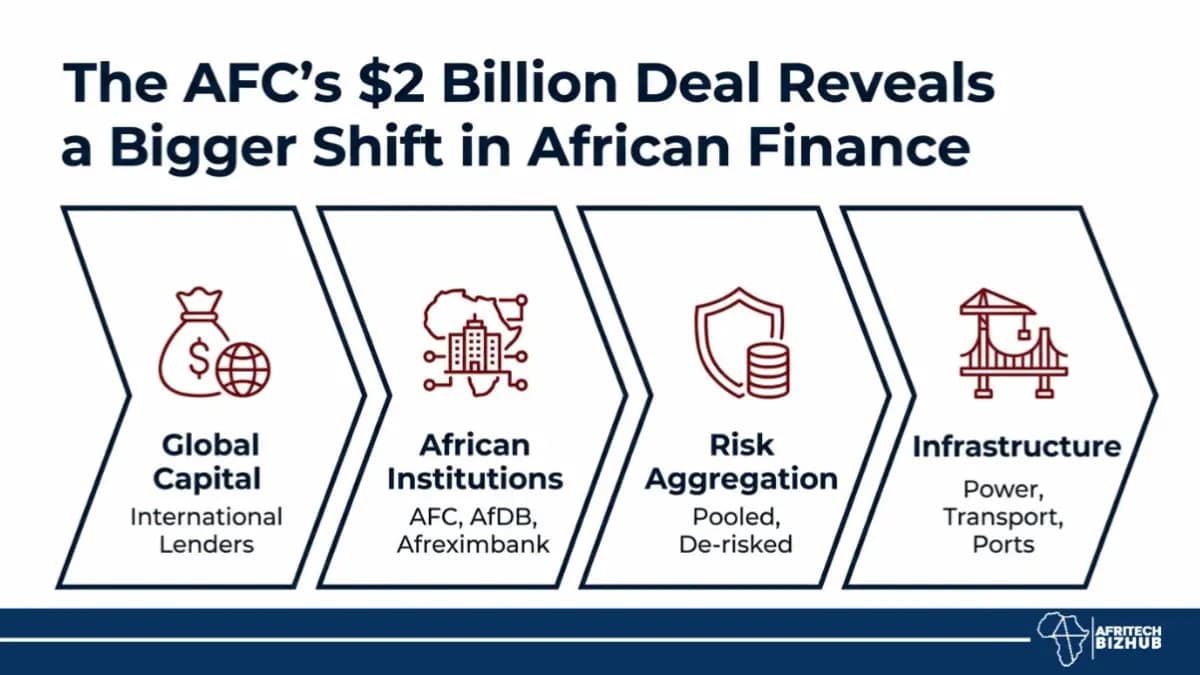
It will be defined by who controls the gateways through which capital flows. The institutions being strengthened today are positioning themselves to become those gateways.
Global capital is still coming. The difference is that Africa is becoming increasingly capable of deciding where it goes.


Recent Comments