

Featured Summary:
- Rooibos tea seeds are scheduled to travel to the International Space Station in October 2026 for approximately six weeks.
- The seeds will be exposed to microgravity and space radiation before returning to South Africa for comparative planting.
- The experiment will examine germination, root development, growth patterns, and stress responses rather than grow rooibos aboard the station.
- South African rooibos gives African learners and agricultural researchers a practical entry point into global plant and space science.
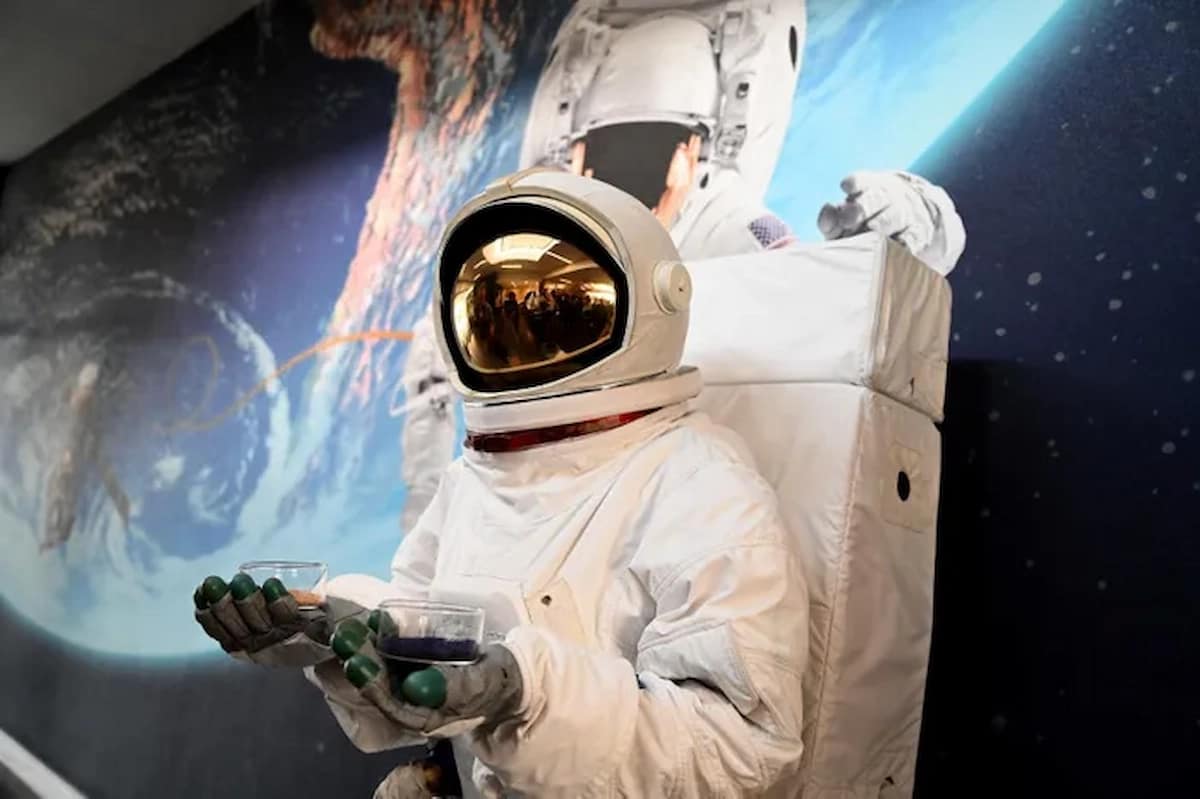
South African rooibos seeds are scheduled to travel to the International Space Station in October 2026 as part of a scientific and educational experiment examining how exposure to microgravity and space radiation affects plant development.
The seeds will remain aboard the station for approximately six weeks before returning to Earth, where they will be planted alongside control samples and monitored through maturity and harvest.
The experiment does not attempt to cultivate rooibos tea in orbit or prove that the crop can sustain future astronauts.
Its immediate purpose is narrower: to compare the germination, root development, growth, and resilience of space-exposed seeds with identical samples kept on Earth.
That distinction makes the project scientifically valuable without overstating its contribution to the much larger challenge of building reliable food systems beyond Earth.
Why Is Rooibos Tea Going to Space Now?
The Rooibos in Space initiative was developed by the South African Rooibos Council and MaxIQ Space, with support from the South African National Space Agency.
Three groups of seeds, untreated, scarified, and scarified with a protective agricultural coating, will be sealed inside a specialized nanolab and transported to the International Space Station through a NASA-supported program.
Matching control batches will remain on Earth so researchers can compare how the different treatments respond.
Rooibos was selected partly because it is an indigenous South African crop with distinctive agricultural characteristics.
The plant grows slowly, is adapted to nutrient-poor soils, and prioritizes deep root development during its early life cycle.
Researchers will examine whether exposure to microgravity and radiation produces measurable differences in germination, root formation, early growth, or stress response without assuming in advance that the space environment will improve the seeds.
How Will Space Agriculture Transform Future Food Production?
Long-duration space missions require more than reliable spacecraft and stored supplies.
Astronauts travelling farther from Earth may need biological systems capable of supplementing packaged food, supporting oxygen production, and contributing to crew well-being.
NASA’s plant programs aboard the International Space Station study how crops respond to microgravity and how water, light, nutrients, and controlled environments must be managed when normal Earth conditions are absent.
Rooibos tea is not yet being assessed as a space food crop, but the project belongs to the broader scientific effort to understand how plant material behaves under extreme conditions.
Space agriculture advances through many controlled experiments that isolate specific biological responses rather than through a single crop breakthrough.
The operational goal is to build enough evidence to design dependable food and life-support systems for future missions to the Moon, Mars, and other destinations.
Why Do Space Agencies Test Diverse Plant Species?
Different plant species respond differently to environmental stress, altered gravity, radiation, restricted space, and artificial growing conditions.
Testing diverse seeds and crops helps researchers identify which biological traits support germination, root orientation, nutrient uptake, growth, and reproduction beyond Earth.
It also reduces the risk of designing future space food systems around assumptions drawn from only a narrow group of plants.
The International Space Station provides a controlled research platform where scientists can compare space-based biological responses with experiments conducted on Earth.
Previous studies involving lettuce, peas, soybeans, and other plants have expanded knowledge of crop development under microgravity, while NASA’s Advanced Plant Habitat allows fundamental and applied plant research to run for extended periods with controlled lighting, nutrients, and environmental conditions.
How is South African Rooibos Contributing to Global Space Science?
The rooibos seeds will not germinate aboard the International Space Station.
After their six-week exposure, they will return to South Africa and be planted beside matching control seeds.
Learners from seven Cederberg schools, working with local farms, will monitor the plants over approximately 18 months, while a parallel experiment at Parklands College will provide additional comparative data.
Researchers will track germination success, seedling establishment, root development, growth patterns, resilience, and eventual yield.
Its contribution lies in the data and scientific capability created through that process.
The experiment could reveal whether space exposure produces measurable biological differences while also training learners in experimental design, data analysis, and plant science.
Results will need to be assessed after the seeds return and the growing period is completed, meaning the project should currently be understood as a carefully structured investigation rather than evidence that rooibos has already demonstrated value for off-Earth agriculture.
What Makes African Crops Valuable for Future Space Research?
African crops can strengthen future space research when their distinctive biology helps scientists examine adaptation, resilience, and plant performance under difficult conditions.
Species developed within dry, nutrient-poor, high-temperature or otherwise demanding environments may offer useful research characteristics, but their value must be demonstrated through controlled experiments rather than inferred from their geographic origin alone.
Rooibos tea now gives South African institutions a practical route into that scientific process.
The larger opportunity is not to declare African crops naturally superior, but to ensure that the continent’s agricultural diversity, researchers, and indigenous superior butge are represented in global experimentation.
African space research will gain lasting relevance when projects such as this produce reliable data, deeper scientific capability, and partnerships that continue beyond a single journey to orbit.


Recent Comments