

Featured Summary:
- Africa currency subsidies sustain apparent stability while structural pressures persist in African markets
- FX resilience relies heavily on external inflows rather than domestic production
- Industrialization and diversified exports correlate with smoother currency adjustments
- Observable patterns from Nigeria, South Africa, and other markets imply temporary interventions mask systemic fragility
Across African markets, currencies often appear stable while interventions and subsidies persist.
Observable FX trends in Nigeria and South Africa highlight contrasting approaches:
Nigeria’s currency has repeatedly adjusted despite heavy intervention and reserve usage, reflecting pressure from weak exports and production gaps, whereas South Africa maintains relative FX stability without heavy subsidies, supported by industrial diversity and internal capacity.
These patterns suggest that nominal stability can exist alongside structural vulnerabilities, exposing economies to shocks when inflows fluctuate or global conditions shift.
How Are African Currencies Being Managed Through Subsidies and Hedging?
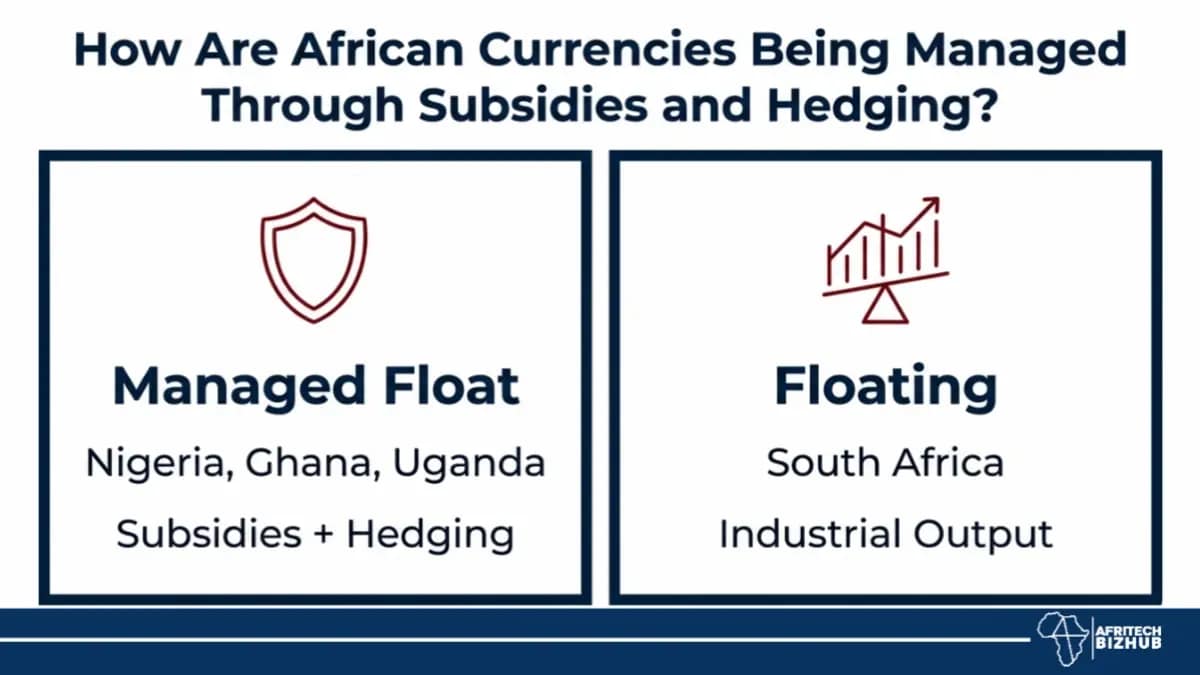
Nigeria’s currency shows a history of partial hedging combined with repeated intervention to support exchange rates.
Observed FX behavior demonstrates that Africa currency subsidies temporarily smooth volatility, yet adjustments occur when reserves are pressured or inflows diminish.
Ghana and Uganda also exhibit partial management, with controlled or semi-floating currencies that rely on external flows for stability.
South Africa, by contrast, operates with limited intervention, maintaining a floating approach while industrial output and diversified exports contribute to steadier FX patterns.
Across these markets, observable trends reveal that these Africa currency subsidies and hedging measures provide short-term calm but do not eliminate exposure to external shocks or structural imbalances.
Why Do Some African Currencies Remain Volatile Despite Apparent Stability?
Currencies in economies with limited industrialization and export diversification experience recurring pressure even with active interventions.
In Nigeria, adjustments follow periods of reserve depletion and weak export earnings, showing that nominal FX calm depends heavily on Africa currency subsidies and external inflows.
Markets where external inflows, commodity exports, or remittances dominate show abrupt corrections when these subsidies fluctuate or are insufficient.
South Africa’s experience contrasts this pattern: industrialization and diversified production reduce reliance on Africa currency subsidies, contributing to smoother currency behavior despite minor external shocks.
How Does Industrialization Influence Currency Resilience in Africa?
Currencies in economies with stronger industrial bases and value-added exports demonstrate more gradual adjustments.
Observed FX patterns indicate that production capacity and export diversification, alongside Africa currency subsidies where applied, align currency behavior with underlying economic activity rather than temporary inflows.
Nigeria’s structural gaps in industrial and export sectors correspond with heightened sensitivity to FX shocks, while South Africa’s diversified economy shows muted volatility.
Across Africa, trends suggest that industrial capacity, export value addition, and measured use of Africa currency subsidies correlate with more resilient currencies.
What Do Market Observations Reveal About Flow-Dependent FX Stability?
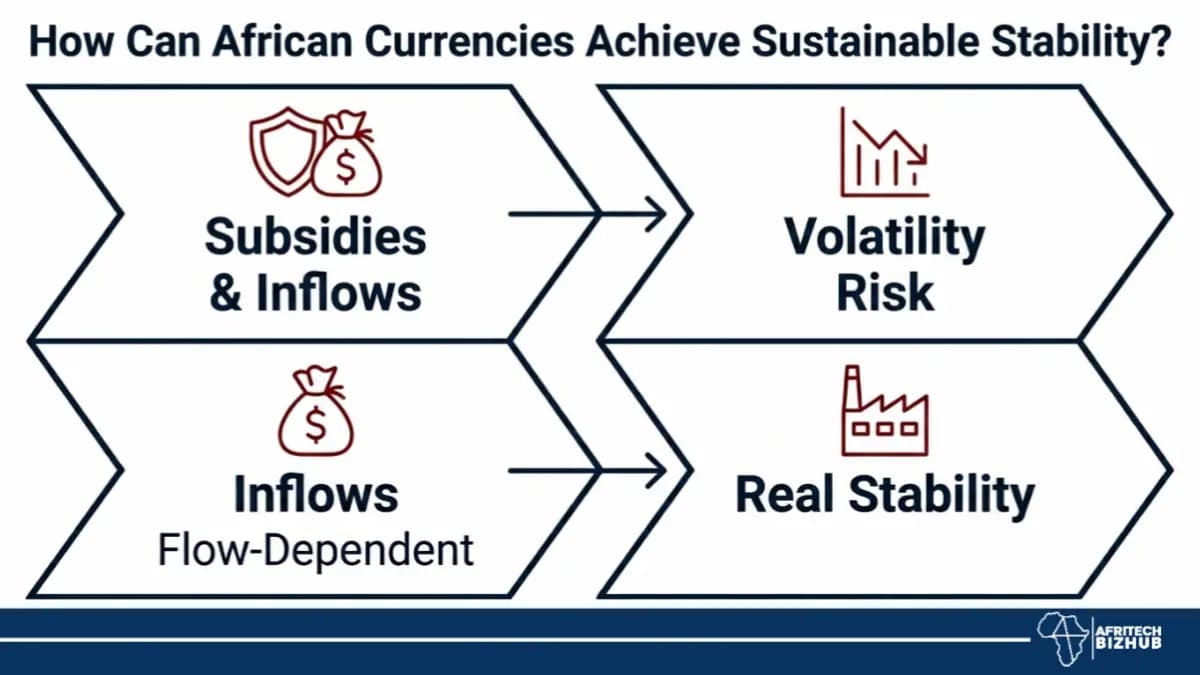
Recent FX data shows that Uganda’s currency has come under pressure due to import-linked shocks and external factors, while Kenya, Nigeria, and Zambia maintain apparent FX stability largely through inflows rather than domestic production.
Observed patterns highlight that temporary calm is frequently tied to short-term flows rather than structural economic strength.
Reuters reports indicate that interventions and subsidies can sustain rates in the short term, but markets relying heavily on flow-dependent stabilization remain exposed to global shocks and commodity price shifts, creating recurring FX pressure.
How Can Africa Currency Subsidies Help Currencies Achieve Sustainable Stability?
Observed trends indicate that aligning currency management with industrialization, production capacity, and export diversification correlates with more durable FX behavior.
Markets relying on subsidies or inflow-dependent stabilization show recurring volatility whenever flows fluctuate.
Patterns in Nigeria and South Africa suggest that industrial and export development reduces dependence on temporary interventions, allowing exchange rates to adjust more gradually.
Across Africa, observable behavior implies that structural FX stability is contingent on productive capacity rather than ongoing subsidy or intervention measures.


Recent Comments