

Featured Summary:
- U.S. Treasury Yields stay elevated as Treasury prepares a $6 billion bond buyback
- The Fed is moving closer to a hold than another rate hike
- Oil above $100 keeps the path to lower rates difficult
- A softer dollar gives emerging markets more room to attract capital
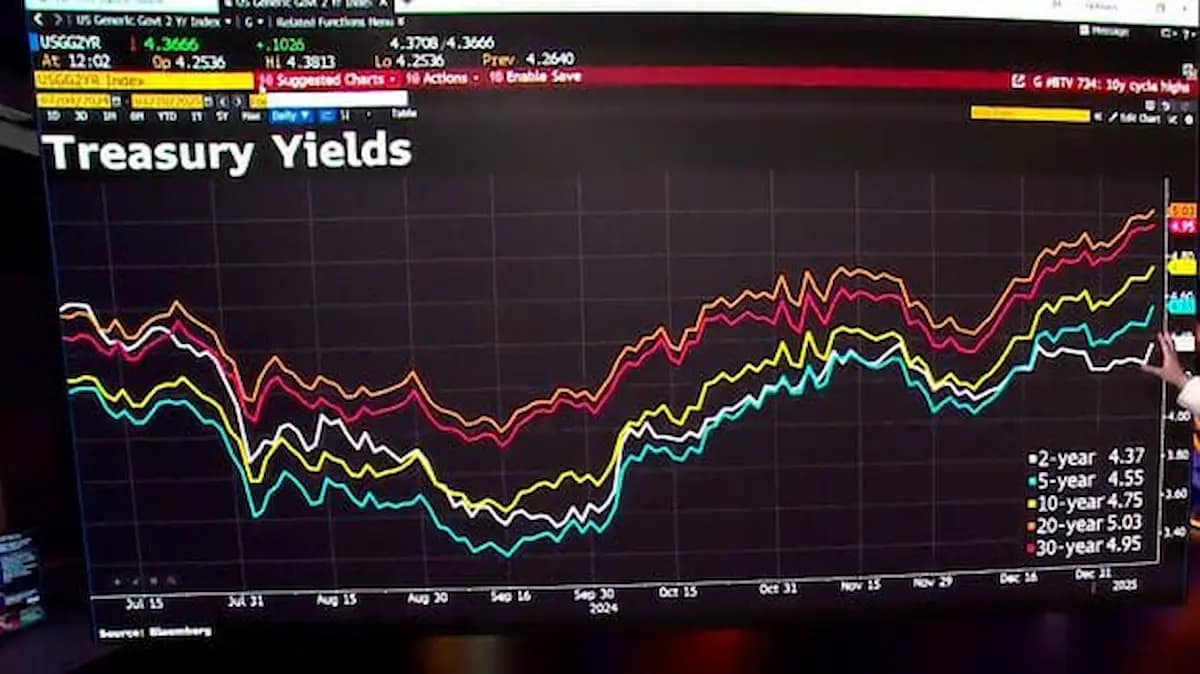
The U.S. Treasury will buy as much as $6 billion of 10-to-20-year securities on September 10, expanding purchases of older long-dated debt. The operation targets liquidity while the 10-year Treasury remains close to 5%.
Fed Governor Christopher Waller has signaled support for leaving rates unchanged if August inflation cools. Expectations for a September increase fell after his remarks, while long-dated U.S. debt remains near its highest yields since 2023.
The yen has strengthened as markets price another Bank of Japan increase. Bitcoin has also rallied as expectations for tighter U.S. policy have eased. U.S. Treasury Yields have remained high through both moves.
That leaves the September Fed meeting with one point already visible in the bond market: Treasuries are still offering a strong return without another rate increase being priced as the only path forward.
Japan Gives Bond Investors More Reason to Keep Money at Home
Japan’s September 1 auction of 10-year government debt cleared at an average yield of 2.995%, with the lowest accepted price yielding 3.011%. The benchmark has returned to levels Japan had not seen since 1996.
Japanese banks are rebuilding government-bond holdings, and insurers are replacing older low-coupon debt as domestic yields rise.
For institutions that spent years looking overseas for income, Japan is paying close to 3% at home.
The U.S. 10-year Treasury reached about 4.85% on September 9, leaving around 185 basis points over the Japanese benchmark.
Higher JGB yields give Japanese capital a stronger reason to stay domestic, but they have not erased the return available in U.S. government debt.
U.S. Treasury Yields still stand well above Japan’s 10-year rate even as Tokyo draws more of its own money home.
Emerging-Market Bonds Get More Room as U.S. Rate Pressure Eases
Nigeria’s Eurobonds were yielding from 5.62% on the 2027 note to 8.15% on the 2051 maturity on September 8, according to the Debt Management Office.
Several issues in the 2030s were above 7%, compared with a U.S. 10-year Treasury near 4.85%.
Those returns reflect substantially more sovereign risk, but they also show the premium available outside the U.S. market.
Another Fed increase would raise the return African issuers must offer to keep that premium attractive.
Ghana completed the final exchange linked to its sovereign debt restructuring in July. Lower global rate pressure would improve the backdrop for any broader return to international capital markets.
Oil adds another split. Nigeria can benefit from stronger export receipts if crude stays high. Import-dependent economies face higher fuel costs and more pressure on external balances.
A Fed hold would leave emerging-market borrowers competing against a U.S. benchmark that is no longer moving higher.
Oil Above $100 Keeps Lower Rates From Becoming an Easy Call
Brent fell to about $69 a barrel on July 2, then climbed to roughly $105 on July 23 as tanker attacks cut traffic through the Strait of Hormuz. EIA said flows through the strait dropped to about 4.9 million barrels a day in the second quarter, from 21.6 million barrels a day in the fourth quarter of 2025.
Crude is back above $100 as the Fed approaches its September meeting. That keeps energy prices high enough to complicate any move toward lower rates later in the year, even if policymakers leave the current range unchanged this month.
U.S. crude production is projected near 13.8 million barrels a day in 2026. EIA also expects Middle Eastern flows to recover as routes reopen. Additional African output would add another source of supply if Gulf disruption persists.
Nigeria is among the producers positioned to sell more crude if buyers continue looking outside the Gulf. A broader increase in supply would make another sustained move toward the July high harder to hold.
Lower Rates Leave U.S. Treasuries Strong While Emerging Markets Get Relief
A lower U.S. rate path would ease financing conditions across markets that spent the tightening cycle competing with rising returns on American debt.
African sovereigns returning to international markets would face a less demanding U.S. benchmark, improving the conditions for refinancing and new issuance without removing the risk premium investors still require.
That shift does not dislodge Treasuries from the center of the global bond market. Their advantage extends beyond the policy rate.
The size and liquidity of the market, together with persistent global demand for dollar assets, continue to give U.S. government debt a position that competing sovereign markets have not matched.
The relief for African borrowers is therefore likely to come through access rather than a change in the global hierarchy of capital.
Governments that have spent the past several years paying more for external financing may find better opportunities to refinance, while domestic bond markets carry a larger share of future funding where local investor demand can support it.
The Fed rate cycle can turn without shifting the center of the bond market away from the United States. Lower rates widen the financing window elsewhere; U.S. Treasuries keep the advantage.


Recent Comments