

Featured Summary:
- Blue economy cooperation is becoming a bigger part of Kenya trade strategy as Nairobi and Oslo deepen maritime engagement.
- Maritime trade discussions are expanding beyond ports and into shipping routes, logistics networks, and vessel connectivity.
- Europe shipping links could strengthen East Africa’s access to global markets while reducing trade friction.
- Mombasa Port stands to benefit if shipping connectivity becomes as important as infrastructure capacity.
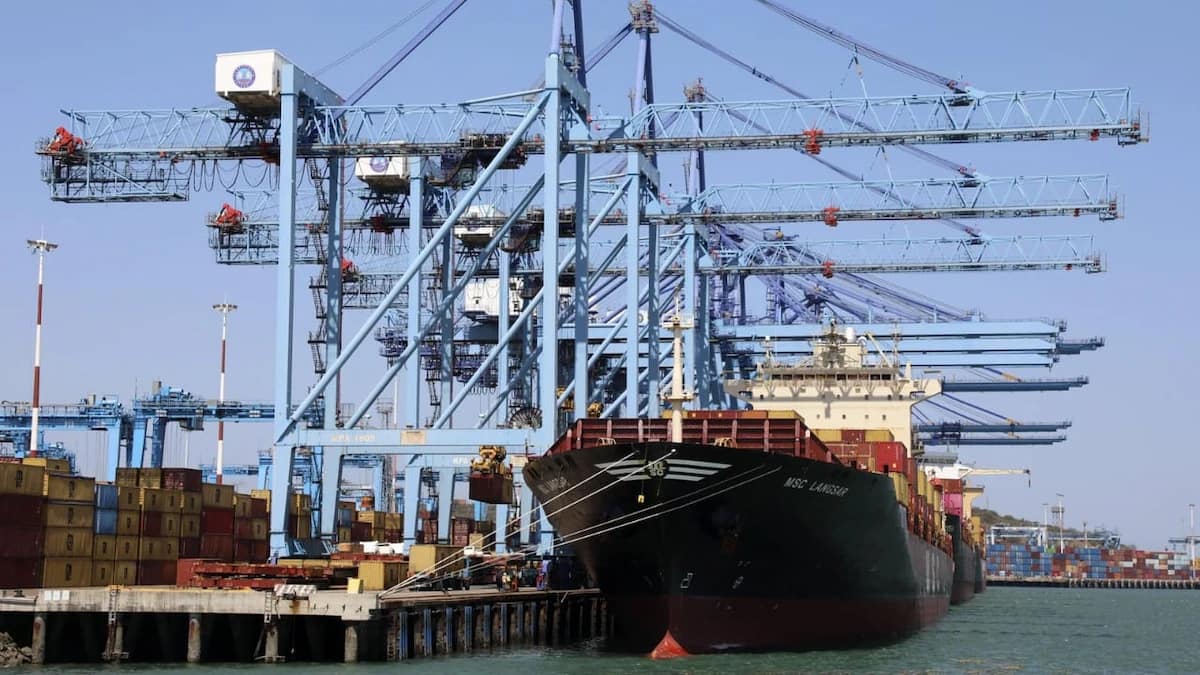
East Africa spent years building ports, transport corridors, and logistics infrastructure designed to support trade growth.
The assumption was simple: build the gateways and commerce would follow.
Kenya and Norway’s latest discussions suggest the next challenge is different.
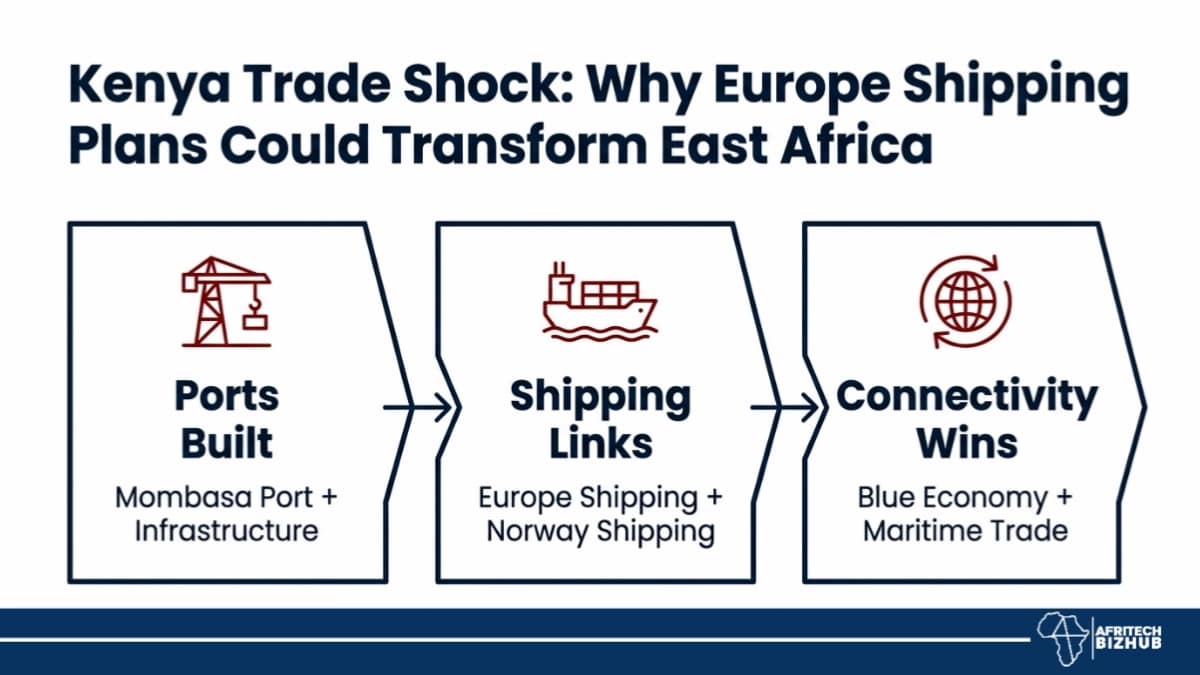
Infrastructure creates access. Shipping routes create movement.
As Nairobi and Oslo explore stronger maritime links connecting East Africa to Europe, attention is shifting from what ports can handle to how efficiently goods move through them.
That distinction may shape the next phase of Kenya trade far more than infrastructure alone.
How Will Blue Economy Plans Reshape Kenya’s Maritime Future?
The Blue economy is no longer confined to discussions about fisheries, marine conservation, or coastal development.
It is becoming part of a broader conversation about trade competitiveness, logistics, shipbuilding, maritime services, and economic positioning.
Governments increasingly view ocean resources and maritime infrastructure as commercial assets capable of supporting growth far beyond coastal communities.
For Kenya, the Blue economy agenda aligns directly with its ambition to strengthen its role as East Africa’s maritime gateway.
New shipping partnerships, investment in maritime industries, and stronger international connectivity expand the economic value generated by the country’s coastline.
The Blue economy is therefore evolving from a sector-specific policy into a wider trade strategy linked to movement, connectivity, and commercial access.
Why Is Maritime Trade Between Kenya and Norway Expanding?
Kenya and Norway enter the conversation from different positions but with complementary interests.
Norway remains one of the world’s leading maritime nations, while Kenya occupies one of the most strategically important positions along the East African coastline.
The relationship increasingly reflects a convergence between maritime expertise and geographic advantage.
Maritime trade is becoming a larger part of bilateral engagement because both countries see opportunity in shipping connectivity, maritime services, port efficiency, and ocean-based industries.
Kenya gains stronger links to European markets, while Norway strengthens commercial engagement within one of Africa’s fastest-growing regions.
The result is a partnership built around movement rather than proximity.
Can Europe Shipping Routes Unlock Faster East African Exports?
Trade corridors matter. Shipping routes often matter more.
Export competitiveness is shaped not only by what a country produces but also by how quickly and efficiently products reach international markets.
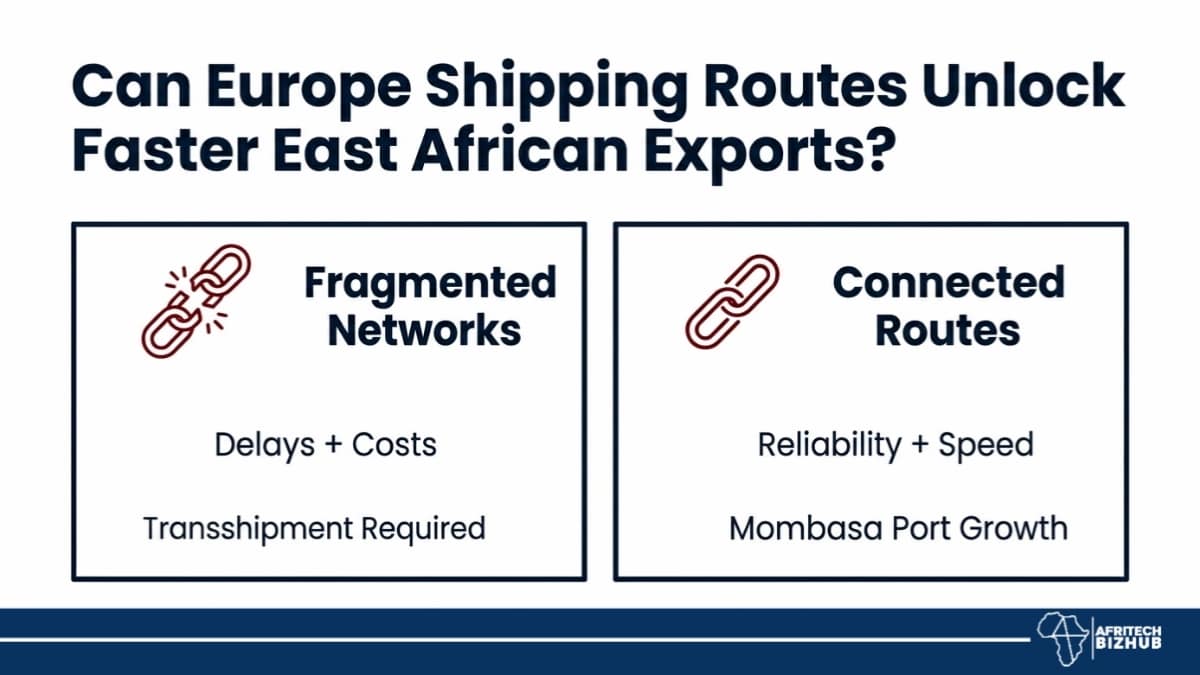
Delays, transshipment requirements, and fragmented shipping networks increase costs and reduce competitiveness.
Stronger Europe shipping connections help address those constraints by improving reliability and reducing friction across supply chains.
That matters for East Africa because the region continues expanding exports in agriculture, manufacturing, minerals, and value-added products.
Faster and more efficient Europe shipping links strengthen access to buyers while improving the attractiveness of East African goods within global markets.
Maritime trade becomes more valuable when connectivity improves.
How Will Mombasa Port Benefit From Norway’s New Strategy?
Mombasa Port already serves as one of Africa’s most important trade gateways, connecting Kenya with Uganda, Rwanda, South Sudan, the Democratic Republic of the Congo, and other regional markets.
The next stage of competition is becoming less about physical infrastructure and more about integration into global shipping networks.
The Kenya Ports Authority has consistently identified connectivity, efficiency, and regional trade facilitation as central components of Mombasa Port’s growth strategy.
Stronger links between East Africa and European shipping networks support those objectives by increasing cargo movement, strengthening route competitiveness, and enhancing the port’s role within international supply chains.
Is African Shipping Entering a Powerful New Growth Era?
African shipping is attracting greater attention because trade patterns are changing.
Ports are expanding, regional integration is advancing, and governments are placing greater emphasis on logistics, supply chains, and maritime connectivity.
The discussion is no longer limited to infrastructure.
It increasingly revolves around how infrastructure connects to global commerce.
The significance of Kenya’s engagement with Norway extends beyond a bilateral relationship.
It reflects a broader shift taking place across the continent.
The Blue economy is becoming more closely linked to trade strategy.
Maritime trade is becoming more closely linked to competitiveness.
Shipping routes are becoming more closely linked to economic influence. Ports built capacity.
Connectivity determines who captures the opportunity.


Recent Comments