

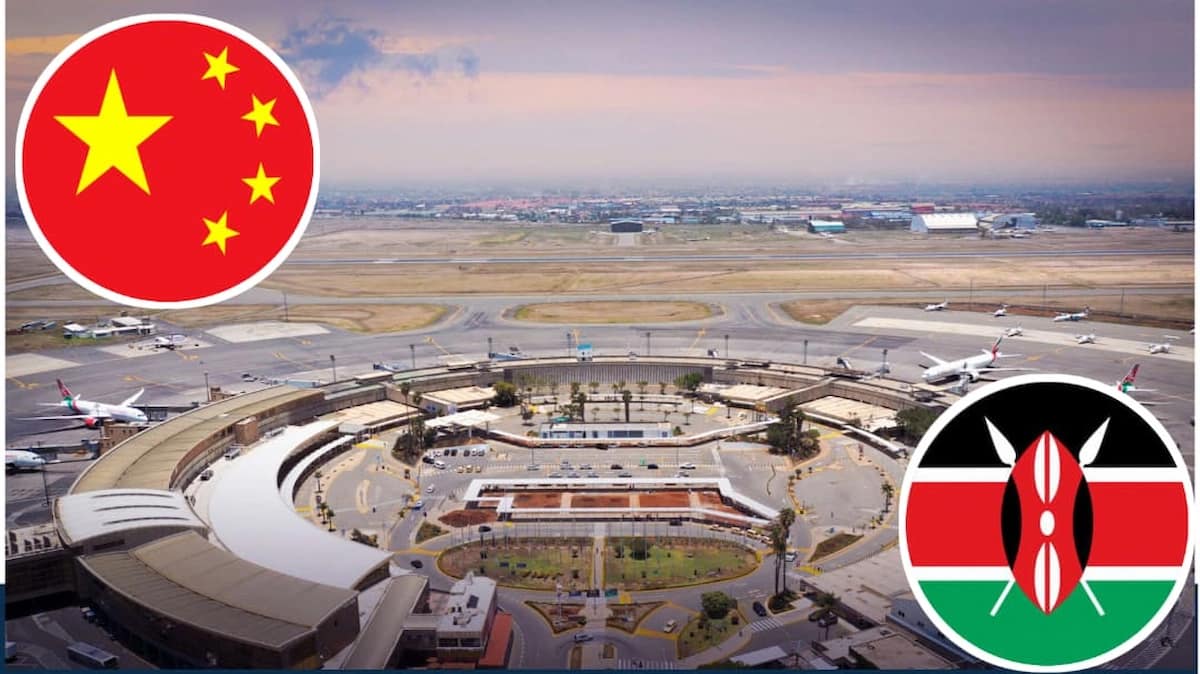
Featured Summary:
- Airport modernization is back on Kenya’s agenda as passenger demand continues to increase despite years of project delays.
- Airport expansion is expected to strengthen Nairobi airport’s ability to handle growing passenger and cargo traffic.
- China-Kenya cooperation remains central to the delivery of large-scale transport infrastructure projects.
- The return of the project reflects growing pressure on Kenya to protect its position as East Africa’s leading aviation hub.
Nairobi’s airport expansion plans disappeared from the conversation.
Passenger growth did not. Years after the project became entangled in political disputes, financing concerns, and shifting priorities, pressure on Kenya’s main international gateway continued to build.
Airlines kept expanding routes. Cargo volumes continued moving through the country.
Regional competitors continued investing in aviation infrastructure.
The return of Airport modernization plans suggests some infrastructure decisions eventually stop being optional.
The longer Kenya waited, the more strategic the project became.
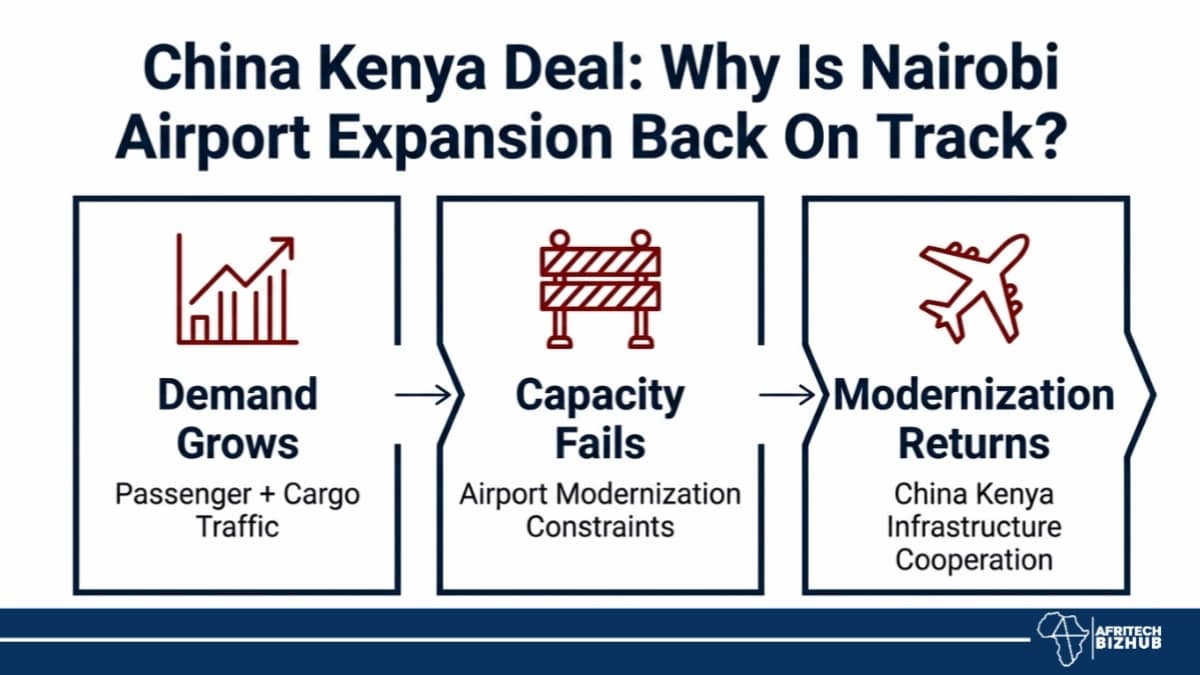
Why Is Airport Modernization Back on Kenya’s National Agenda?
Demand is forcing the issue.
Jomo Kenyatta International Airport remains one of Africa’s busiest aviation gateways, serving passengers, cargo operators, international airlines, and businesses that depend on reliable global connectivity.
Existing infrastructure was designed for a different stage of growth.
Current traffic levels and future projections place increasing pressure on facilities that were never intended to absorb unlimited expansion.
Competition is adding urgency. Airports across Africa are no longer competing solely for passengers.
They compete for airlines, logistics operators, cargo flows, investment, tourism, and regional influence.
Governments increasingly view Airport modernization as an economic strategy rather than a transport project because aviation infrastructure often determines how effectively economies connect to global markets.
Kenya’s decision to revive expansion plans reflects that reality.
Capacity constraints rarely announce themselves all at once.
They emerge gradually until growth begins colliding with infrastructure.
How Will Airport Expansion Transform Nairobi Airport Operations?
The immediate impact of Airport expansion is capacity.
Additional terminal space, upgraded facilities, improved cargo infrastructure, and enhanced operational systems are expected to reduce congestion while creating room for future growth.
Those improvements become increasingly important as airlines evaluate where to allocate aircraft, routes, and investment.
The significance extends beyond passenger experience.
Airports sit at the centre of tourism, exports, business travel, logistics, and international commerce.
More efficient operations improve the movement of both people and goods, strengthening the competitiveness of businesses that depend on global connectivity.
Airport modernization, therefore, influences far more than aviation performance.
It shapes how efficiently economic activity moves through the country.
For Nairobi airport, expansion is less about becoming larger and more about preventing growth from being constrained by infrastructure.
Why is China-Kenya Infrastructure Cooperation Returning to the Spotlight?
Large infrastructure projects require financing, engineering expertise, implementation capacity, and long-term commitment.
Those requirements help explain why China-Kenya cooperation continues to feature prominently in major transport projects across the country.
The airport expansion revives a familiar conversation.
China has played a significant role in Kenya’s infrastructure development through projects linked to transport, logistics, connectivity, and economic integration.
The renewed focus on Nairobi airport places that relationship back at the centre of discussions surrounding strategic infrastructure and long-term economic competitiveness.
The importance of the relationship extends beyond a single airport.
China-Kenya cooperation increasingly reflects a broader effort to build the systems required to support economic growth rather than simply the infrastructure visible on the surface.
How is China Africa Investment Reshaping Major Transport Projects?
The Nairobi airport project forms part of a wider pattern across the continent.
China Africa investment has been heavily concentrated in transport infrastructure, including ports, railways, roads, logistics corridors, and airports designed to improve connectivity between markets.
The Kenya Ministry of Roads and Transport has identified airport expansion as a critical component of efforts to strengthen national transport infrastructure and support future growth in passenger and cargo traffic.
The project reflects a broader understanding that infrastructure capacity influences trade competitiveness, tourism growth, logistics efficiency, and investment attraction.
The wider significance is difficult to ignore.
Across Africa, transport infrastructure is increasingly being treated as a competitive asset rather than a development objective.
What Does Nairobi Airport Expansion Mean for Kenya’s Future?
The most important question is not whether Nairobi airport becomes larger.
The more important question is whether Kenya remains ahead.
East Africa’s aviation landscape is becoming more competitive as governments invest in airports, logistics systems, and transport networks designed to attract airlines, businesses, cargo operators, and international travellers.
Historical advantages still matter. Infrastructure advantages matter more.
Airport modernization is returning because delay became more expensive than action.
Nairobi built its regional position through connectivity. The expansion suggests Kenya is not prepared to surrender it.


Recent Comments