

Featured Summary:
- Africa China Relations are evolving as global competition for minerals, energy, and strategic resources intensifies
- Africa possesses many of the resources required for industrial growth, energy security, and the global green transition
- Resource ownership has not always translated into economic strength, limiting Africa’s negotiating position
- The next phase of Africa China Relations may depend on how effectively African countries convert resource importance into economic leverage
The global economy is entering a period where access to resources is becoming as important as access to capital.
Governments are securing supply chains. Manufacturers are competing for critical minerals.
Energy security has returned to the centre of economic strategy. As competition intensifies, the value of controlling strategic resources is rising.
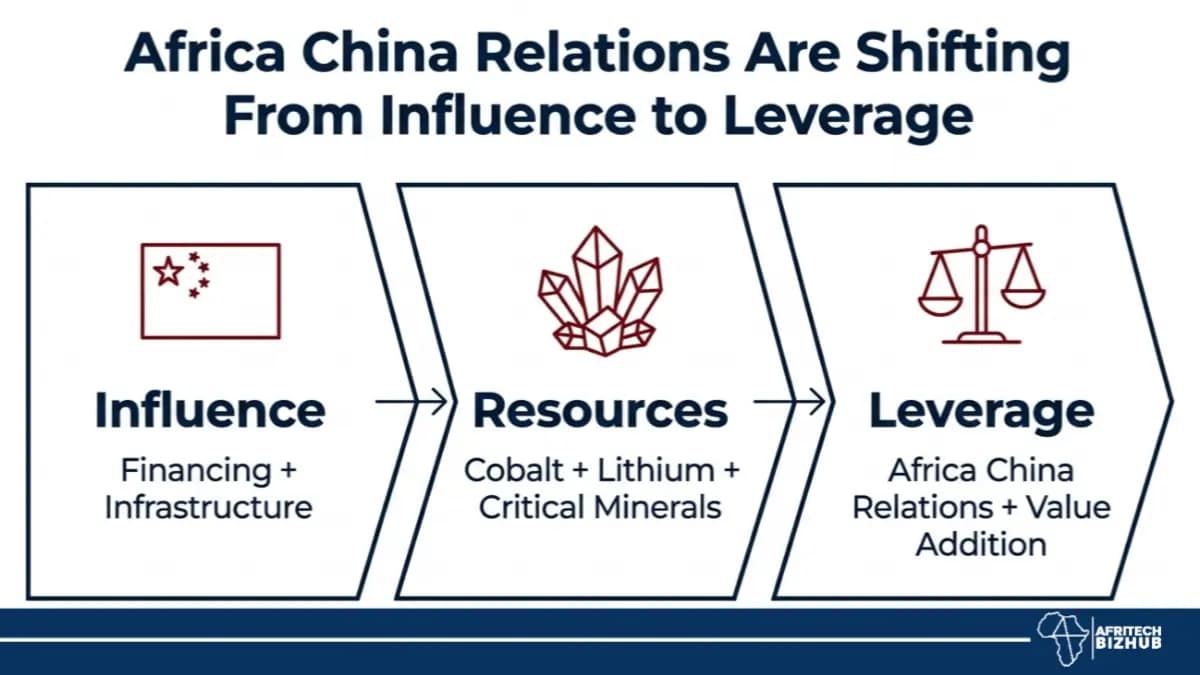
This shift is changing the foundations of Africa China Relations.
For years, the relationship was largely viewed through the lens of Chinese financing, infrastructure investment, and economic influence.
Yet many of the resources needed to support industrial growth, energy transition plans, and future manufacturing are located in Africa.
The question may no longer be how much influence China has in Africa.
The more important question may be how effectively Africa uses the leverage that growing global demand is creating.
Why Is Africa Becoming More Important to the Global Economy?
Africa’s growing importance is increasingly reflected in where future growth opportunities are emerging.
The continent is expected to account for a significant share of global population growth over the coming decades, while urbanisation, industrialisation, and rising consumer demand continue expanding economic activity across multiple sectors.
For businesses and governments looking beyond mature markets, Africa represents one of the few regions where long-term demand is still accelerating.
That demand extends beyond consumers.
African economies remain central to global energy production, agricultural exports, and the supply of industrial commodities that support manufacturing and technology development.
As governments and companies search for new sources of growth, Africa is becoming increasingly difficult to ignore.
The continent’s significance is no longer defined solely by what it can export. It is increasingly shaped by the scale of the market it is becoming.
How Are Africa China Relations Moving Beyond Infrastructure and Financing?
For much of the past two decades, Africa China Relations were largely defined by infrastructure projects, development financing, and trade agreements.
Roads, railways, ports, power projects, and industrial parks became the most visible symbols of the relationship across the continent.
That framework is beginning to evolve.
African governments are increasingly focused on industrial development, local manufacturing, technology adoption, and value addition, while Chinese firms continue seeking long-term commercial opportunities across multiple sectors.
The relationship is becoming less about financing individual projects and more about aligning economic interests.
Infrastructure remains important, but it is increasingly part of a broader conversation about production, industrial capacity, energy development, and economic growth.
Africa China Relations are therefore becoming more reciprocal than they once appeared.
Both sides are pursuing outcomes that support their own long-term economic objectives, creating a relationship driven less by one-directional influence and more by mutual interests.
Why Has Resource Wealth Not Become Resource Leverage?
Africa’s resource position has rarely been in doubt.
The continent is home to significant oil reserves, vast mineral deposits, agricultural assets, and many of the commodities that power global industries.
Yet ownership of strategic resources has not automatically translated into economic influence.
Many African economies continue to participate in global value chains primarily as suppliers of raw materials while higher-value processing, manufacturing, and industrial activity take place elsewhere.
The result is a recurring paradox.
Countries that export crude oil often import refined petroleum products.
Mineral-rich economies frequently export unprocessed commodities and import finished industrial goods at far higher prices.
Revenue is generated, but a substantial share of the value created along the supply chain is captured beyond the continent.
That limits bargaining power, weakens industrial development, and reduces the economic leverage that strategic resources can provide.
Possessing strategic resources and capturing strategic value are not always the same thing.
Resource wealth becomes leverage only when countries can convert ownership into stronger negotiating positions, greater industrial capacity, and a larger share of the value generated from the assets they control.
Why Is Africa’s Leverage Growing Faster Than Many Realise?
The value of Africa’s resources is becoming harder to ignore.
At the African Development Bank’s 2026 Annual Meetings in Brazzaville, experts estimated that Africa’s natural capital is worth approximately $6 trillion.
That figure reflects a resource base that is becoming increasingly important to industrial production, energy security, and future economic growth.
Cobalt, lithium, copper, rare earth minerals, and energy resources are no longer simply export commodities.
They are becoming strategic assets as governments and industries compete to secure future supply.
The global economy is becoming more dependent on resources that Africa already controls.
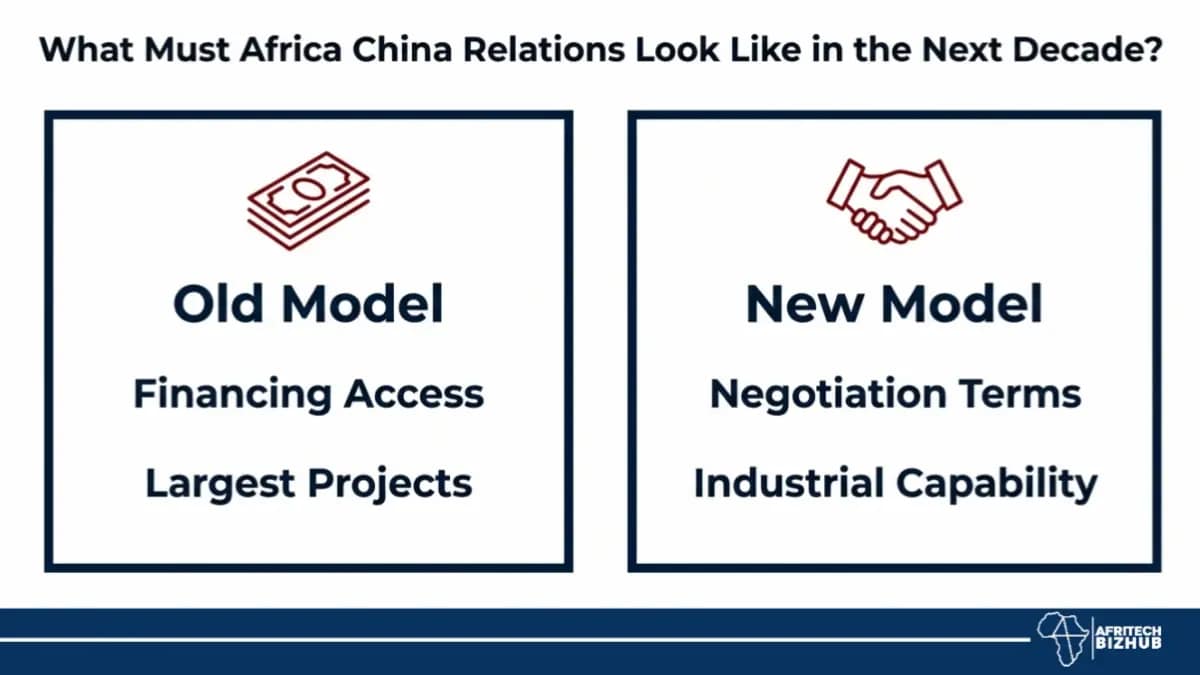
What Must Africa China Relations Look Like in the Next Decade?
The next phase of Africa China Relations may be shaped less by access to financing and more by the terms under which economic partnerships are negotiated.
As governments around the world strengthen industrial policies and secure strategic supply chains, African countries face a similar challenge: ensuring that economic partnerships contribute to domestic production, industrial expansion, and long-term value creation.
The opportunity is no longer simply attracting investment. It is using investment to strengthen national and regional economic capacity.
Countries that secure better outcomes from Africa China Relations will not necessarily be those that attract the largest projects.
They will be those that negotiate partnerships that deepen industrial capability, expand value addition, and create greater economic benefits at home.
The future of Africa China Relations may depend less on who has the resources and more on who negotiates them most effectively.


Recent Comments