


Last updated: June 16, 2026
Featured Summary:
- Satellite internet Africa is accelerating via Kenya’s Kuiper Gateway and Starlink hubs, expanding regional access.
- Amazon satellite internet and SpaceX Starlink are competing to define the next phase of internet Africa.
- Rural internet Africa could finally reach communities long disconnected from broadband infrastructure.
- Kenya’s strategic role in satellite deployment positions it as a gateway for continental digital connectivity.
Africa’s internet expansion is entering a new phase.
Mobile and terrestrial broadband networks laid the groundwork, but satellite internet Africa now promises to reach areas beyond fibre and cellular coverage.
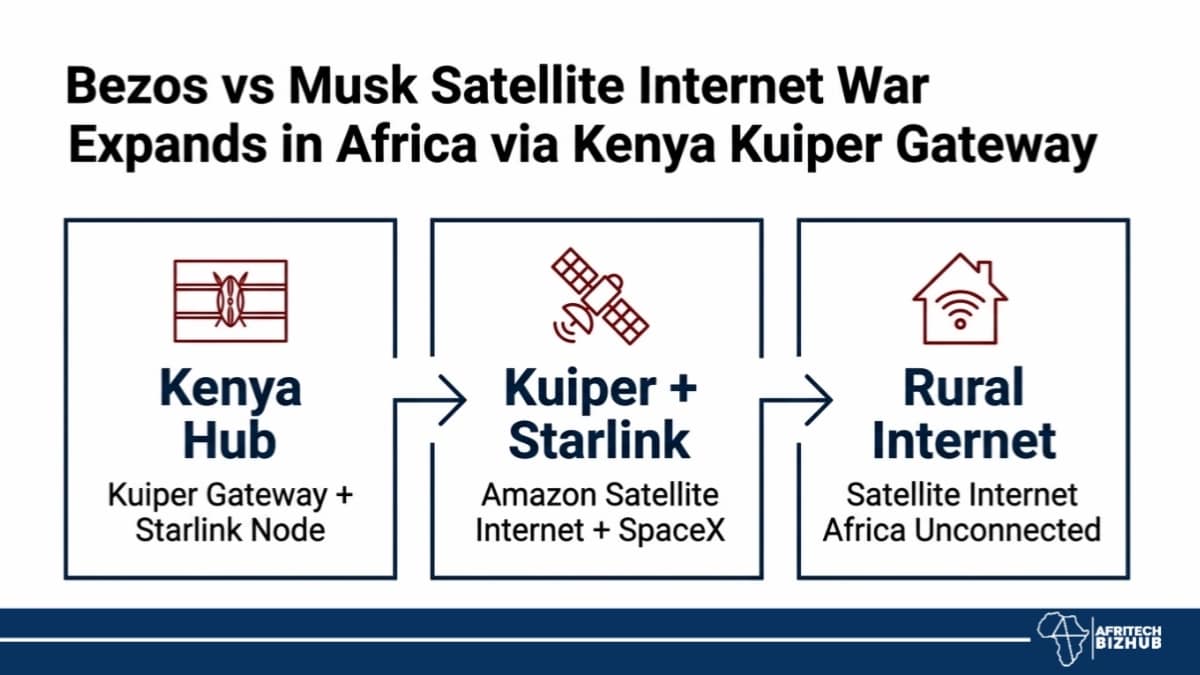
Kenya has become central to this evolution, serving as a landing hub for Amazon’s Kuiper network and a strategic node for SpaceX’s Starlink operations.
The contradiction is clear: Africa has long suffered uneven connectivity, yet global tech giants are now investing heavily in infrastructure and gateways to bring rural internet Africa into reach.
This is not a story about users; it is a story about ecosystem control, capacity, and continental digital inclusion.
Is Kenya Leading the Satellite Internet Africa Race?
Kenya’s geographic position, regulatory openness, and infrastructure readiness make it an attractive landing point for satellite internet networks.
Observed patterns show that both Amazon Kuiper and Starlink view Kenya as a gateway for wider East African coverage.
The deployment strategy goes beyond urban centres.
Satellite hubs here allow companies to link multiple regional markets, offering both consumer and enterprise connectivity.
Kenya’s regulatory and spectrum environment provides a relatively predictable framework for satellite operators, which is increasingly rare across Africa.
By hosting these operations, Kenya strengthens its continental influence in the satellite internet Africa landscape.
Early adoption and infrastructure deployment give the country a competitive edge in shaping digital inclusion policies, spectrum usage, and regional interoperability.
Will Internet Africa Shift Through Kenya Hub?
Satellite internet Africa relies on strategic ground stations, gateways, and connectivity nodes to reach remote communities.
Kenya’s Kuiper and Starlink nodes will route data across borders, linking previously unconnected rural areas.
Observed trends indicate that regional routing through Kenya could accelerate cross-border internet adoption while reducing latency for underserved markets.
The hub model also allows for centralized network management, operational monitoring, and regulatory coordination.
Africa’s rural internet adoption may therefore hinge on how effectively hubs like Kenya’s manage bandwidth allocation, latency, and service quality across multiple countries.
The shift implies that internet Africa is not purely about satellite technology.
It is about strategic infrastructure placement, cross-border coordination, and regional operational control.
How Amazon Satellite Internet Challenges Starlink Dominance?
Amazon’s Kuiper network enters Africa with a deliberate strategy: complement existing Starlink coverage rather than simply compete head-on.
Observed deployment patterns suggest Kuiper emphasizes multi-service capabilities, mini-app integration for local financial services, and partnerships with telcos for regional reach.
Starlink, with its existing footprint, continues to dominate early adopters and high-demand urban corridors.
Kuiper’s entry creates competitive tension, prompting innovations in pricing, service reliability, and localized infrastructure support.
Observers note that this competition may accelerate adoption of satellite internet Africa while encouraging interoperability and standardization across networks.
The larger signal is strategic: infrastructure ownership, regional gateways, and service ecosystems are becoming as important as technology itself in determining which satellite provider shapes Africa’s digital future.
Can Rural Internet Africa Finally Reach Communities?
Rural internet Africa has long been limited by terrain, low population density, and high deployment costs.
Satellite deployments via Kenya promise to overcome these barriers.
Observed adoption trends suggest that the combination of Kuiper’s and Starlink’s gateways can deliver connectivity to schools, hospitals, small businesses, and households previously excluded from digital networks.
Satellite internet Africa can finally extend reliable coverage beyond major cities, provided ground infrastructure, regulatory coordination, and spectrum management are aligned.
This also enables new digital services such as remote learning, telemedicine, and fintech applications to reach rural populations.
Is Rural Internet Transforming the Kenyan Connectivity Landscape?
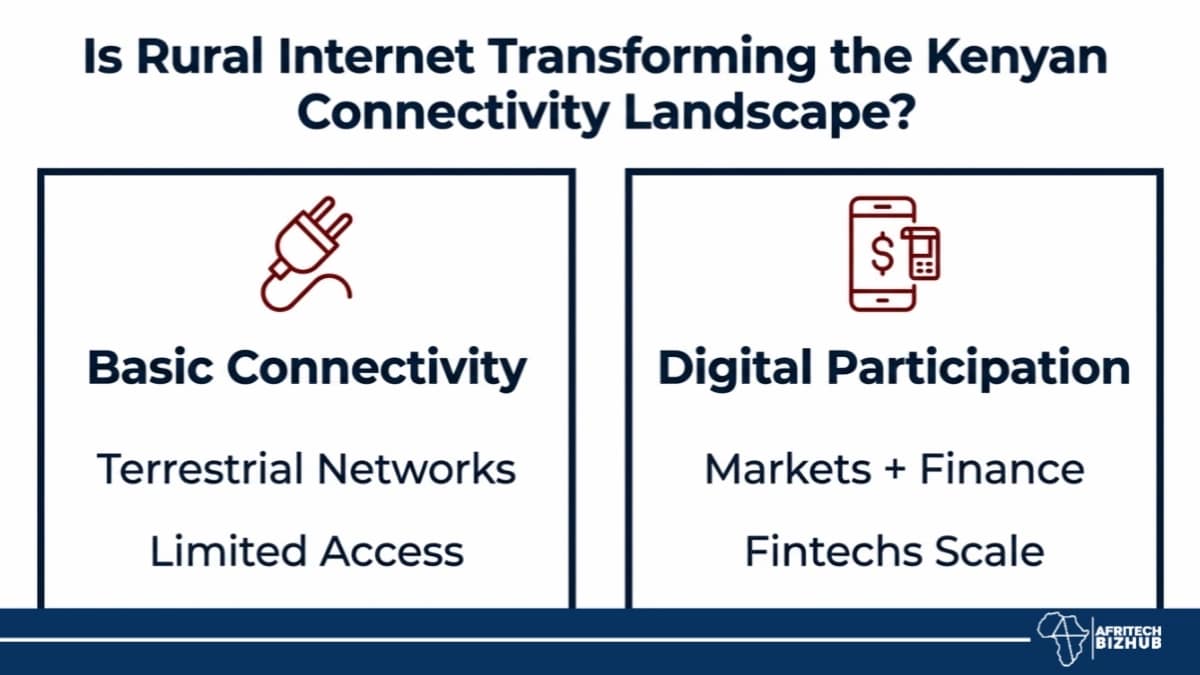
Observed trends indicate that rural internet Africa is not only expanding access but reshaping economic activity.
Farmers, entrepreneurs, and local businesses gain real-time access to markets, finance, and information.
Communities once reliant on terrestrial networks are now linked into continental commerce and social networks.
Kenya’s role as a satellite gateway creates cascading effects across East Africa.
Rural internet adoption strengthens digital ecosystems, encourages mobile money integration, and allows fintechs and educational platforms to scale.
The outcome is a shift from basic connectivity to integrated digital participation, where infrastructure placement, ecosystem coordination, and service diversity determine the impact.


Recent Comments