


Featured Summary:
- Telecom infrastructure remains one of the biggest determinants of digital participation across Africa.
- Rural connectivity continues to lag behind digital-economy ambitions in many markets.
- 5G network expansion depends on deeper investment in towers, fibre, and supporting infrastructure.
- Digital inclusion becomes difficult to achieve when network infrastructure fails to reach underserved communities.
Nigeria wants a larger digital economy.
It wants stronger digital services.
It wants broader adoption of artificial intelligence, fintech, ecommerce, cloud computing, and digital government platforms.
Those ambitions increasingly depend on a less glamorous question: who builds the infrastructure?
Recent engagements involving NUCAP Telecom, the Federal Ministry of Communications, Innovation and Digital Economy, and China Industrial Bank bring that reality into focus.
Much of the conversation around digital transformation centres on software, applications, and emerging technologies.
Yet none of those systems operate without telecom infrastructure capable of carrying them.
That remains one of the most important challenges facing Africa’s digital economy.
The continent’s digital ambitions continue expanding.
Infrastructure coverage does not always expand at the same pace.
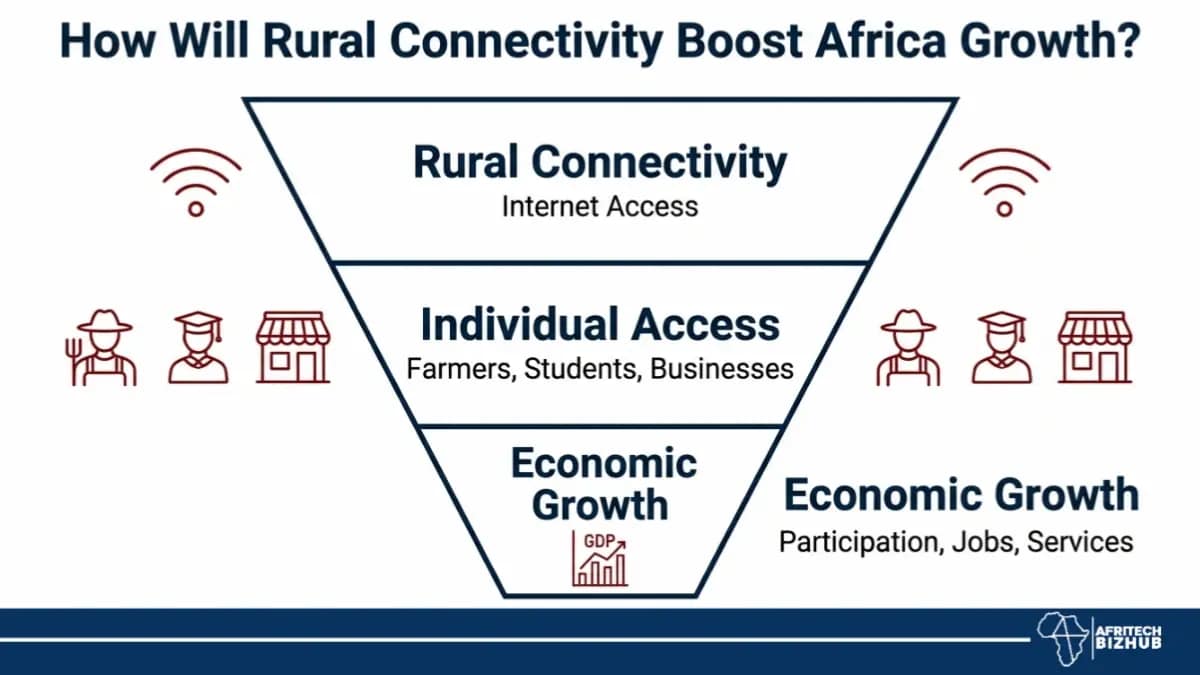
How Will Rural Connectivity Boost Africa Growth?
The digital economy often appears borderless from a city office or smartphone screen.
Large parts of Africa experience a different reality.
Millions of people remain outside reliable connectivity networks or depend on inconsistent access to digital services.
The gap affects more than communication.
It affects participation.
Farmers struggle to access market information.
Small businesses struggle to reach customers digitally.
Students struggle to access online learning resources.
Financial services become harder to reach.
Government services become harder to access.
This is why rural connectivity increasingly sits at the centre of economic discussions rather than telecommunications discussions.
The communities that remain disconnected are often the same communities excluded from many of the opportunities digital economies create.
Connectivity is no longer simply about access to networks.
It is increasingly about access to economic participation itself.
Will 5G Network Transform Africa Telecom Sector?
The excitement surrounding 5G often creates the impression that technological upgrades alone will transform connectivity.
The reality is more demanding.
Faster networks still depend on towers.
They still depend on fibre.
They still depend on power infrastructure.
They still depend on investment.
A 5G network cannot solve coverage gaps if the underlying telecom infrastructure remains insufficient.
That tension is becoming increasingly visible across African markets.
Digital demand continues rising. Consumers use more data.
Businesses depend more heavily on connected systems.
Governments continue digitising services.
Yet infrastructure deployment often determines how much of that demand can actually be served.
Technology may attract headlines.
Telecom infrastructure determines how far the technology reaches.
How Is Telecom Infrastructure Expanding Rural Nigeria?
The most important digital investments are often the least visible.
Telecom towers rarely attract the same attention as new applications, fintech platforms, or artificial intelligence tools.
Yet telecom infrastructure remains the foundation on which those services depend.
Every mobile payment, video call, digital transaction, and online service begins with a network connection.
That reality explains the significance of projects focused on expanding coverage into underserved areas.
For operators, the challenge is rarely technical.
The challenge is economic.
Rural deployment often requires substantial investment while generating slower returns than urban markets.
This is one reason financing partnerships continue playing an important role in network expansion.
The broader impact extends beyond telecommunications.
One piece of telecom infrastructure can support schools, hospitals, financial services, businesses, and government platforms simultaneously.
The value spreads far beyond the network itself.
Can Digital Inclusion Bridge Nigeria Access Gap?
The discussion around digital inclusion often begins with devices and internet access.
The deeper challenge sits underneath both.
Infrastructure determines who can participate.
According to Nigeria’s Federal Ministry of Communications, Innovation and Digital Economy, engagements involving NUCAP Telecom and China Industrial Bank form part of broader efforts to strengthen telecom infrastructure and improve connectivity across the country.
That objective matters because digital inclusion rarely succeeds through connectivity alone.
Coverage matters.
Affordability matters.
Skills matter.
Infrastructure matters.
Remove one component and participation becomes harder to sustain.
The lesson is increasingly difficult to ignore.
Digital inclusion is not created when people come online once.
It is created when people can remain connected long enough to benefit economically from that connection.
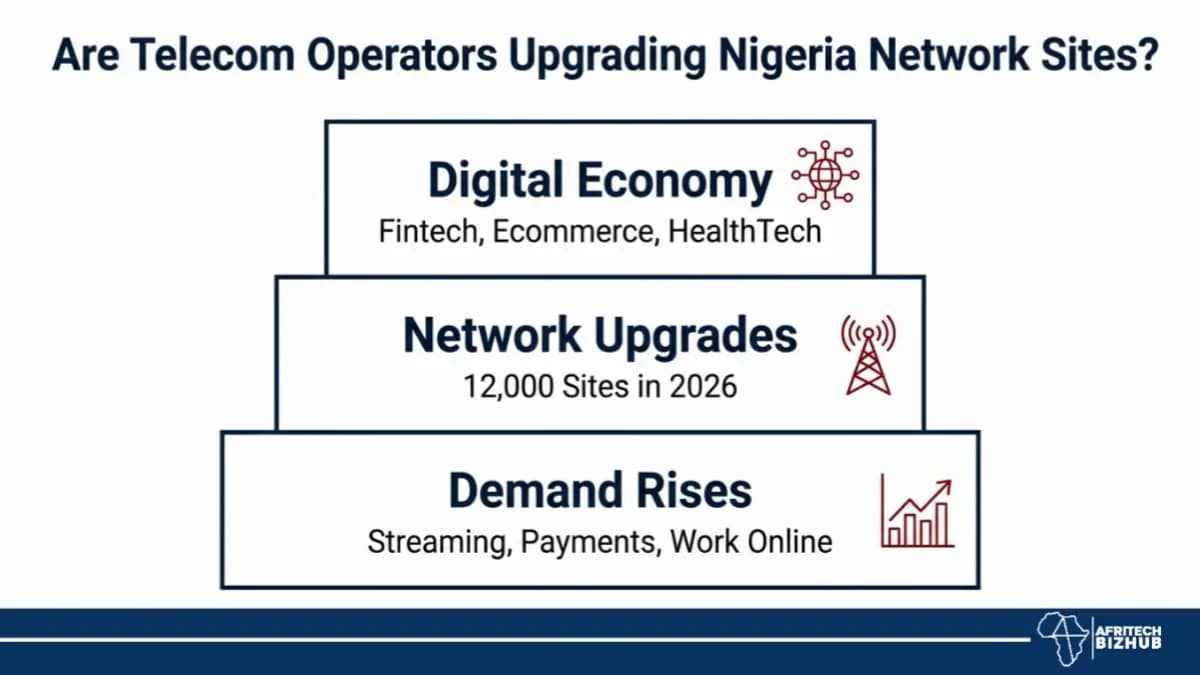
Are Telecom Operators Upgrading Nigeria Network Sites?
More Nigerians now stream content, use digital payments, access cloud-based services, participate in ecommerce, and depend on mobile banking than they did a few years ago.
Every one of those activities increases pressure on existing networks.
Telecom operators are not upgrading infrastructure because it is fashionable.
They are upgrading because digital activity continues growing faster than many existing systems were designed to handle.
That pressure is unlikely to ease.
The bigger issue extends beyond Nigeria.
Across Africa, governments continue discussing artificial intelligence, digital transformation, financial technology, and innovation-led growth.
Those ambitions are important.
None of them eliminate the need for telecom infrastructure.
Countries do not enter digital economies through policy announcements alone.
They enter through infrastructure.
The next phase of Africa’s digital economy may depend less on the technologies being discussed and more on whether the underlying networks reach the people expected to use them.


Recent Comments