


Featured Summary:
- Africa telecoms is extending connectivity deeper into underserved West African markets through U.S.-supported network expansion.
- West Africa internet growth is shifting toward areas traditional telecom investment often ignored.
- Digital infrastructure now matters as much as mobile subscriptions in determining connectivity.
- Rural internet access may influence where the next generation of telecom connections emerges.
West Africa’s internet gap is increasingly becoming a problem of infrastructure reach rather than digital demand.
Millions already participate in mobile and digital economies, yet large parts of the region remain outside reliable network coverage because investment repeatedly concentrated around commercially attractive areas instead of broad access.
The latest U.S.-supported telecom initiative attempts to push that boundary further by supporting studies around deployment of roughly 1,500 telecommunications base stations across Nigeria, Ghana, Benin, and Côte d’Ivoire.
The bigger shift sits beyond infrastructure itself.
The next phase of Africa telecoms may depend less on attracting users and more on extending digital access into places previous investment cycles repeatedly left behind.
How Will US Africa Telecoms Funding Expand Connectivity?
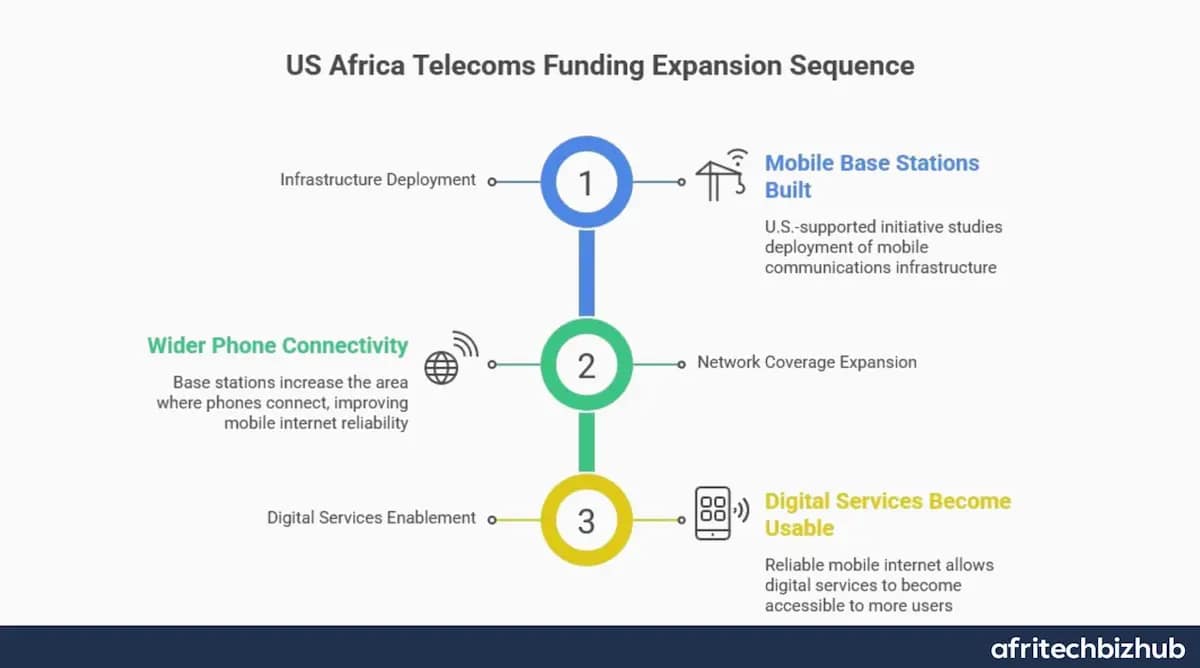
Telecom funding works in a simple sequence: infrastructure appears first, connections follow later.
The U.S.-supported initiative focuses on studying deployment of mobile communications infrastructure intended to extend network coverage across selected West African markets.
Base stations increase the area where phones connect, mobile internet works more reliably, and digital services become usable.
That matters because connectivity problems rarely begin with people refusing to use the internet.
Many communities simply sit outside profitable network zones.
Once infrastructure reaches those areas, telecom connections usually grow because businesses, schools, payment systems, and households finally gain access to a usable signal instead of intermittent coverage.
Why Is West Africa Internet Expansion Accelerating Fast?
Internet expansion across West Africa is accelerating because telecom growth increasingly depends on expanding network reach rather than acquiring already connected users.
Mobile penetration, digital payments, online services, and public-sector digitization are widening demand beyond urban centers and changing how operators evaluate investment returns.
That shift is changing infrastructure decisions.
Markets once viewed as commercially marginal are becoming more attractive as digital activity deepens and underserved users generate broader economic participation.
Can Digital Infrastructure Bridge West Africa’s Connectivity Gap?
Digital infrastructure solves an access problem before it becomes an economic opportunity.
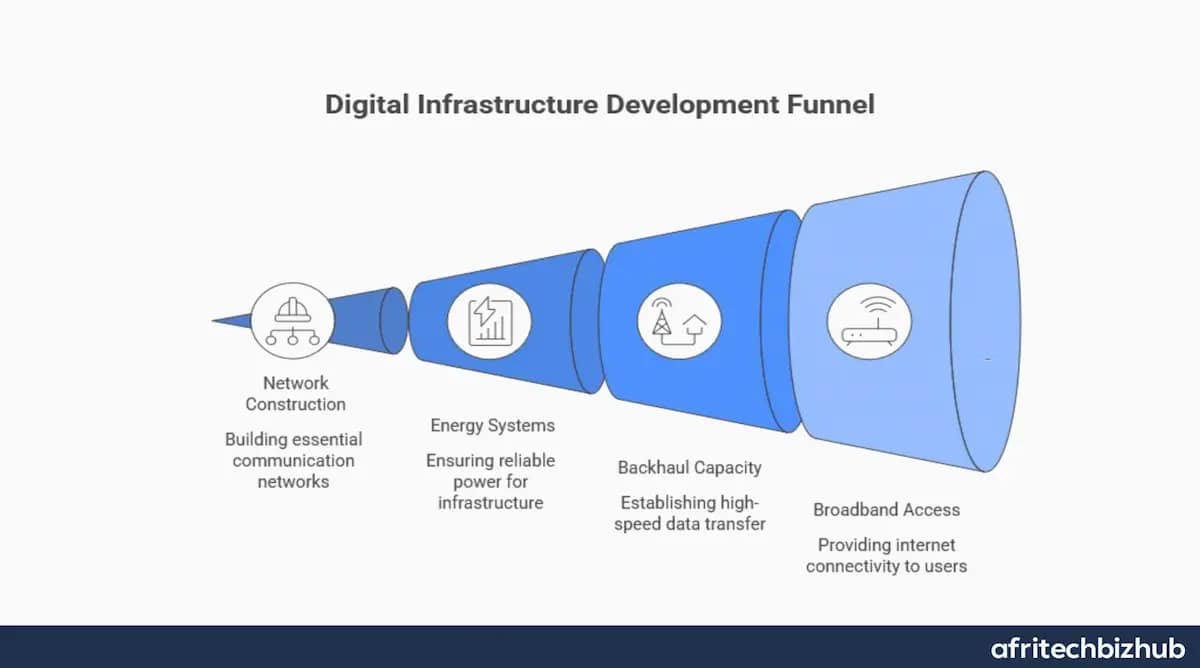
Networks, towers, energy systems, backhaul capacity, and broadband infrastructure determine whether businesses, schools, households, and public services can participate in digital markets at all.
Without those layers, demand cannot convert into reliable internet usage.
The World Bank has consistently identified digital infrastructure as a foundational condition for stronger digital participation and broader economic inclusion across developing economies.
The institution notes that connectivity outcomes increasingly depend on infrastructure availability, service quality, and the ability to extend access beyond commercially concentrated areas.
Across West Africa, the implication is becoming clearer: the next phase of Africa telecoms may depend less on subscriber growth and more on whether infrastructure deployment reaches markets previous investment cycles repeatedly left behind.
How Will Rural Internet Access Boost Telecom Connections?
A network connection changes value once people start building around it.
Rural internet access creates conditions for local businesses to reach customers, schools to access digital learning, healthcare systems to exchange information, and households to participate in financial services.
The next phase of Africa telecoms will be decided less by who announces the largest investment figures and more by who extends reliable connectivity into places traditional expansion models repeatedly overlooked.
Subscriber growth alone increasingly says less about market strength than infrastructure reach.
Operators that solve rural access early will shape how West Africa participates in the digital economy over the next decade.


Recent Comments