


Featured Summary:
- Yango Africa is extending its position beyond ride-hailing into logistics and wider mobility services.
- Yango expansion is increasing pressure on Uber competitors across African urban markets.
- Multi-service mobility platforms are creating new competition around customer retention and urban movement.
- Transport technology is becoming the deciding advantage as mobility platforms compete for long-term urban scale.
Yango’s Africa expansion reflects a broader shift unfolding across urban mobility markets.
Ride-hailing is increasingly becoming the entry point rather than the business model itself as platforms expand into logistics, delivery, mapping, and adjacent services.
The competitive question is changing.
The next phase of urban mobility may depend less on moving passengers and more on controlling how people, goods, and services move through African cities.
How Is Yango Africa Challenging Uber Competitor Dominance?
Yango Africa is competing through service integration rather than ride supply alone.
Urban transport users across African markets increasingly make decisions based on convenience, service availability, transaction simplicity, and how many activities can happen inside one platform.
Ride-hailing remains the visible product, but platform depth increasingly shapes retention.
That approach places pressure on Uber competitors and local mobility startups operating narrower models.
A platform connecting movement, delivery, routing, and payments reduces the number of decisions users make across the day.
In transport markets where switching costs remain low, keeping users inside one ecosystem matters as much as acquiring them.
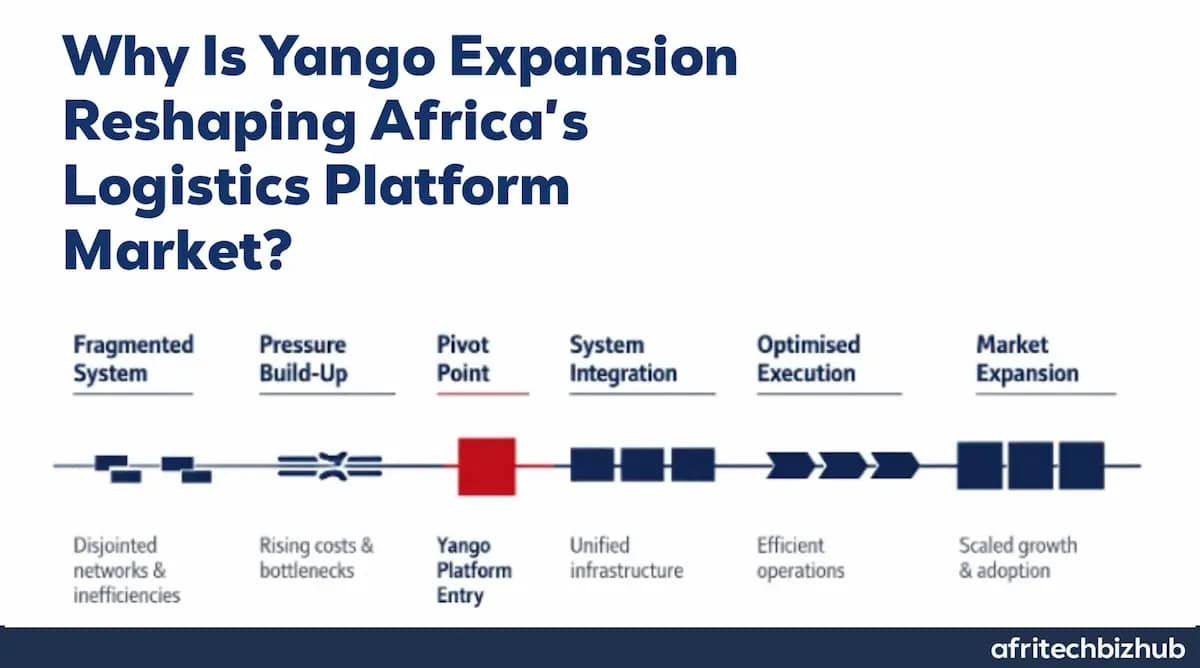
Why Is Yango Expansion Reshaping Africa’s Logistics Platform Market?
The stronger implication of Yango expansion sits inside logistics economics rather than passenger movement alone.
African cities continue carrying high delivery costs, fragmented route coordination, inconsistent fulfillment systems, and rising expectations around speed and reliability.
Those inefficiencies create room for platforms that combine transport infrastructure with logistics execution.
That shift places logistics platforms under a different type of pressure. Competition no longer starts when a parcel is dispatched.
It starts when users open an app. Once transport, delivery coordination, and digital transactions operate inside one environment, mobility platforms begin competing for larger portions of urban commercial activity.
Can Mobility Startup Yango Africa Build a Super App?
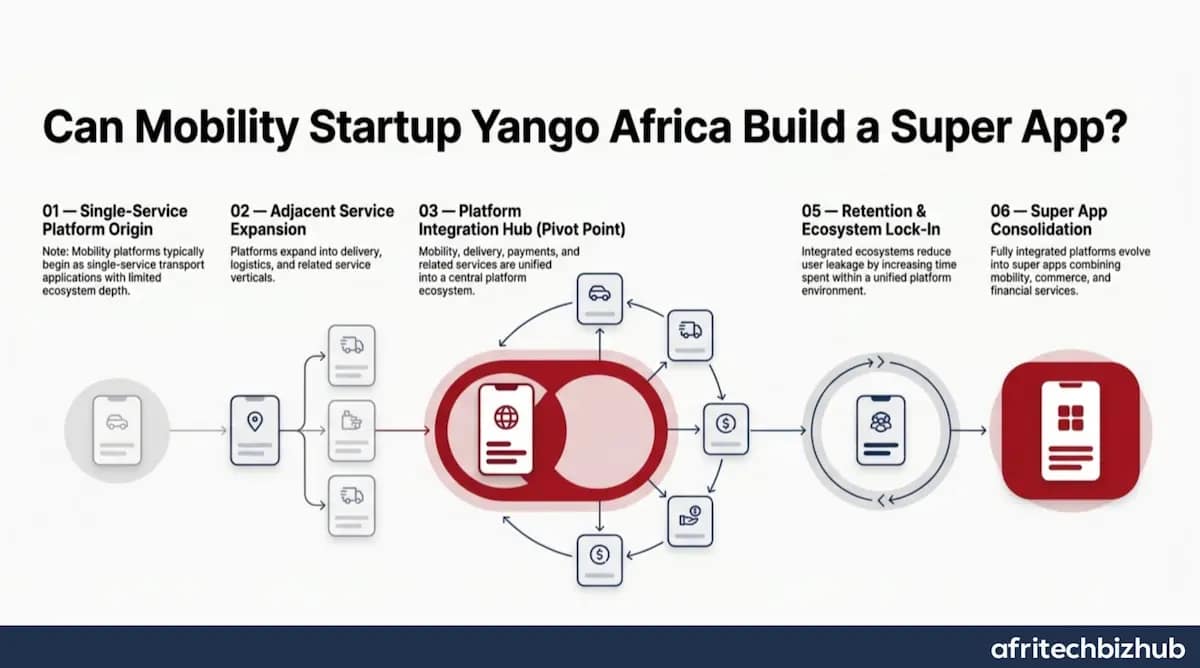
Yango Africa’s wider service structure places the company closer to a multi-service platform model increasingly visible across emerging markets.
Combining mobility, delivery, payments, and related services gives operators more opportunities to increase engagement and reduce user leakage across competing platforms.
The Organisation for Economic Co-operation and Development (OECD) has highlighted that digital platforms operating across multiple services can strengthen network effects and reinforce competitive advantages as users spend more activity inside one ecosystem.
That logic becomes increasingly relevant because scale alone rarely protects platform businesses over time.
Service integration tends to create stronger user retention than geographic expansion by itself.
How Is Transport Technology Driving Yango Expansion Across Africa?
Transport technology now carries more weight than market entry announcements.
Dispatch systems, route optimization, mapping capability, payment integration, driver coordination, and operational visibility increasingly determine whether mobility businesses improve reliability at scale or simply add more users into inefficient systems.
Yango’s longer-term position across African markets may depend less on how many countries it enters and more on whether its systems reduce friction inside real urban conditions.
African mobility markets increasingly reward platforms that make movement easier, transactions faster, and logistics more predictable rather than those expanding faster than operations can support.


Recent Comments