


Featured Summary:
- Funding pressure across Nigerian startups is forcing investors to prioritize profitability, operational discipline, and long-term sustainability over aggressive expansion.
- Urban mobility restrictions in Lagos disrupted the operational model many transport startups were originally built around.
- Gokada’s Chapter 11 filing is intensifying concerns around regulation, profitability, and the long-term viability of African mobility startup
Nigeria’s startup ecosystem spent years selling investors a vision of fast-moving urban mobility platforms capable of transforming transport, logistics services, and digital commerce across major cities.
Gokada became one of the most visible names inside that movement.
Now the company’s bankruptcy process is reopening uncomfortable questions around regulation, investor patience, and whether parts of Africa’s startup ecosystem expanded faster than the business environment could realistically support.
What Forced Gokada Into Delaware Bankruptcy Proceedings?
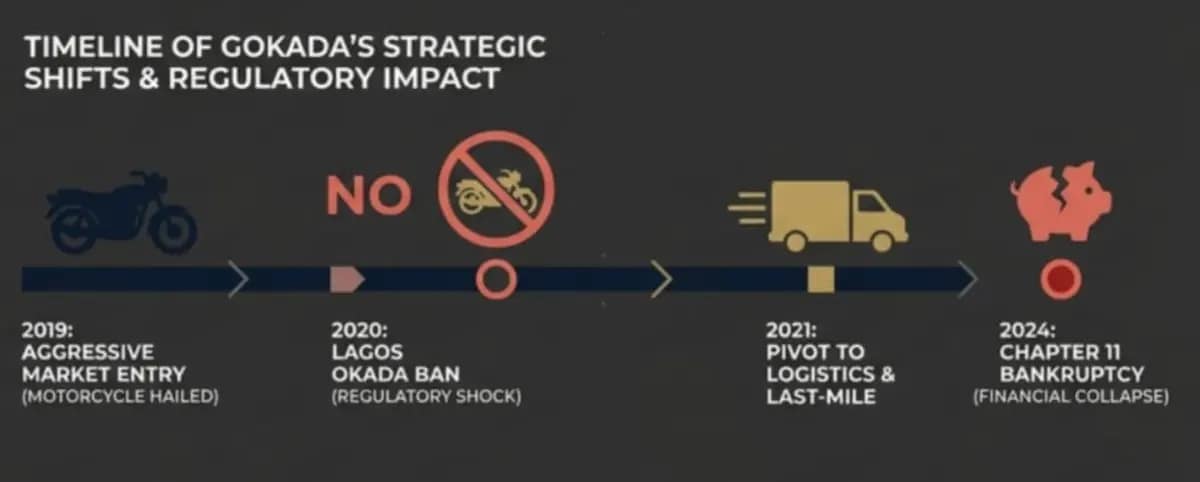
Gokada’s move into Delaware bankruptcy proceedings follows years of operational pressure linked to transport restrictions, funding uncertainty, and changing business conditions across Nigeria’s urban mobility sector.
The company initially built its model around motorcycle ride-hailing before Lagos restrictions on commercial motorcycles disrupted a large part of that business structure.
The pressure did not stop with regulation alone. Nigerian startups across logistics services, fintech, and mobility sectors are now operating inside a tougher investment environment where profitability matters more than expansion headlines.
Startup investors are becoming more cautious about companies still struggling to show stable long-term revenue models after years of aggressive growth-focused funding cycles.
Are Startup Investors Losing Confidence in Nigerian Startups?
The broader funding environment around African technology companies has changed significantly over the last few years.
Startup investors who once prioritized rapid expansion and market capture are now placing heavier attention on operational sustainability, cash flow, and realistic growth expectations across Nigerian startups and wider African technology markets.
That shift is becoming more visible inside sectors heavily dependent on regulation and infrastructure stability.
Investors still see long-term opportunity inside Africa’s digital economy, but confidence has become more selective.
Companies operating inside urban mobility and logistics services now face tougher questions around profitability, regulatory risk, and whether business models can survive sudden policy changes in large urban markets like Lagos.
How Did Urban Mobility Restrictions Hurt Gokada’s Growth?
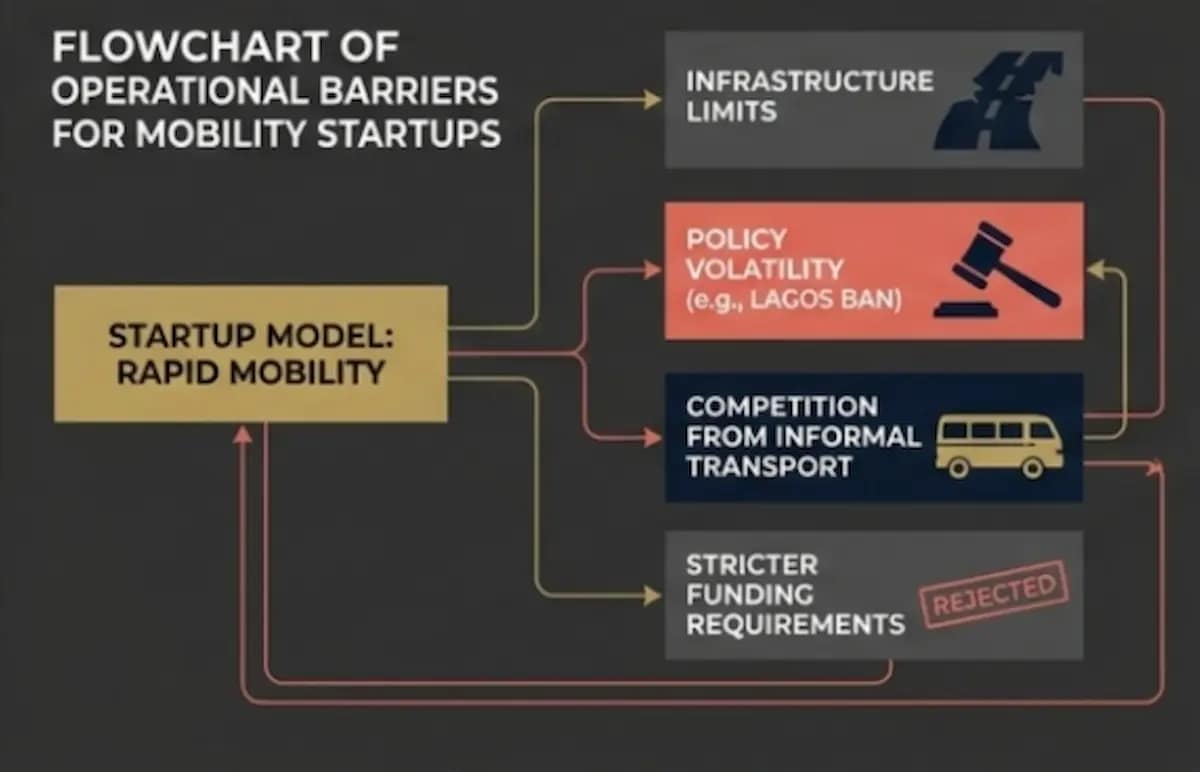
The Lagos government’s restrictions on commercial motorcycles changed the economics of urban mobility startups almost overnight.
Companies built around bike-hailing services suddenly faced operational disruption, route limitations, and rising uncertainty around how transport technology businesses could continue scaling inside Nigeria’s largest commercial city.
The World Bank has repeatedly highlighted how congestion, transport limitations, and infrastructure pressure continue affecting mobility systems across rapidly growing cities in developing economies.
Lagos reflects many of those broader urban transport pressures, where mobility regulation remains closely tied to debates around safety, congestion management, informal transportation systems, and urban planning.
The challenge for mobility startups is that innovation alone does not remove regulatory risk when transport policy shifts faster than business models can adapt.
Why Is Gokada Seeking Chapter 11 Bankruptcy Protection?
Gokada’s Chapter 11 filing reflects how difficult urban mobility remains in markets where transport regulation, infrastructure pressure, operational costs, and investor expectations continue colliding simultaneously.
The company’s restructuring process is now becoming part of a wider recalibration happening across African mobility startups as expansion-focused business models face heavier commercial scrutiny.
The larger pressure building across Nigeria’s urban mobility sector is no longer centered only on growth.
Investors increasingly want companies capable of surviving regulatory shocks, maintaining operational stability, and generating more predictable revenue inside volatile urban environments.
African mobility startups are still attracting long-term interest, but the era of growth without stronger operational discipline is beginning to narrow significantly.


Recent Comments