


Featured Summary:
- Kenya AI infrastructure is expanding as governments, businesses, and technology firms increase demand for computing capacity.
- Data centres are becoming strategic economic assets rather than purely technology facilities.
- ICT policy is increasingly influencing where digital infrastructure investment flows across Africa.
- Renewable energy is emerging as a competitive advantage in the race to attract AI and cloud-computing infrastructure.
Kenya is attracting data-centre investment at the same moment global demand for AI computing infrastructure is accelerating.
That is unlikely to be a coincidence.
Across Africa, governments continue discussing artificial intelligence, digital transformation, cloud services, and technology-led growth.
Behind those ambitions sits a less visible reality.
Every AI model, cloud platform, digital-payment system, and online service depends on computing capacity.
The countries building that capacity are increasingly positioning themselves for the next phase of digital growth.
That is why Kenya AI infrastructure is attracting growing attention.
The story is no longer simply about technology adoption.
It is increasingly about whether infrastructure can keep pace with digital demand.
How Is Kenya AI Infrastructure Evolving Rapidly?
AI adoption receives the headlines.
Computing capacity receives the investment.
Across Kenya, demand for digital services continues expanding.
Banks process larger volumes of transactions.
Businesses operate through cloud platforms.
Governments deliver more services digitally.
Telecommunications networks carry increasing amounts of data.
Every activity places additional pressure on digital infrastructure.
The response is becoming visible through investment in data centres, fibre networks, cloud infrastructure, and computing facilities capable of supporting future workloads.
Kenya AI infrastructure is expanding because demand is already arriving.
Infrastructure often determines where digital activity settles.
Applications can move quickly across borders.
Computing capacity is tied to physical assets.
Countries that build those assets early frequently strengthen their position within regional digital economies.
What Drives AI Infrastructure Investment Growth In Africa?
The enthusiasm surrounding artificial intelligence often obscures a simpler reality.
Digital economies consume infrastructure.
Every payment platform, streaming service, ecommerce marketplace, cloud application, and AI system requires storage, connectivity, and processing power.
As digital activity expands, infrastructure demand follows.
This is why investment in data centres continues increasing across multiple African markets.
The infrastructure story increasingly sits behind the AI story.
Africa’s AI ambitions increasingly depend on infrastructure that does not yet exist at the scale future demand may require.
That gap is helping drive investment decisions today.
Kenya AI infrastructure reflects a broader continental shift where digital growth is beginning to translate into long-term infrastructure spending.
How Does ICT Policy Enable Cloud Expansion?
Infrastructure investment rarely follows technology alone.
Large-scale digital projects require long investment horizons.
Data centres take years to develop.
Cloud infrastructure requires significant capital commitments.
Investors therefore pay close attention to regulatory conditions before deploying funds.
Licensing frameworks, taxation policies, data-governance rules, connectivity requirements, and cross-border data regulations increasingly influence investment decisions.
Investors can tolerate technological uncertainty.
They rarely tolerate regulatory uncertainty.
This is why ICT policy has become a strategic factor in digital infrastructure development.
Countries competing for digital investment are increasingly competing through policy credibility as much as technological capability.
Clear rules often attract capital more effectively than ambitious announcements.
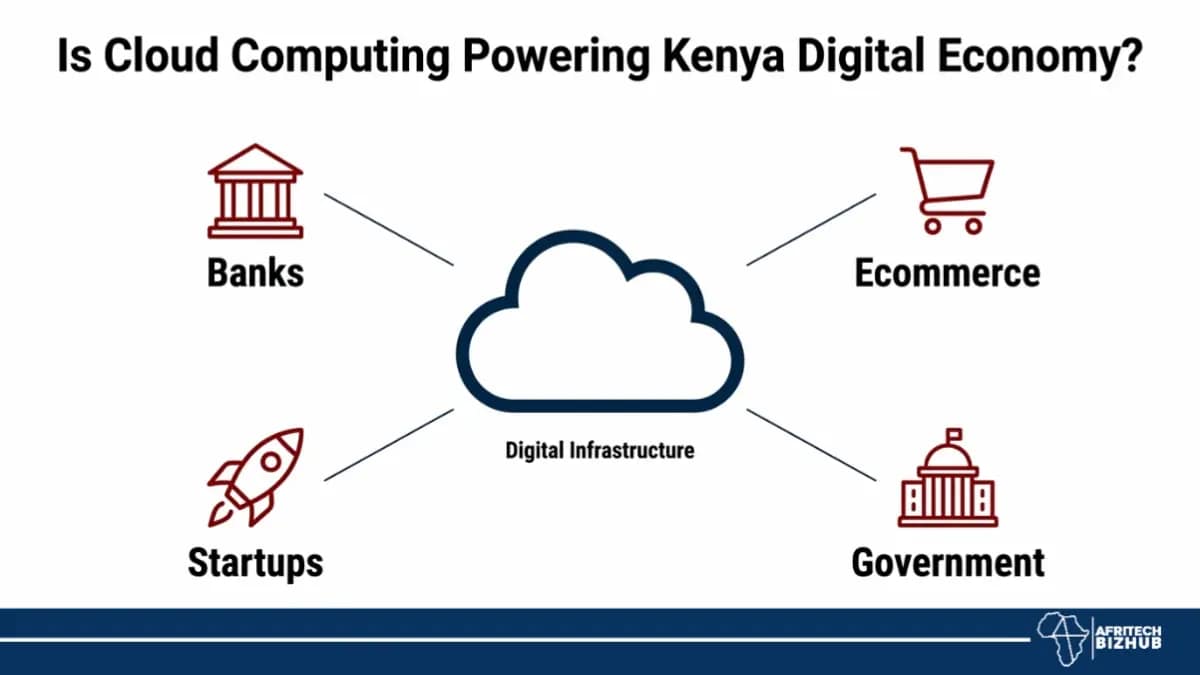
Is Cloud Computing Powering Kenya Digital Economy?
The relationship between cloud computing and digital growth is becoming increasingly difficult to separate.
Businesses rely on cloud infrastructure to scale operations.
Financial institutions use cloud platforms to support transactions.
Startups launch services without building expensive in-house computing environments.
Governments increasingly deploy digital services through cloud-based systems.
Demand continues building underneath multiple sectors simultaneously.
According to Kenya’s Ministry of Information, Communications and the Digital Economy, the country is expanding data-centre capacity as part of broader efforts to strengthen digital infrastructure and support future demand for cloud services and advanced computing technologies.
Cloud computing is no longer simply a technology service.
It is increasingly becoming part of the infrastructure through which economic activity moves.
That helps explain why Kenya AI infrastructure continues attracting attention from investors and policymakers alike.
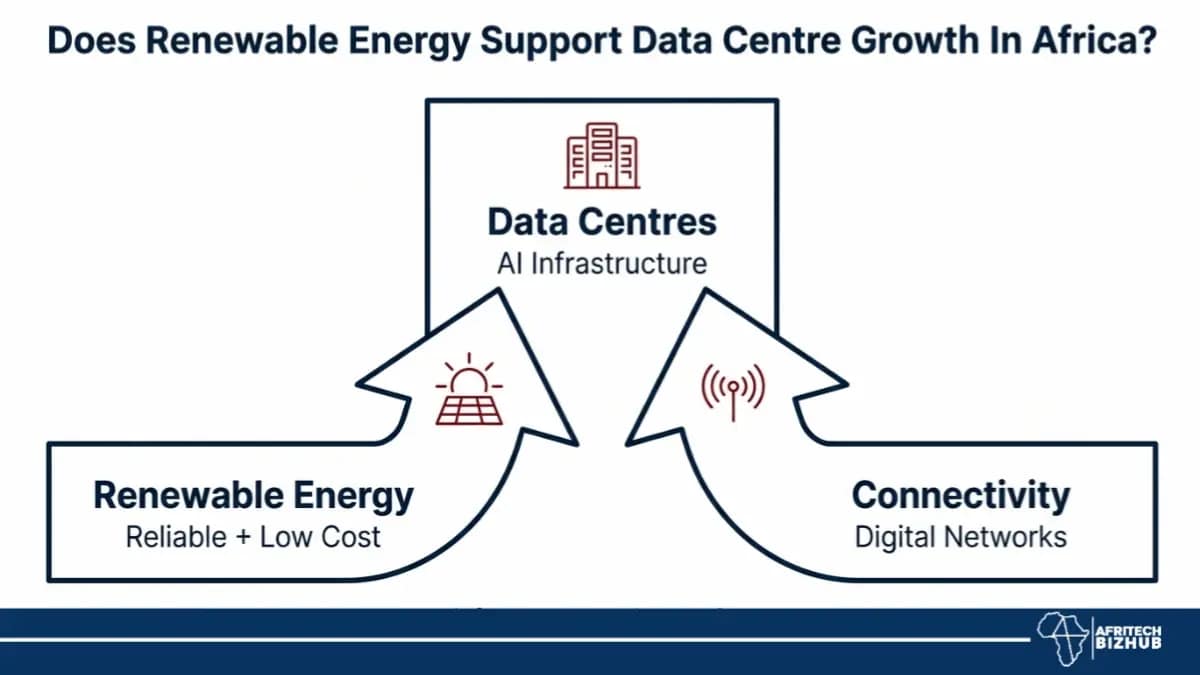
Does Renewable Energy Support Data Centre Growth In Africa?
The artificial-intelligence conversation eventually arrives at a practical question.
Where will the electricity come from?
Data centres operate continuously.
AI workloads operate continuously.
Cloud services operate continuously.
Reliable energy therefore becomes as important as connectivity itself.
Computing infrastructure without stable power remains underutilised regardless of how advanced the technology may be.
This is where renewable energy is becoming strategically important.
Countries capable of providing reliable, scalable, and competitively priced energy increasingly strengthen their position within the digital-infrastructure economy.
The advantage extends beyond sustainability targets.
It affects operating costs, service reliability, investment attractiveness, and long-term competitiveness.
Africa’s digital future is unlikely to be constrained by a shortage of ideas.
The greater risk is a shortage of infrastructure.
The AI economy does not begin with algorithms.
It begins with electricity, connectivity, and computing capacity.
Countries that build those foundations first are likely to capture a disproportionate share of the opportunities that follow.
That is why Kenya AI infrastructure is becoming more than a technology story.
It is increasingly becoming an economic-development story.


Recent Comments