


Last updated: June 10, 2026
Featured Summary:
- Africa Digital Payments continue expanding as instant-payment systems process growing transaction volumes across the continent.
- Financial crime is rising alongside digital adoption, exposing weaknesses in fraud prevention and consumer protection.
- Instant payments are solving speed problems while creating new security pressures.
- The next phase of Africa Digital Payments may be determined less by speed and more by trust.
Africa has spent much of the past decade solving a problem that constrained economic activity for generations: moving money.
Payments that once required cash, paperwork, physical branches, or long settlement periods increasingly happen in seconds.
Mobile money expanded. Digital banking expanded.
Instant-payment systems expanded.
Millions of people now participate in financial services without entering a bank branch.
That transformation is no longer the story. The story is what happens next.
Africa Digital Payments have reached a stage where speed is increasingly expected.
The emerging challenge is confidence.
As more money, businesses, governments, and consumers depend on digital systems, fraud, cybercrime, identity theft, and payment abuse become more consequential.
The same infrastructure driving financial inclusion is increasing the cost of failure.
The continent’s payment race is increasingly becoming a trust race.
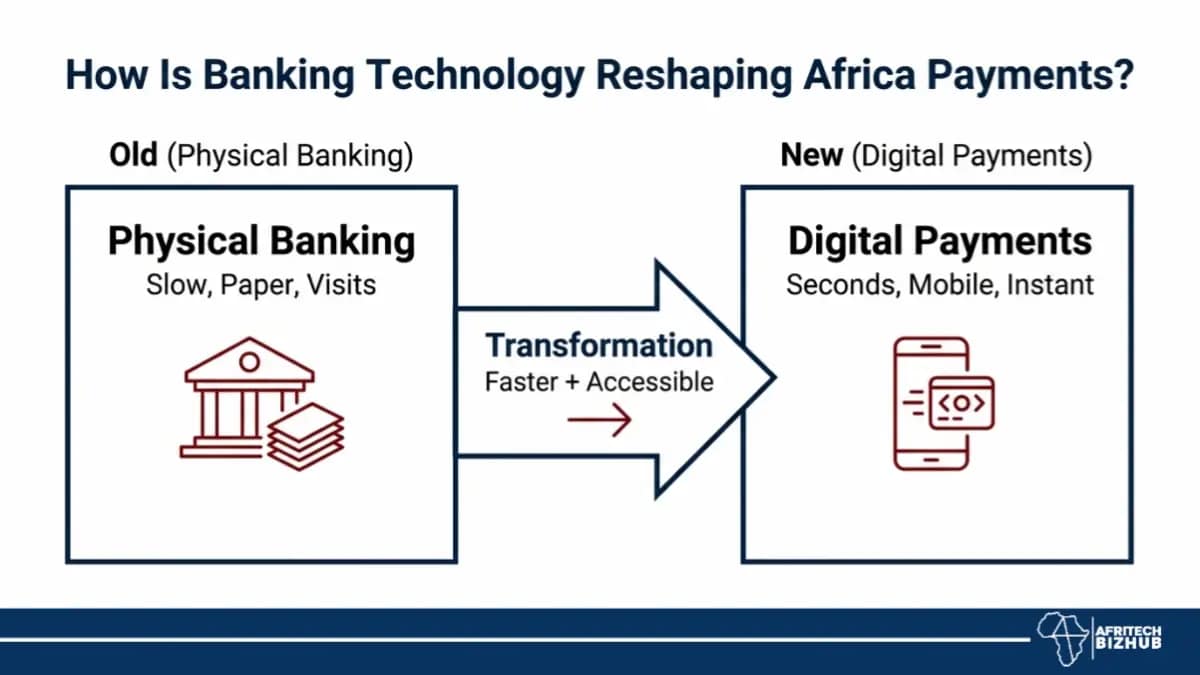
How is Banking Technology Reshaping Africa Payments?
The most important change is not how people pay.
It is what people now expect.
Consumers increasingly expect money to move immediately.
Businesses increasingly expect real-time settlement.
Merchants increasingly expect digital payments to function as reliably as cash.
Financial institutions face growing pressure to deliver all three simultaneously.
That pressure is reshaping banking technology across the continent.
Mobile applications, payment gateways, digital wallets, integrated banking platforms, and instant-payment systems are becoming core infrastructure rather than competitive advantages.
What once differentiated financial institutions increasingly defines basic participation in the market.
The deeper shift sits underneath the technology itself.
Transactions that once depended on physical banking infrastructure increasingly depend on digital infrastructure.
Africa Digital Payments are no longer an alternative channel.
They are becoming part of the financial system’s operating architecture.
Why Is Financial Crime Rising In Africa?
Money attracts innovation.
It also attracts crime.
As transaction volumes move into digital environments, criminal activity increasingly follows the same path.
Fraudsters do not need physical access to cash when financial activity itself becomes digital.
The attack surface expands alongside adoption.
The methods continue evolving.
Phishing attacks grow more sophisticated.
Identity theft becomes more scalable.
Social-engineering schemes become more targeted.
Account-takeover fraud continues exploiting weaknesses in consumer awareness and system design.
This pattern has emerged across every major digital-payment market globally.
The uncomfortable reality is that successful payment systems often become more attractive to criminals precisely because they are successful.
Growth creates opportunity.
Unfortunately, it creates opportunity for both legitimate users and criminal actors.
Financial crime is therefore becoming more than a cybersecurity challenge.
It is increasingly becoming a confidence challenge.
How Does Payment Fraud Threaten Instant Payments?
The appeal of instant payments is obvious.
The risk becomes visible when something goes wrong.
Traditional payment systems often provided time to identify suspicious activity before transactions settled.
Instant payments compress that timeline.
A fraudulent transaction can move through multiple accounts before institutions or consumers have an opportunity to respond.
The speed creates economic value.
The speed also increases operational pressure.
This is why payment fraud continues receiving attention across global financial systems.
Every improvement in payment efficiency increases the importance of authentication, monitoring, customer protection, fraud analytics, and risk management.
The issue is not whether instant payments work.
The issue is whether trust can operate at the same speed.
That question increasingly sits at the centre of Africa Digital Payments as adoption continues accelerating across multiple markets.
Is Africa Ready For Cashless Society Transition?
The answer depends less on technology than many assume.
Major cities increasingly operate within digital-payment ecosystems.
Consumers use mobile-money platforms, banking applications, payment wallets, and online financial services as part of everyday life.
In those environments, a cashless future appears increasingly plausible.
The picture changes elsewhere.
Connectivity remains uneven.
Device ownership remains uneven.
Merchant acceptance remains uneven.
Digital literacy remains uneven.
These gaps matter because cashless systems require consistency.
Consumers do not abandon cash because digital alternatives exist.
They abandon cash when digital alternatives become reliable enough to trust.
A cashless economy is not simply a payments story.
It is an infrastructure story.
According to the State of Inclusive Instant Payment Systems (SIIPS) 2025 report published by AfricaNenda Foundation in partnership with the World Bank and the United Nations Economic Commission for Africa, instant-payment systems across Africa processed nearly $2 trillion in transaction value during 2024, highlighting the growing scale of digital financial activity across the continent.
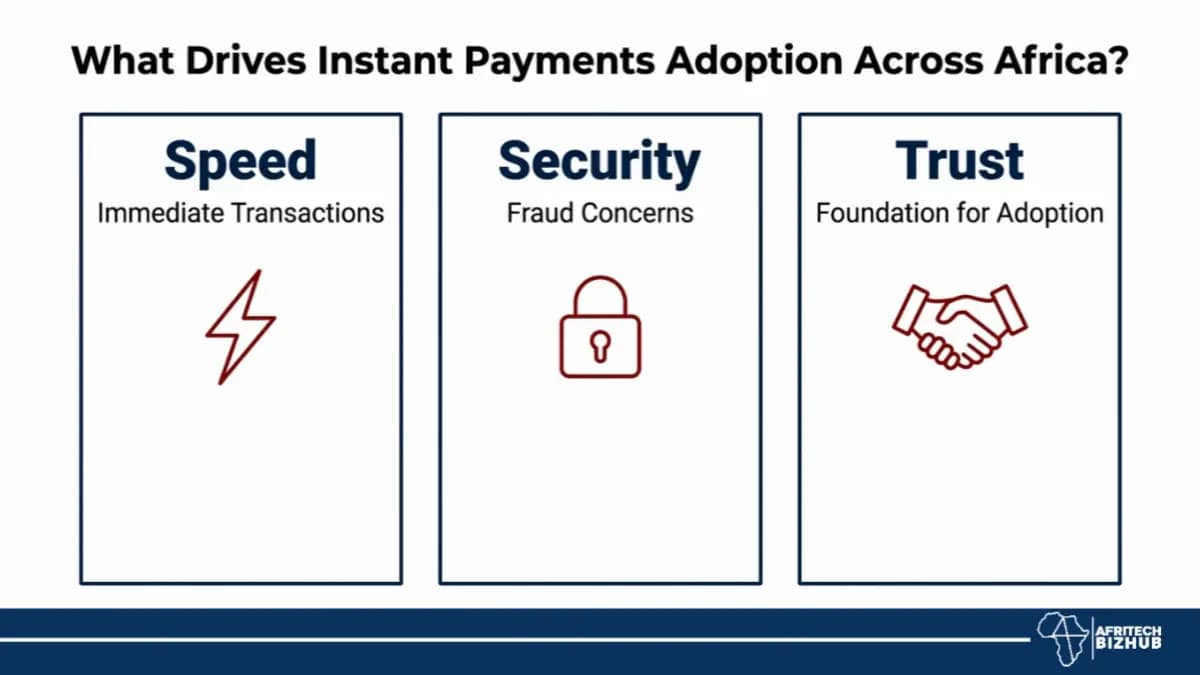
What Drives Instant Payments Adoption Across Africa?
Speed helped build adoption.
Trust may determine how far adoption goes.
Consumers want immediate transactions.
Businesses want faster access to funds.
Governments want more efficient financial systems.
Financial institutions want infrastructure capable of supporting growing digital economies.
Those incentives continue pushing instant-payment adoption higher across Africa.
Yet the same systems generating growth continue facing questions around fraud, security, dispute resolution, and consumer protection.
That should not be treated as a secondary issue.
Africa has largely demonstrated that money can move faster.
The next challenge is proving that digital systems remain trustworthy when money moves faster.
The distinction matters because payment behaviour ultimately depends on confidence rather than technology alone.
The strongest payment networks will not necessarily be the fastest.
They may be the ones users trust most.
Africa Digital Payments have already transformed how money moves across the continent.
The next phase will determine whether trust can scale at the same pace as adoption.
That may become the defining test of Africa’s cashless future.


Recent Comments