


Featured Summary:
- Malawi ICT investment is focused on improving digital government services, connectivity, and public-sector efficiency.
- The digital economy depends on more than internet access; it requires citizens, institutions, and businesses to operate through connected systems.
- Digital transformation is increasingly a governance challenge, not just a technology rollout.
- Africa digital transformation is creating opportunities for economic participation, innovation, and regional growth.
Governments across Africa have spent years talking about digital transformation, yet many citizens still encounter public systems that feel largely unchanged.
Paper-based processes remain common, services are fragmented across multiple agencies, and administrative tasks consume significant time and resources.
Malawi is confronting this challenge head-on, expanding ICT infrastructure, improving digital governance, and modernizing public services.
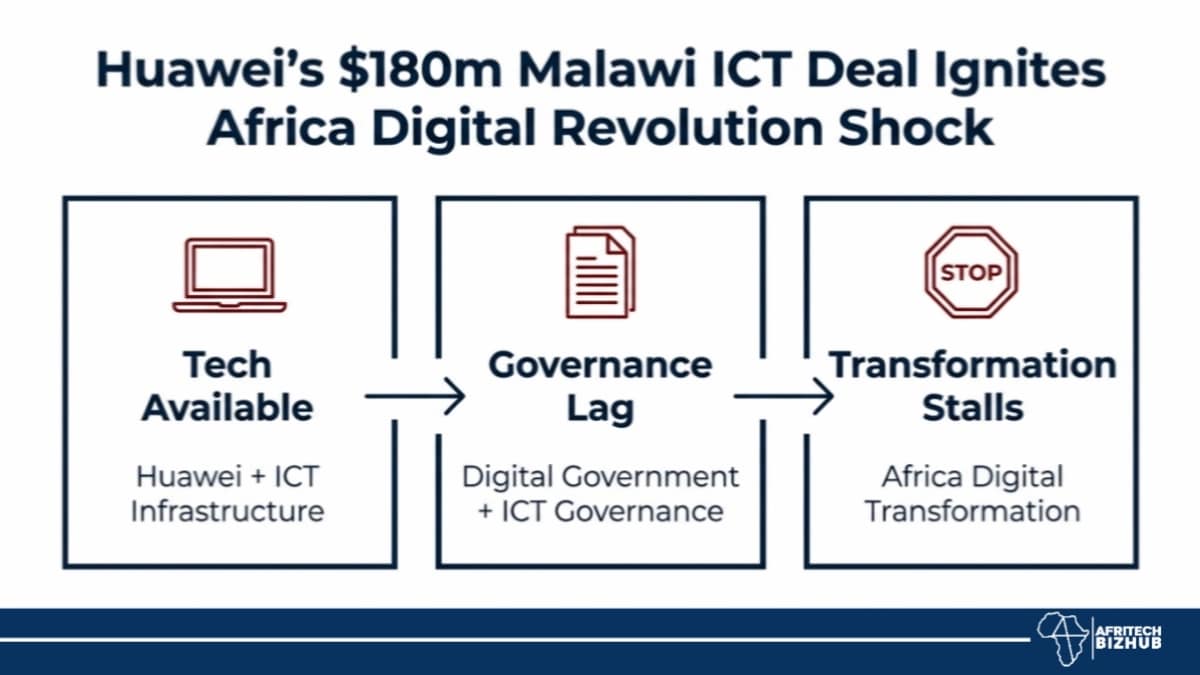
The $180m Huawei partnership signals a broader shift: digital transformation is no longer just about technology access.
It is about ensuring institutions, businesses, and citizens can operate efficiently through connected systems.
How is Malawi ICT Investment Transforming Public Services?
Deploying new technology does not automatically improve service outcomes.
Digital portals, online applications, and automated systems may exist, yet delays and inefficiencies persist.
Malawi’s ICT investment agenda, including the Digital Malawi Project, is focused on linking technology to actual service delivery.
The initiative strengthens communication between government offices, improves ICT governance, and enhances citizen access to public services.
By embedding technology into institutional operations, Malawi aims to reduce administrative barriers, improve citizen experience, and create a more responsive public sector.
What Impact Does Digital Economy Bring to Malawi?
A thriving digital economy depends on more than connectivity metrics.
True value emerges when businesses and citizens use digital systems to perform tasks efficiently, access new opportunities, and participate in markets.
For Malawi, strengthening the digital economy could enable entrepreneurship, expand financial service access, reduce transaction costs, and allow small enterprises to compete more effectively.
As data, digital tools, and infrastructure integrate into everyday business activity, connectivity becomes the foundation for measurable economic outcomes rather than an end in itself.
Is Digital Transformation Reshaping Malawi Government Systems?
Digital transformation succeeds when technology drives institutional change, not merely digitizes existing processes.
Malawi’s ICT strategy emphasizes governance, coordination, and service accessibility.
Systems are designed to ensure government offices operate more effectively, integrating workflows and improving public engagement.
Outcomes, rather than technology adoption alone, determine success: faster service delivery, reduced friction, and efficient citizen interaction are the real benchmarks of transformation.
How Africa Digital Transformation Drives Regional Growth?
Malawi’s efforts reflect a broader continental trend: countries are recognizing that economic competitiveness requires digital infrastructure capable of supporting commerce, innovation, and regional integration.
Digital government reduces administrative bottlenecks, strengthens investment climates, and supports cross-border economic participation.
Institutional bodies such as the African Union (AU) Digital Transformation Strategy provide a continental framework, highlighting the need for interoperable systems, governance standards, and skills development to sustain long-term digital growth.
What Does China Malawi ICT Partnership Involve?
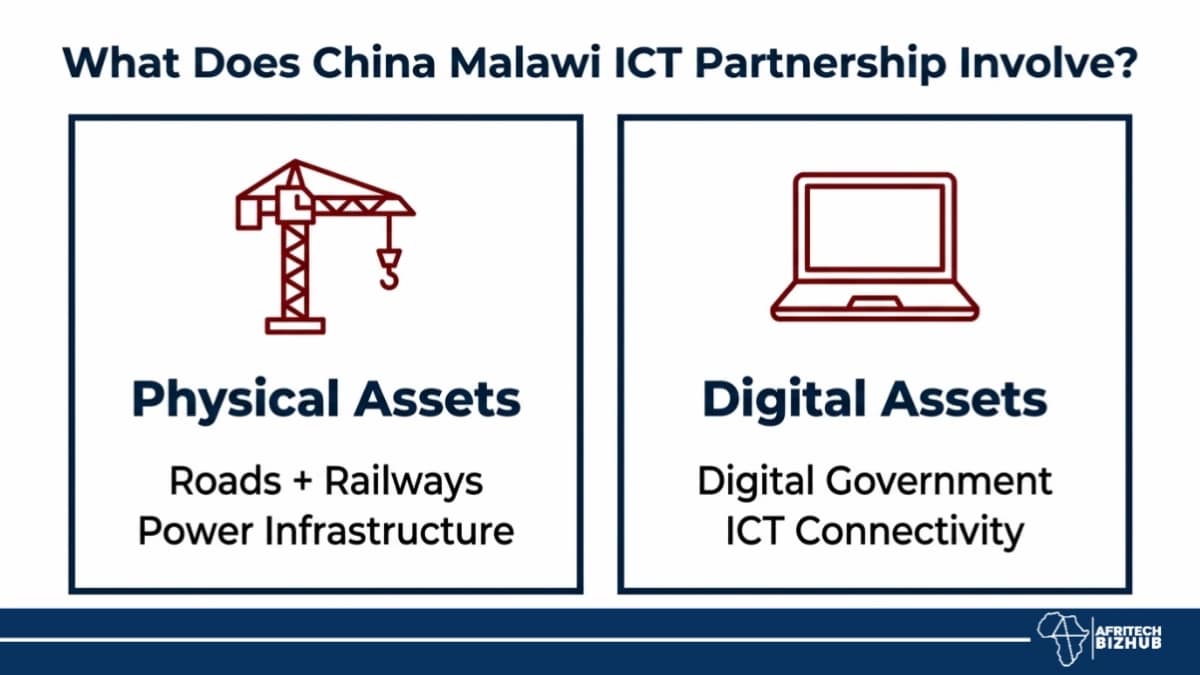
China-Africa technology partnerships are increasingly focused on digital infrastructure and governance, rather than solely on physical assets.
Huawei’s involvement in Malawi supports digital government modernization, connectivity expansion, and ICT capability building.
The collaboration aims to strengthen institutions, enhance citizen services, and create sustainable platforms for economic participation.
Beyond technology deployment, the partnership reflects a strategic approach to digital transformation that balances capability building, service delivery, and economic inclusion across Malawi and the region.


Recent Comments