

Featured Summary:
- Trade partnership talks between Ghana and Croatia point to Accra’s search for new European routes beyond its traditional major partners.
- Croatia’s EU membership gives the relationship wider strategic value, but the market impact will depend on real business links and project delivery.
- Infrastructure investment and green energy could become useful cooperation areas if both sides connect diplomacy to finance and technical expertise.
- Economic cooperation will matter only if bilateral relations produce trade missions, investment pipelines, and measurable private-sector activity.
Ghana’s push toward Croatia will not redraw Africa-Europe trade overnight, but it exposes a shift in Accra’s external strategy.
The relationship is not built around a major power, a huge market, or a headline-grabbing finance package. That is the tension.
Ghana is testing whether a smaller European partner can still become a useful gateway for trade access, infrastructure investment, green energy cooperation, and wider EU-linked commercial networks.
The opportunity is real, but the burden is execution: Ghana-Croatia ties must move beyond diplomatic courtesy and become a structured trade partnership with projects, capital, and business activity behind it.
Can the Ghana-Croatia Trade Partnership Deliver Real Gains?
A Ghana-Croatia trade partnership starts from an uneven but useful position.
Ghana brings a West African market with export potential, infrastructure needs, energy demand, and growing interest in diversified external partnerships.
Croatia brings EU membership, port experience, tourism strength, maritime links, and access to European commercial networks.
The relationship becomes valuable only when those strengths are tied to actual trade channels rather than broad diplomatic language.
The gain for Ghana is not Croatia’s market size alone. Croatia is not Germany, France, Italy, or the Netherlands in Africa-facing trade scale.
Its value sits in the gateway function: a smaller EU partner that can help Ghanaian firms reach buyers, distributors, technical partners, logistics operators, and investors inside a wider European system.
That is where the trade partnership can move from symbolism to strategy.
Ghana does not need another ceremonial opening; it needs commercial routes that carry goods, projects, and private capital.
Will Infrastructure Investment Boost Ghana-Croatia Cooperation?
Infrastructure investment gives the Ghana-Croatia relationship a practical economic test.
Ghana needs stronger transport systems, logistics assets, ports, energy networks, water infrastructure, industrial zones, and urban services to support trade and manufacturing.
Croatia is unlikely to finance that agenda alone, but it can still play a useful role through engineering expertise, maritime knowledge, project partnerships, and links into European capital.
The question is not whether Croatia becomes Ghana’s largest infrastructure partner.
The question is whether it helps connect Ghanaian priorities to bankable delivery.
That distinction matters. Infrastructure cooperation fails when it remains trapped in memoranda, visits, and general promises.
Investors need feasibility studies, clear procurement, credible repayment structures, and political discipline before capital moves.
If Ghana and Croatia can identify specific projects and bring technical partners into the pipeline, infrastructure investment could become one of the stronger pillars of the relationship.
Without that, the partnership will remain visible in diplomacy and thin in development impact.
How Will Green Energy Shape Ghana-Croatia Ties?
Green energy gives the relationship a future-facing lane, but it must be treated carefully.
Ghana needs cleaner and more reliable power to support industry, digital services, mining, agribusiness, urban growth, and export competitiveness.
Croatia’s experience inside the European energy transition gives it a possible role in renewable energy, grid modernisation, energy efficiency, and climate-aligned project design.
That makes green energy a useful area for cooperation, not yet proof of a major investment shift.
The trade angle is stronger than the climate language alone.
European markets are placing more pressure on sustainability, supply chains, and low-carbon production.
Ghanaian exporters and manufacturers will face that reality more often as trade links deepen.
A Ghana-Croatia green energy channel could therefore support more than electricity generation.
It could help Ghana prepare industries for a market where cleaner production, credible standards, and climate-linked finance increasingly shape access.
Are Stronger Bilateral Relations on the Ghana-Croatia Agenda?
Stronger bilateral relations now sit at the centre of the Ghana-Croatia opening.
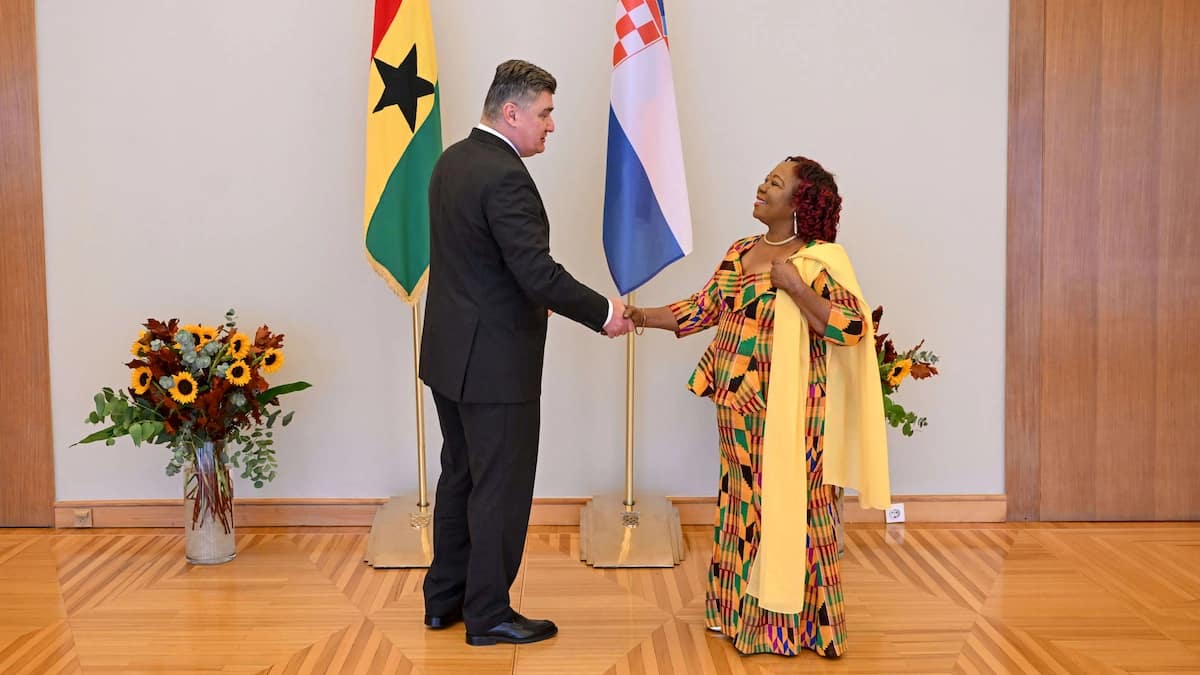
Ghana’s latest diplomatic engagement with Croatia signals a desire for more structured economic cooperation, political consultations, and high-level exchanges.
That matters because diplomacy creates the formal space where business ties, investment discussions, trade facilitation, and sector agreements can begin.
But formal relations do not become economic leverage until companies, agencies, investors, and financial institutions are given a reason to act.
The Council of the European Union’s official record of the EU-Ghana Stepping Stone Economic Partnership Agreement gives the relationship its wider trade frame.
Croatia is part of the EU system, while Ghana already operates within a formal trade arrangement with the European bloc.
That makes the Ghana-Croatia channel more important than bilateral trade volumes alone may suggest.
The opportunity is to use bilateral relations as another route into European commercial networks, while Croatia gains a more direct bridge into a stable West African economy with demand for infrastructure, green energy, services, and investment partnerships.
Can Economic Cooperation Transform the Ghana-Croatia Partnership Outlook?
Economic cooperation will decide whether the Ghana-Croatia relationship becomes a useful trade corridor or another diplomatic headline.
Ghana needs partners that can support export growth, infrastructure delivery, green energy development, tourism links, investment attraction, and private-sector competitiveness.
Croatia needs stronger links with African markets where smaller European economies can still build influence through focused sectors and practical expertise.
The fit is not automatic, but it is credible if both sides narrow the agenda.
The next phase must be measured by activity, not language.
Trade missions, buyer networks, investment forums, infrastructure proposals, green energy partnerships, and private-sector agreements will show whether the relationship has economic weight.
Ghana-Croatia cooperation can become a useful example of Africa-Europe engagement beyond the usual big-power channels. The opening is there.
Its value will be decided by whether bilateral relations produce trade, finance, and projects that survive beyond the diplomatic photo.


Recent Comments