


Featured Summary:
- Fintech collaboration is growing because Africa’s payments challenges are too complex for any single company to solve.
- Banks and fintechs increasingly depend on each other to build faster, safer, and more accessible payment systems.
- Mastercard East Africa provides the infrastructure connecting institutions that power digital payments across the continent.
- Financial inclusion remains the primary driver of future growth in Africa’s digital payments ecosystem.
Africa’s fintech story was long framed as a rivalry between banks and startups, with competition positioned as the defining narrative.
Observed patterns now show that the market has shifted: payment systems are more complex, regulatory requirements are stricter, cross-border transactions remain costly, and infrastructure investments are rising.
Across African markets, collaboration between banks, fintechs, networks, and regulators is increasingly producing more value than competition alone, creating momentum for a more integrated payments ecosystem.
Why is Fintech Collaboration Driving Africa Payments?
Fintech collaboration is expanding because Africa’s financial system remains fragmented. Each country operates different currencies, regulations, and payment rails.
Moving money across these systems requires technical integration, compliance expertise, and access to infrastructure.
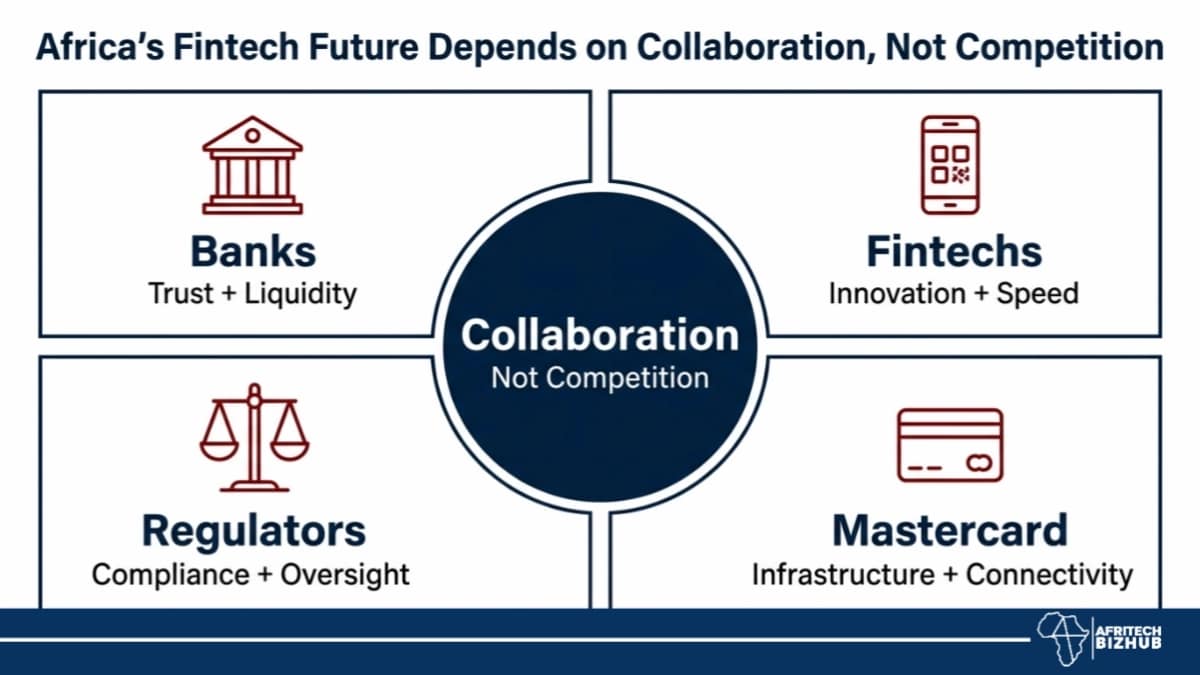
Fintechs bring product innovation, while banks provide regulatory oversight and liquidity management.
Neither can build a continent-wide solution independently.
Observed trends show partnerships are increasingly preferred to accelerate payment efficiency and cross-border reach.
Collaboration reduces duplication of effort and allows institutions to leverage complementary strengths.
Across Africa, this trend is reshaping how digital payments are delivered and scaled.
How Does Payments Ecosystem Depend on Partnerships?
Every digital payment involves multiple participants.
Customers see apps or bank cards, but transactions rely on banks, payment processors, networks, merchants, and regulators operating in coordination.
Observed patterns indicate that partnerships are essential for reliability.
Banks safeguard funds, fintechs innovate digital interfaces, networks connect systems, merchants accept payments, and regulators ensure compliance.
As the ecosystem expands, collaboration becomes structural.
Africa’s payments efficiency depends on coordinated action across stakeholders rather than single-company initiatives.
Can Banks and Fintechs Truly Win Together?
Banks and fintechs complement each other.
Banks provide trust, liquidity, and regulatory stability.
Fintechs offer speed, innovation, and customer-centric platforms.
Observed adoption patterns show that combining these capabilities produces better user experiences, faster payments, and broader financial access.
Customers, regulators, and investors all respond to these integrated approaches, creating incentives for cooperation rather than competition.
As digital services and fintech platforms grow, collaborative models reduce risk and increase scalability, suggesting a structural shift in leadership and operational strategy across Africa’s payments ecosystem.
What Role does Mastercard East Africa play?
Mastercard East Africa provides the infrastructure connecting banks, fintechs, merchants, and regulators.
Its platforms enable seamless payments, transaction security, and cross-border settlement.
Observed patterns show that Mastercard East Africa facilitates collaboration by linking institutions, enabling interoperability, and supporting digital payment growth across the continent.
This role strengthens trust, reduces friction, and allows new participants to access formal financial services.
The company’s work demonstrates that collaboration, not competition, is central to scaling digital payments across African markets.
How does Financial Inclusion Expand Digital Payments?
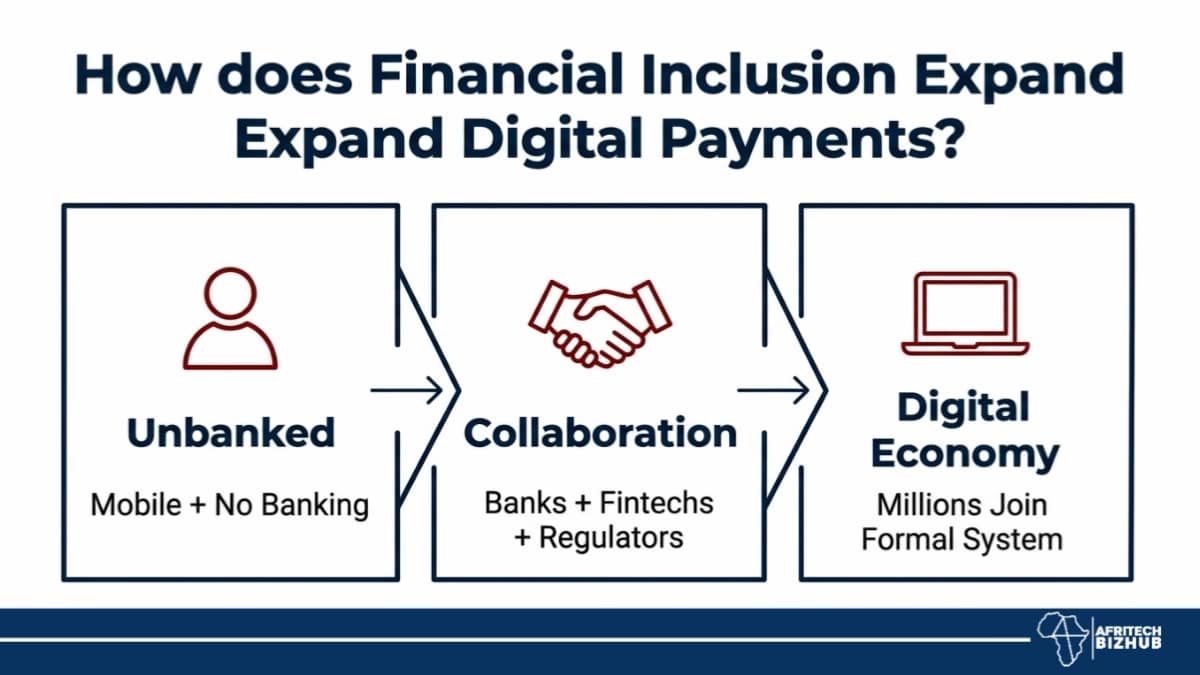
Financial inclusion brings previously unbanked populations into the formal financial system.
Millions of Africans have mobile phones but lack access to banking services, representing the largest growth opportunity in digital payments.
Observed patterns indicate that expanding access requires coordination between banks, fintechs, mobile operators, regulators, and payment networks.
No single entity can deliver full inclusion independently.
Across Africa, fintech collaboration enables millions of new users to join the digital economy.
The future of payments growth depends on institutional cooperation and inclusive strategies rather than competitive rivalry.


Recent Comments