

Featured Summary:
- Egypt energy sector is attracting fresh upstream investment as oil companies become more selective about where capital is deployed.
- Geopolitical risk is changing portfolio strategy across the global energy industry.
- Genel Energy’s proposed $360 million acquisition reflects a wider shift toward established production markets.
- Egypt’s next advantage will depend on converting investment into long-term exploration and production growth.
Oil companies are not short of places to drill, they are short of places where capital feels easier to defend.
Across the energy industry, investment decisions are being shaped by more than reserves in the ground.
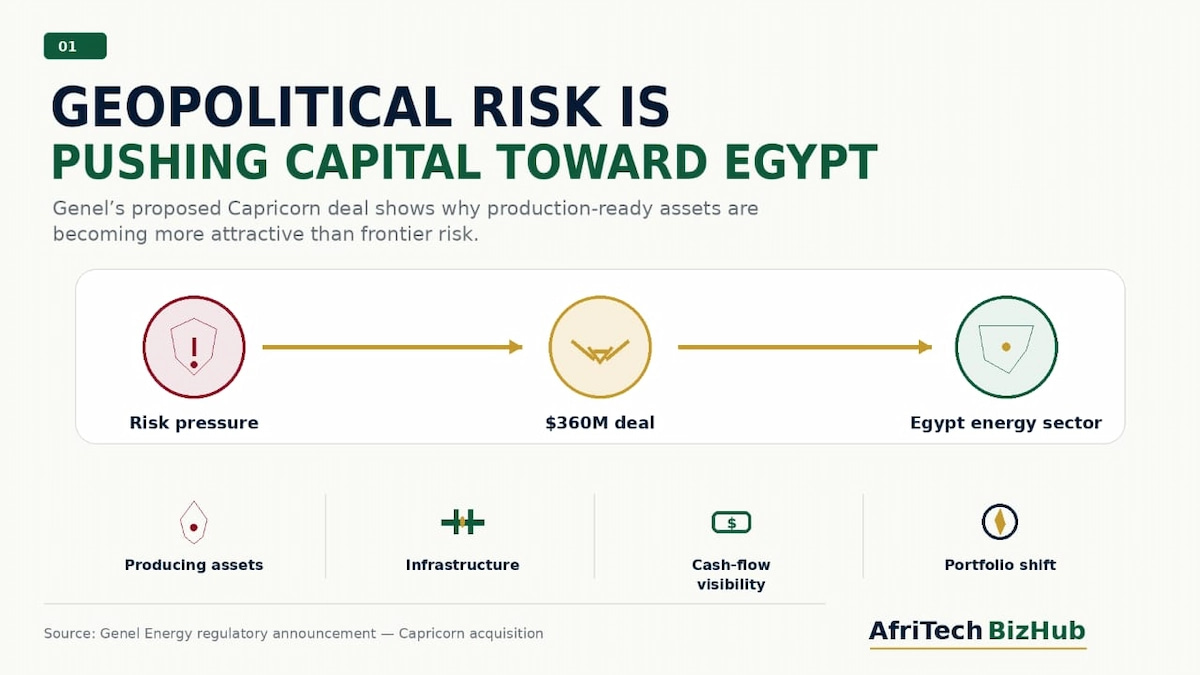
Companies are now weighing political risk, infrastructure access, payment reliability, export routes, operating history and how quickly assets can generate cash.
That is why Genel Energy’s proposed $360 million acquisition of Capricorn Energy matters for Egypt. The transaction is not only a corporate takeover.
It shows how producing assets in the Egypt energy sector can become more attractive when companies want growth without taking full frontier risk.
Egypt’s position is clear: it offers existing production, experienced operators, energy infrastructure and a market where upstream investment can be connected to wider regional energy strategy.
How Is Egypt Energy Sector Attracting Oil Investors?
Investors are looking for energy markets where production can be expanded without starting from zero.
Egypt offers that combination through existing oil and gas fields, established operators, pipelines, processing facilities, export infrastructure and a long history of international participation. For upstream companies, that lowers the uncertainty attached to new capital.
The Egypt energy sector also benefits from its wider role in regional supply.
The country has LNG infrastructure, domestic demand, exploration acreage and government interest in keeping international oil companies active.
That does not remove every risk, especially around payments, fiscal terms and currency pressure. But it gives investors a clearer operating base than many frontier markets.
In a selective capital environment, that matters.
Can Geopolitical Risks Reshape Global Oil Investment?
Energy companies are adjusting portfolios because geopolitical risk now affects the cost and confidence of production.
A discovery may be large, but if exports are uncertain, payments are delayed, infrastructure is weak or conflict risk is high, capital becomes harder to justify.
That is why portfolio strategy is moving toward assets that can produce, generate cash and fit into existing operating systems.
This is a story about capital allocation.
Companies want jurisdictions where they can manage risk, protect cash flow and plan development with more confidence.
Egypt sits inside a complex region, but it also has established energy infrastructure and long-standing upstream relationships.
That combination gives it a stronger case as companies compare Egypt with markets where political disruption, export restrictions or security risks are harder to price.
Why Is Genel Energy Betting Big On Egypt?
Genel’s proposed acquisition points to a practical shift in upstream strategy.
Rather than waiting only for new frontier discoveries, the company is moving toward producing assets that already have operating history and development potential.
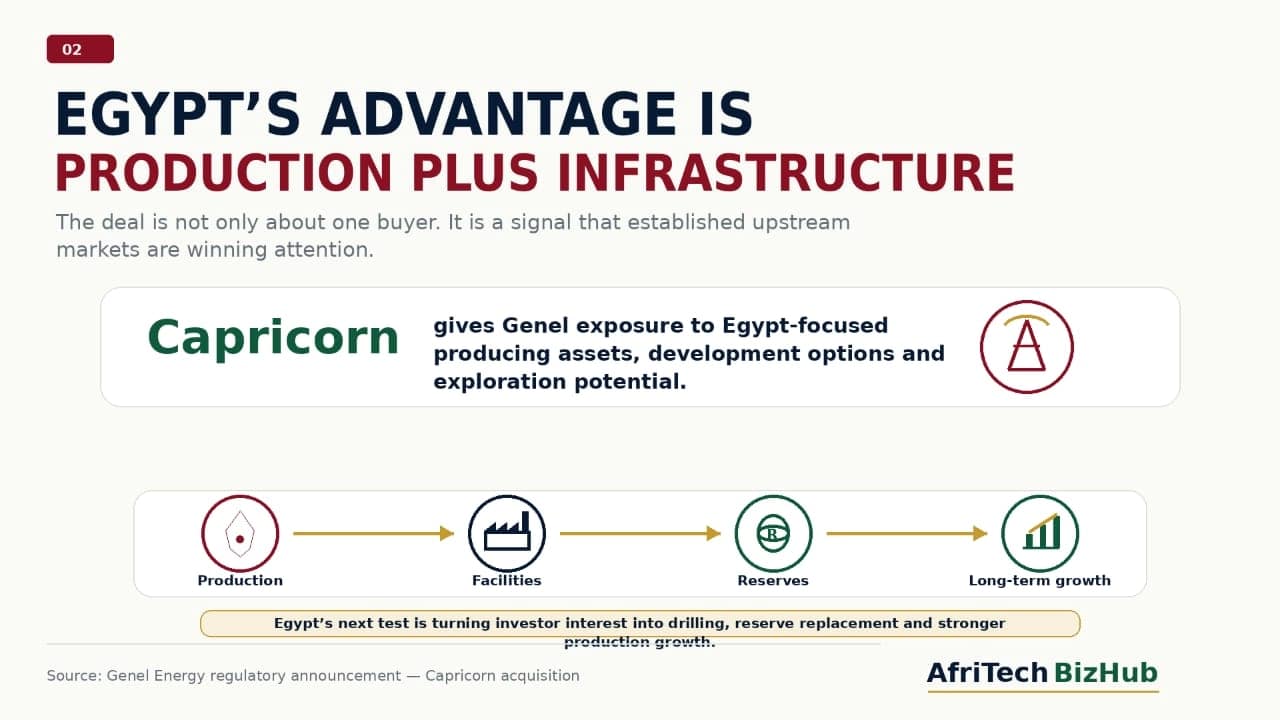
Capricorn’s Egyptian portfolio gives Genel exposure to oil and gas production in a market with infrastructure already in place.
The deal also helps explain why Egypt is gaining attention.
Producing assets can offer faster strategic value than early-stage exploration because they already have reserves, facilities, partners and cash-flow visibility.
For Genel, Egypt offers diversification beyond its existing portfolio and a route into a more established North African energy market.
For Egypt, the deal signals that its upstream assets can still attract international buyers at a time when oil companies are becoming more selective.
Who Owns Genel Energy?
The company behind the transaction matters because Genel is not entering Egypt as a short-term buyer of isolated assets.
Genel Energy is a London-listed exploration and production company whose strategy depends on building a portfolio that can support production, cash flow and long-term reserves.
Its governance and public-market structure mean acquisitions must be explained to investors through strategy, value and execution discipline.
Genel’s official regulatory announcement confirms the recommended cash acquisition of Capricorn Energy through Genel Energy No.9 Limited, a company indirectly owned by Genel Energy.
The announcement values Capricorn at about US$360 million and sets out the proposed transaction as a route for Genel to acquire Capricorn’s Egypt-focused asset base.
That makes the Egypt move part of a broader portfolio strategy rather than a standalone purchase.
What Does Capricorn Energy Plc Do?
Capricorn’s value in this story is not its corporate name alone.
It is the Egyptian asset base Genel is trying to acquire.
Capricorn’s portfolio gives a buyer access to producing oil and gas assets, development opportunities and exploration potential in Egypt’s Western Desert, where operating history and existing infrastructure already support production.
The deal shows that established assets are becoming more valuable as oil companies balance growth with risk control.
Egypt’s opportunity is to turn this type of investor interest into deeper drilling, stronger production, better reserve replacement and long-term confidence in the country’s upstream sector.
Genel’s $360 million proposal may be one transaction, but it reflects a wider market judgement: in a more uncertain energy world, production-ready assets in the Egypt energy sector are becoming harder to ignore.


Recent Comments