

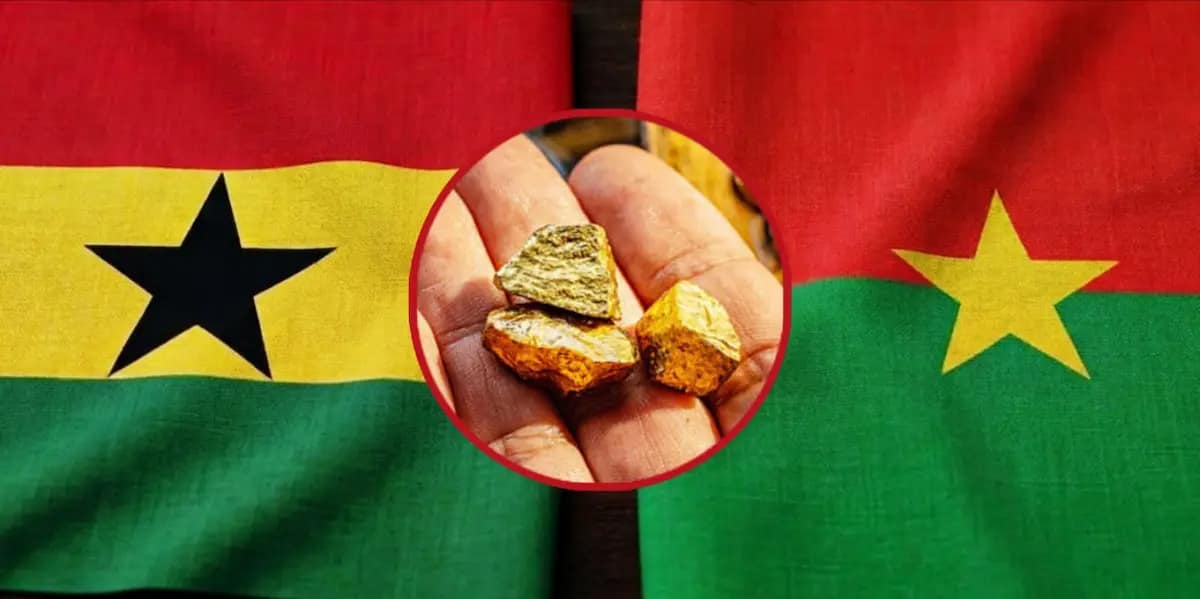
Featured Summary:
- Ghana produced 5.94 million ounces of gold in 2025
- Burkina Faso has opened a refinery capable of processing 164 tonnes a year
- Investors are looking beyond output to mine costs, reserves and ownership
- Gold prices remain high as U.S. demand shifts with rates and the dollar
Burkina Faso has opened its first gold refinery with capacity to process 164 tonnes a year, compared with about 94 tonnes mined in the country in 2025.
The government plans to eventually expand the facility to 515 tonnes annually as it increases domestic processing of one of its largest mineral exports.
Ghana produced 5.94 million ounces of gold in 2025, equivalent to about 185 tonnes, after output rose 23.4% from a year earlier.
The country remains one of Africa’s largest gold producers, with major mines operated by international and domestic companies alongside a growing small-scale mining industry.
The refinery gives Burkina Faso more capacity to process gold at home as Ghana expands production from a much larger mining base.
Both markets are drawing attention at a time when higher gold prices have increased revenues across the industry and encouraged spending on existing mines and new projects.
The investment flowing into those mines will determine how quickly West African gold production expands from current levels, with Ghana adding ounces from established operations and Burkina Faso building more capacity around its mining industry.
Ghana Has the Production Lead as Burkina Faso Expands Refining
Ghana mined about 2.8 million ounces of gold in 2021, before output recovered to 3.7 million ounces in 2022 and continued higher through 2024, when it reached 4.82 million ounces.
Artisanal and small-scale miners accounted for much of the latest increase. Their output rose from 1.90 million ounces in 2024 to 3.11 million ounces last year, exceeding large-scale production for the first time.
Industrial mines produced 2.83 million ounces, down from 2.92 million. Obuasi and Asanko recorded increases, while Namdini and Ahafo North added new supply.
Burkina Faso’s industrial output fell from 66.9 tonnes in 2021 to 57.7 tonnes in 2022, 56.9 tonnes in 2023 and 53.4 tonnes in 2024.
Twelve industrial mining companies contributed to the 2024 figure, including operations at Essakane, Houndé, Bomboré and Sanbrado.
More gold from Ghana’s artisanal and small-scale sector is being refined locally. GoldBod began supplying Gold Coast Refinery with one tonne a week in February from its purchases from miners.
GoldBod buys an average 2.5 tonnes weekly, and the refinery can process two tonnes a week. The state has acquired a 15% interest in the facility.
Gold Coast Refinery can process more than 80 tonnes annually but had been operating below capacity.
Ghana is working with South Africa’s Rand Refinery as it seeks to meet London Bullion Market Association refining standards.
Mine Economics Show Where Investors Can Get Gold Exposure
Newmont expects Ahafo South to produce 440,000 ounces this year at an all-in sustaining cost of $2,160 an ounce. Ahafo North is forecast at 315,000 ounces with AISC of $1,285.
Gold Fields owns 90% of Tarkwa, which produced 191,900 ounces in the first half of 2026 and generated $279 million in adjusted free cash flow as AISC rose to $2,671 an ounce. Newmont and Gold Fields both trade in New York.
West African Resources owns 90% of Burkina Faso’s Sanbrado mine; the government holds the remaining 10% as a free-carried interest.
Sanbrado and Kiaka support a company target of averaging 533,000 ounces a year through 2035. IAMGOLD holds 90% of Essakane and has guided for attributable production of 340,000 to 380,000 ounces this year at AISC of $2,000 to $2,150.
West African Resources trades in Australia and over the counter in the United States. IAMGOLD trades in New York and Toronto.
Orezone produced 75,626 ounces at Bomboré in the first half, up 34% from a year earlier after its new hard-rock plant increased throughput.
AISC reached $2,234 an ounce, partly because higher gold prices raised the royalties paid under Burkina Faso’s sliding scale.
Orezone has maintained annual guidance of 160,000 to 180,000 ounces and trades in Toronto, Australia and on the OTCQX market.
Ghana charges mining companies a 5% mineral royalty and a 35% corporate income tax. The state is also entitled to a 10% carried interest in mining operations.
Burkina Faso applies royalties that increase with the gold price and holds direct interests in several mines.
High Gold Prices Are Raising the Value of West African Mines
Gold averaged $4,506 an ounce in the second quarter, 37% higher than a year earlier. Against Ahafo North’s 2026 AISC guidance, that price is more than $3,200 an ounce higher.
At Essakane, the difference is more than $2,300 based on the upper end of IAMGOLD’s cost forecast, before corporate expenses and taxes.
Global demand reached 2,522 tonnes in the first half of 2026 and was valued at a record $380 billion. Central banks bought 289 tonnes during the second quarter after purchases slowed earlier in the year.
U.S.-listed physically backed gold ETFs recorded net outflows of 61 tonnes during the first six months, including 40 tonnes in June.
Bar and coin purchases increased from a year earlier in the second quarter. North American investment flows remain sensitive to real yields, Federal Reserve rate expectations and movements in the dollar.
New Production Will Test West Africa’s Gold Investment Push
New projects and extensions at existing operations are becoming the next source of growth in Ghana’s mining industry.
In Burkina Faso, Raffinor-BF will need enough supply to support the expansion planned for the refinery.
Higher gold prices have increased the value of production coming from both countries, while development and operating costs remain important to projects moving toward construction.
Mine expansions, reserve updates and investment decisions will now shape the amount of additional supply that reaches the market.
For investors, attention now moves to the projects companies approve, the capital they commit and the production that follows.


Recent Comments