

Featured Summary:
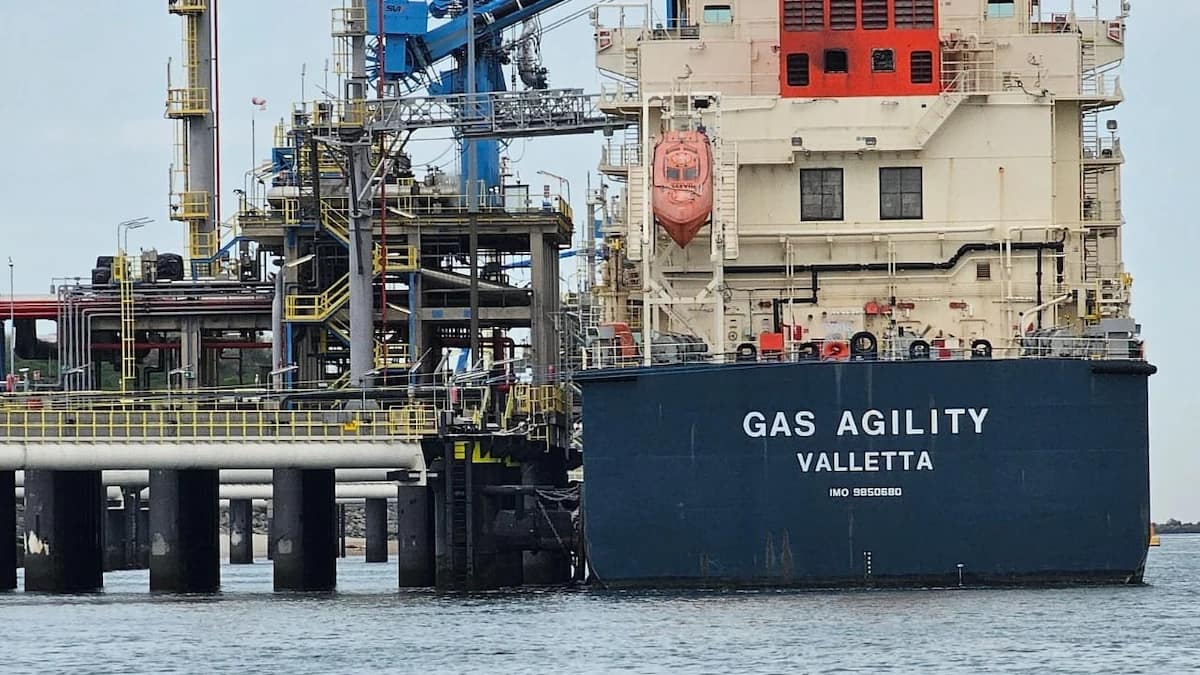
- Floating LNG is accelerating how Africa converts offshore gas into export revenue.
- LNG infrastructure is shifting from long construction cycles toward faster commercial deployment.
- Africa LNG projects are attracting global energy companies competing for future gas markets.
- Africa’s next energy advantage will depend on commercialising gas before competitors, not simply discovering it.
Africa has discovered vast natural gas reserves for decades, yet much of that wealth has remained commercially stranded beneath offshore waters.
Global energy markets no longer reward countries simply for owning gas resources.
They increasingly reward countries capable of delivering liquefied natural gas quickly to buyers seeking secure and diversified energy supplies.
That shift is changing investment across Africa’s energy sector.
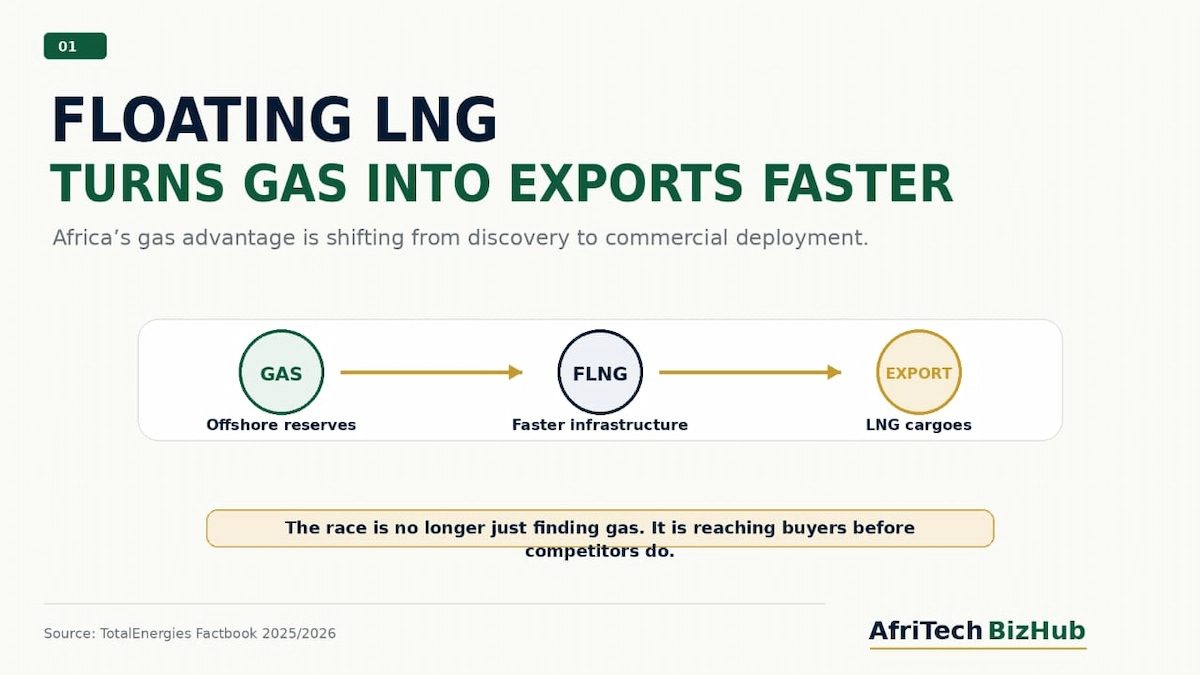
Floating LNG allows offshore gas to reach export markets without waiting years for permanent onshore terminals, making commercialisation rather than resource discovery the continent’s next competitive advantage.
The race is no longer centred on finding more gas.
It is centred on bringing existing gas into global supply chains before competing producers do.
How Could LNG Exports Reshape Africa’s Global Energy Position?
Global energy markets increasingly place greater value on dependable LNG exports than on undeveloped natural gas reserves.
Energy buyers seeking long-term supply security are prioritising countries capable of delivering consistent cargoes through reliable export infrastructure instead of waiting for projects that remain years away from commercial production.
Export readiness has therefore become a stronger competitive advantage than resource size alone.
Africa holds some of the world’s largest offshore gas discoveries, giving the continent an opportunity to strengthen its position within global LNG trade.
Countries that successfully commercialise production can diversify export markets, attract long-term purchasing agreements and strengthen their role in international energy security.
LNG exports are reshaping Africa’s global energy position because dependable export capacity increasingly determines commercial influence in the global gas market.
Why Is LNG Infrastructure Becoming Africa’s Biggest Energy Priority?
Natural gas creates economic value only after it reaches international buyers, making LNG infrastructure the link between resource ownership and export revenue.
Offshore discoveries can remain commercially inactive for years when processing, transportation and export facilities are unavailable, regardless of the size of the reserves.
Investors therefore evaluate infrastructure readiness as carefully as geological potential when deciding where capital should be deployed.
Floating LNG is changing that commercial calculation by offering a faster route from offshore production to export markets than many conventional developments.
Rather than waiting for large onshore terminals and associated infrastructure to be completed, producers can shorten development timelines and improve project economics through offshore liquefaction.
LNG infrastructure has therefore become Africa’s biggest energy priority because commercial success depends on moving gas efficiently into international markets rather than simply producing it.
How Are Africa LNG Projects Attracting Global Energy Giants?
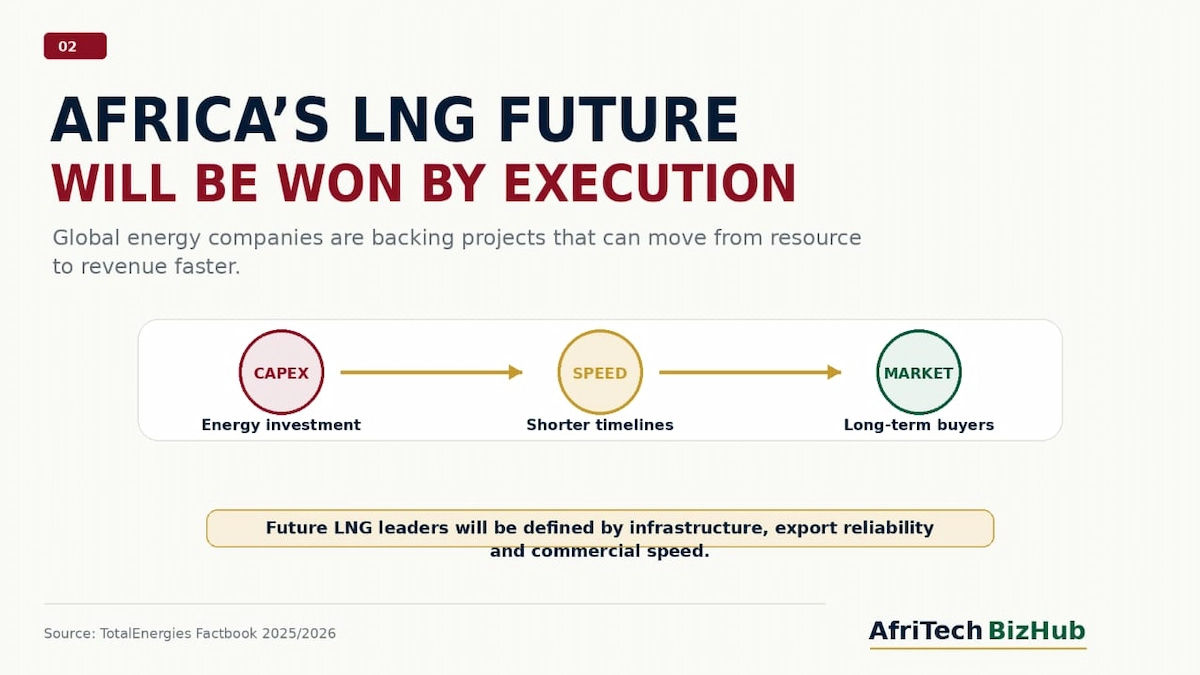
Africa LNG projects are attracting global investment because companies increasingly favour developments capable of reaching commercial production within competitive timeframes.
International energy companies assess regulatory certainty, infrastructure availability, project execution and expected market demand before committing billions of dollars to offshore developments.
Projects that demonstrate a clearer pathway from discovery to exports generally present lower commercial risk and stronger long-term returns.
TotalEnergies illustrates this investment strategy through its continued commitment to major African gas developments, including the Mozambique LNG project, while other global companies such as Eni, Shell and ExxonMobil continue expanding their regional LNG portfolios.
Interest in Floating LNG projects has also accelerated as governments and operators seek faster commercialisation models capable of responding to sustained international demand for liquefied natural gas.
Africa LNG projects are therefore attracting global energy companies because quicker commercial development improves investment certainty while expanding future export capacity.
What Makes Floating LNG Essential for Africa’s Gas Expansion?
Floating LNG changes project economics by reducing the time between offshore discoveries and export revenue generation.
Earlier commercial production improves project cash flow, reduces exposure to long construction schedules and allows producers to respond more quickly to changing global demand.
Faster deployment also helps countries commercialise offshore reserves that may otherwise remain undeveloped because of infrastructure constraints or financing challenges.
The commercial benefits extend beyond project timing.
Floating LNG reduces dependence on extensive onshore facilities while giving producers greater flexibility to monetise offshore gas resources through export markets.
As competition for future LNG buyers intensifies, shorter development cycles improve Africa’s ability to secure long-term supply contracts before competing producers increase global capacity.
Floating LNG therefore strengthens Gas expansion by accelerating the commercial pathway from offshore production to international sales.
What Is the Largest LNG Project in Africa?
Africa’s largest LNG developments demonstrate that the continent possesses the resource base needed to become one of the world’s most important natural gas exporters.
Projects such as Mozambique LNG, Nigeria LNG and expanding offshore developments across several producing countries highlight the scale of future export opportunities available as global demand continues evolving.
Their significance lies not only in production capacity but also in their ability to connect African gas with long-term international markets.
Future leadership, however, will depend less on reserve size than on commercial execution.
Countries capable of reducing development timelines, strengthening export infrastructure and bringing offshore gas into global supply chains ahead of competitors will capture a larger share of future LNG demand.
Africa’s next generation of energy leaders will therefore be defined by how efficiently they commercialise natural gas rather than by the volume of reserves beneath their waters.


Recent Comments