

Featured Summary:
- ExxonMobil Nigeria is returning with a $1 billion offshore investment.
- Nigeria’s deepwater sector is attracting renewed long-term capital.
- Offshore projects are strengthening Nigeria’s crude production outlook.
- Global energy companies are backing resilient offshore assets over higher-risk operations.
Global energy capital is drawing a sharper line between Nigeria’s offshore opportunity and its onshore challenges.
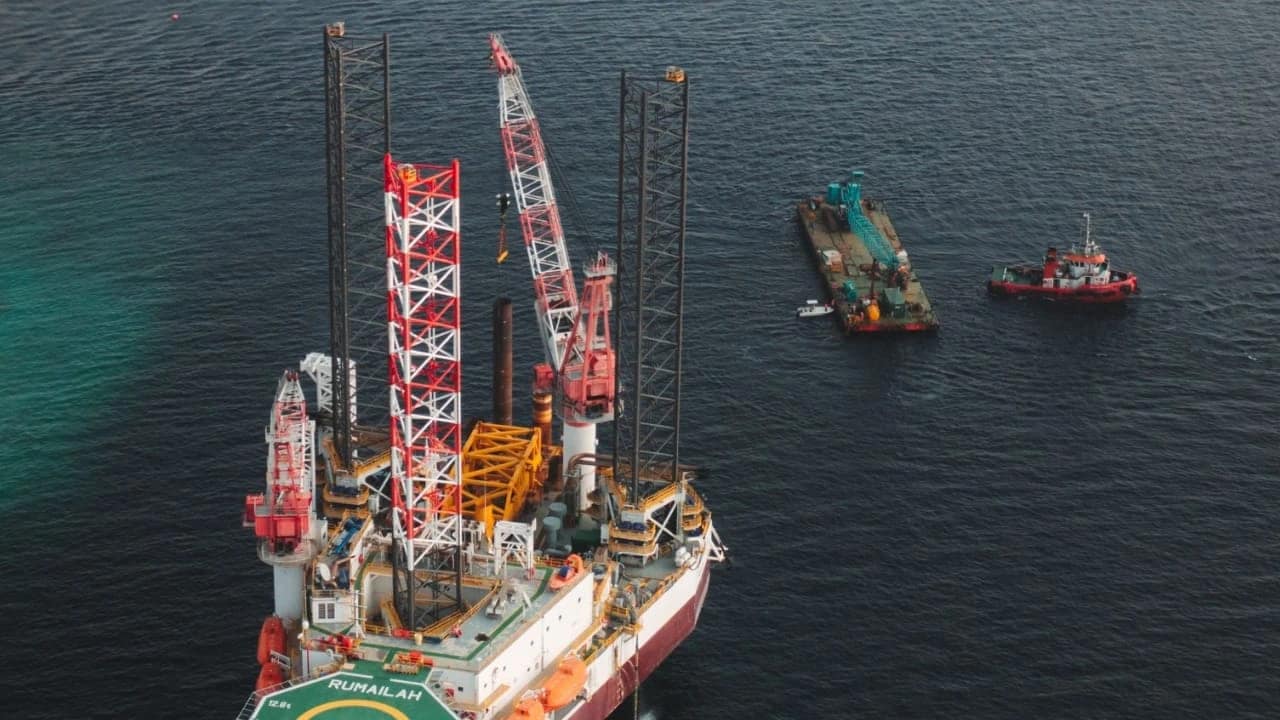
ExxonMobil’s planned $1 billion investment in the Usan Infill Project reflects renewed confidence in deepwater assets where larger reserves, longer production cycles and stronger operating economics are reshaping investment decisions.
The move places Nigeria’s upstream story back inside the part of the market where international oil companies still see durable value.
The significance is not that ExxonMobil Nigeria is returning to every part of the country’s oil industry.
The capital is going offshore, where operational disruption is lower and long-life production can justify heavy spending.
Nigeria’s next energy chapter is being written around deepwater fields, revived drilling activity and projects capable of lifting crude output without carrying the same exposure that pushed several international companies away from legacy onshore assets.
Why Is ExxonMobil Nigeria Investing $1 Billion Again?
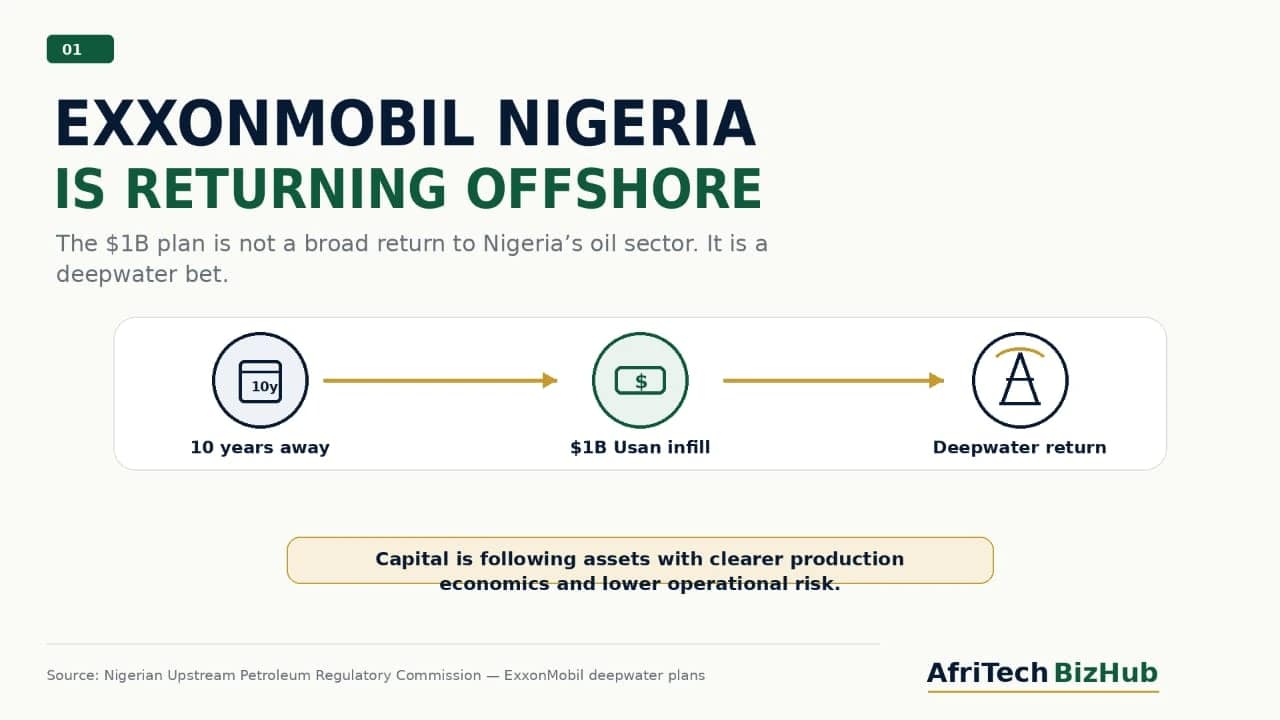
ExxonMobil Nigeria is investing again because the economics of deepwater production still offer a stronger case than much of Nigeria’s legacy oil terrain.
The Usan Infill Project sits offshore, where production can be expanded through existing field infrastructure, additional wells and improved reservoir recovery.
That makes the investment less about broad exposure to Nigeria’s oil sector and more about selective capital deployment into assets with clearer production potential.
The project is expected to add about 40,000 barrels per day to Nigeria’s output, placing it directly inside the country’s production-recovery agenda.
ExxonMobil affiliate Esso Exploration and Production Nigeria is also returning to drilling activity after its last operation in 2016.
That timeline gives the investment its weight.
Long-term capital is returning where the asset quality still supports scale, efficiency and future production.
Can Africa Oil Producer Regain Lost Investor Confidence?
Nigeria’s investor-confidence problem has never been evenly spread across the whole industry.
Onshore assets have faced security concerns, ageing infrastructure, theft, community disputes and higher operational uncertainty.
Offshore projects present a different profile, with larger reserves, deeper capital requirements, stronger technical barriers and longer production horizons.
That difference is now shaping investment behaviour.
Global energy companies are not treating all Nigerian assets the same way.
Capital is moving toward projects where risk can be priced more clearly and production can be sustained over longer cycles.
Nigeria’s position as a major Africa oil producer strengthens when investors begin separating asset quality from the wider narrative of exits and divestments.
How Will Nigeria Crude Production Rise From This Project?
Nigeria’s crude production recovery increasingly depends on offshore capacity that can offset the limits of mature and disrupted assets.
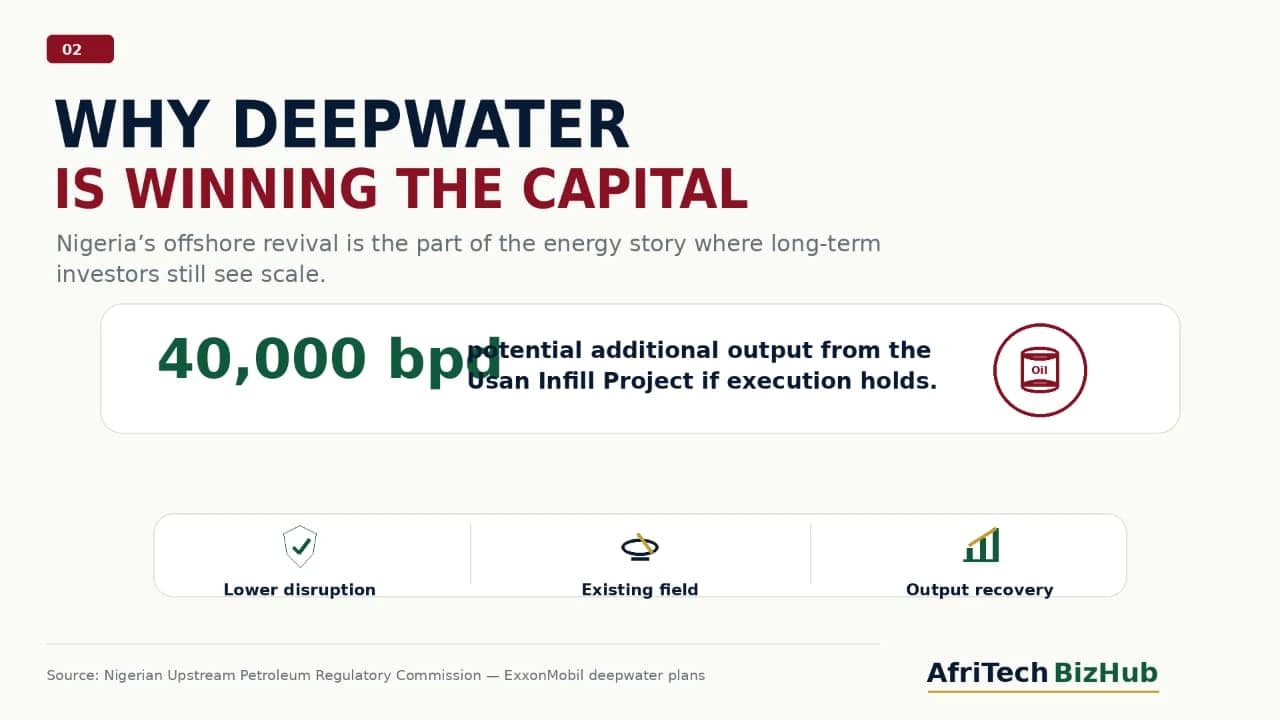
The Usan Infill Project is expected to add up to 40,000 barrels per day, giving the country a measurable boost if execution stays on schedule.
In a sector where production losses have often come from theft, outages and underinvestment, incremental offshore barrels carry strategic value.
The project also supports government revenue, export capacity and energy-market credibility.
Nigeria needs steady crude output to strengthen foreign-exchange earnings and maintain its role in the global supply mix.
Offshore investment gives the country a route to production growth that is less exposed to the pressures that have weakened parts of the onshore system.
Higher output will depend on drilling delivery, project timing and sustained operating performance.
Why Is the Energy Market Watching Nigeria’s Offshore Revival?
Nigeria’s offshore revival is drawing attention because deepwater projects are becoming the stronger side of the country’s upstream story.
Recent industry headlines have focused on divestments, onshore exits and operational risk, but offshore assets are carrying a different investment profile.
Larger reserves, longer production cycles and lower exposure to theft and disruption are giving global energy companies a clearer case for fresh capital.
The Nigerian Upstream Petroleum Regulatory Commission has already placed ExxonMobil’s renewed deepwater plans inside Nigeria’s wider upstream revival.
In April 2026, the regulator said ExxonMobil briefed it on planned multi-billion-dollar deepwater projects, including potential new investments on Usan, life-extension work on Erha, and wider deepwater opportunities such as Owowo and Bosi.
That regulatory signal gives the Usan investment a broader frame: Nigeria’s offshore sector is becoming the part of the energy market where long-term capital still sees scale, reserves and policy support.
What Is the Main Business of ExxonMobil?
ExxonMobil operates across the global energy value chain, with major businesses in upstream exploration and production, refining, fuels, lubricants, LNG, chemicals and lower-emission solutions.
Its upstream business remains central to the company’s capital strategy because large oil and gas projects can support long production lives, reserve replacement and cash flow across market cycles.
That is why the Nigeria decision carries weight beyond one offshore field.
ExxonMobil does not commit heavy capital simply to defend a market presence.
It allocates investment where asset quality, technology, reservoir potential and long-cycle returns can support production for years.
Nigeria’s deepwater sector now sits inside that calculation, giving the country access to capital, offshore expertise, drilling technology and production efficiency at a time when its crude-output recovery depends on stronger assets.


Recent Comments