

Featured Summary:
- Liberia shipping manages one of the world’s largest ship registries.
- Global shipping companies choose Liberia for regulatory confidence, not geography.
- Maritime services have become one of Liberia’s strongest international industries.
- Liberia shows how institutions can create globally competitive African businesses.
Liberia’s greatest maritime asset is not the number of ships it owns.
It is the confidence the global shipping industry places in its flag, legal framework and registry administration.
By building one of the world’s largest ship registries, Liberia has turned institutional credibility into a global maritime business.
That gives Liberia shipping a different kind of power.
The country does not need to operate the world’s biggest ports or own the world’s biggest fleet to influence global ocean trade.
Its strength comes from registering vessels that move energy, containers, raw materials and manufactured goods across international routes.
Liberia has built one of Africa’s most successful service exports by making regulation itself commercially valuable.
How Is Liberia Shipping Dominating Global Ocean Routes?
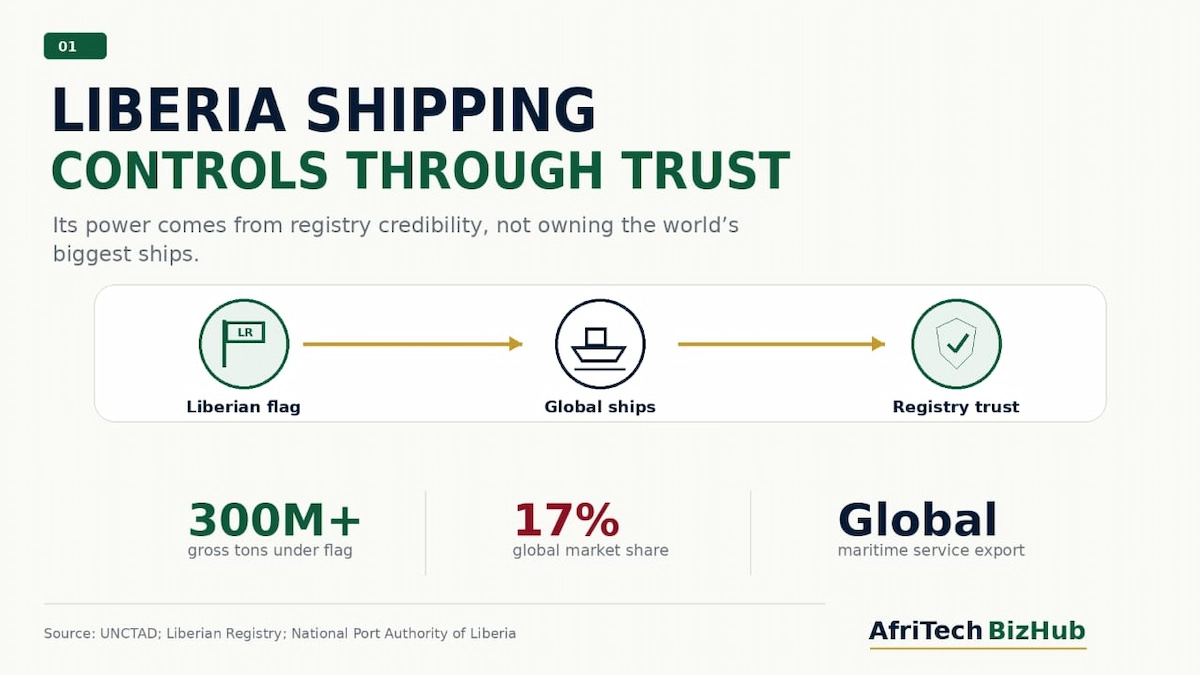
Liberia shipping dominates global ocean routes through registration rather than ownership.
The Liberian flag appears on vessels operated by international shipowners, allowing the country to sit inside global trade flows without controlling every vessel commercially.
That is why Liberia can influence shipping far beyond the size of its domestic economy.
The Liberian Registry says it has more than 300 million gross tons under its flag and about 17 percent of global market share, placing it among the most important flag states in international shipping.
This is maritime influence built through institutional service, not port size.
Liberia has shown that a small African country can build global relevance by offering shipowners a registry system that is recognised, efficient and commercially trusted.
Why Does the Maritime Industry Trust Liberia’s Registry?
The maritime industry trusts Liberia’s registry because shipowners are buying certainty as much as administrative efficiency.
A flag state affects compliance, safety oversight, legal recognition, financing, insurance, crewing, inspections and port acceptance.
In global shipping, those details are not paperwork. They shape whether a vessel can move smoothly through international markets.
Liberia’s advantage comes from consistency.
Shipowners need a flag that is accepted by regulators, banks, insurers, charterers and port authorities across different jurisdictions.
The Liberian Registry has built its business around regulatory reliability, technical support and international compliance.
Governance becomes the commercial product.
Trust becomes the reason ships choose Liberia.
How Are Oil Tankers Choosing Liberia’s Flag?
Oil tankers choose a flag based on commercial risk, regulatory acceptance and operational efficiency.
A tanker moving crude or refined products across global routes needs a flag that supports financing, chartering, insurance, safety certification and port entry.
The flag is no longer only a national symbol.
It is part of the vessel’s business infrastructure.
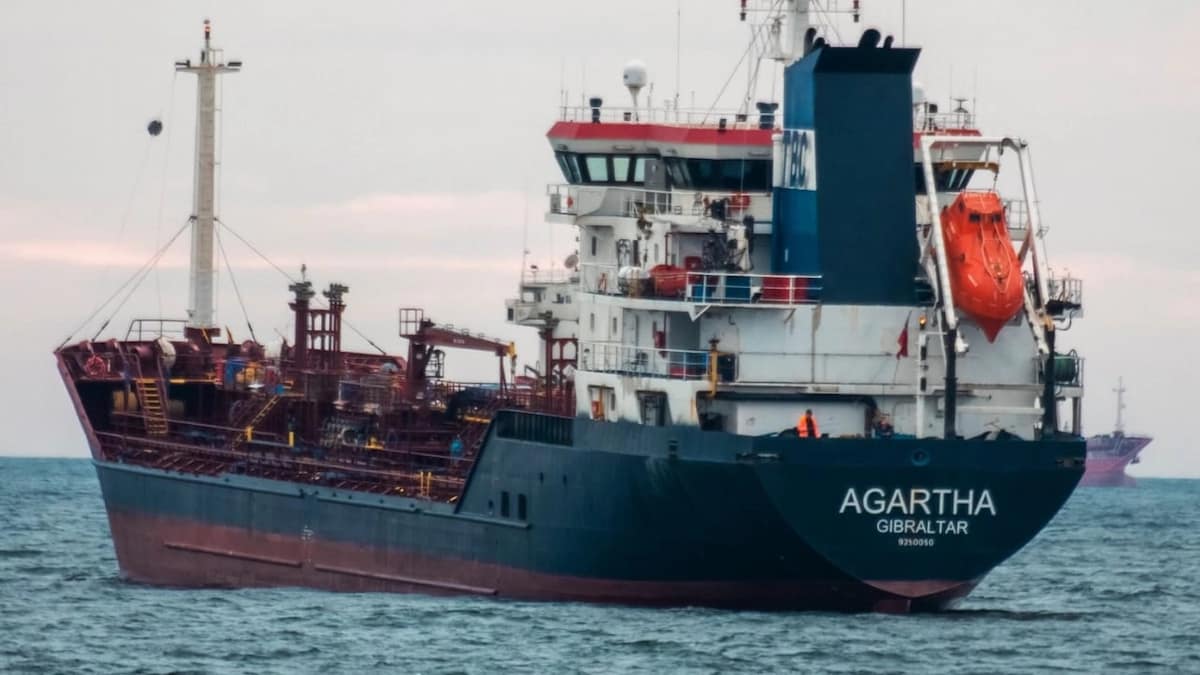
That is why Liberia shipping has become important to tanker owners and other major fleet operators.
The Liberian Registry describes itself as the world’s largest flag state and a leading flag for tankers, container ships, LNG and LPG newbuilds.
For oil tankers, the value lies in credibility at sea and acceptance in port. Registry choice has become part of corporate shipping strategy.
Can African Maritime Industry Growth Transform Shipping?
Liberia proves that Africa’s maritime future does not have to be limited to port construction and cargo handling.
Ports remain important, but maritime services can create influence through registration, compliance, insurance, arbitration, digital administration and regulatory expertise.
Liberia shipping shows how an African state can turn maritime governance into a globally competitive business.
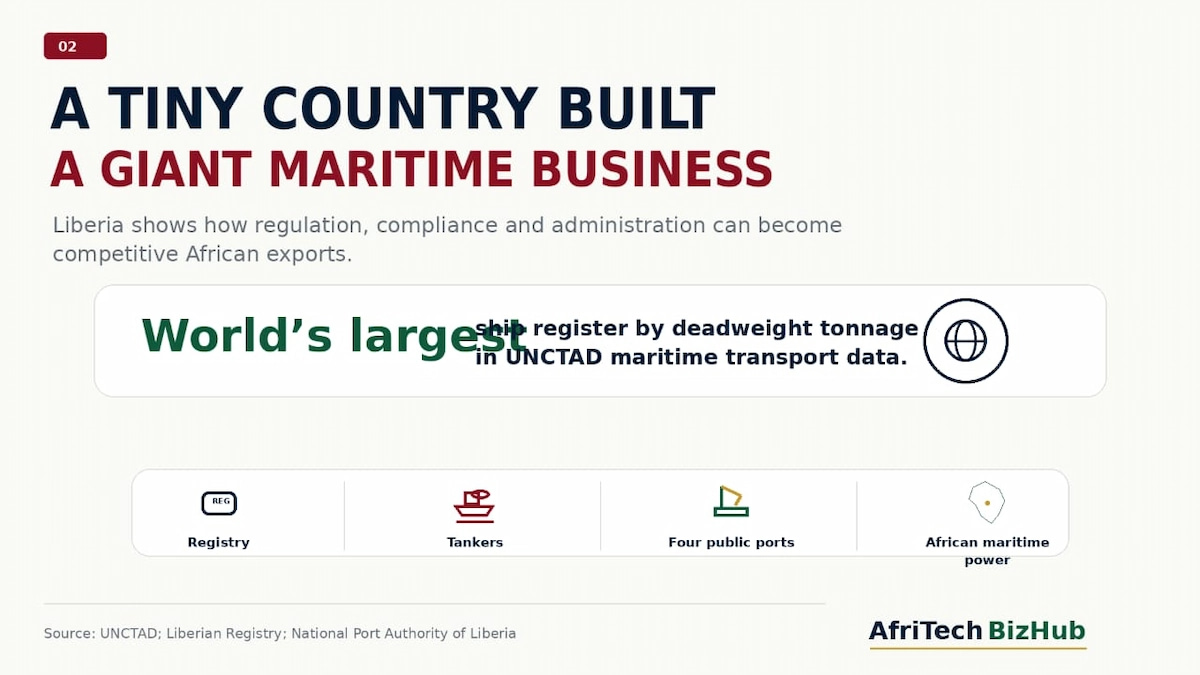
UNCTAD’s 2026 maritime transport data lists Liberia as the world’s largest ship register by deadweight tonnage, ahead of Panama and the Marshall Islands.
That ranking places an African registry at the centre of global carrying capacity and shows why maritime growth must be measured beyond physical infrastructure alone.
Africa’s next maritime opportunity includes ports, but it also includes the legal, financial and administrative systems that manage global shipping.
How Many Ports Are in Liberia?
Liberia has four main public ports under the National Port Authority system: the Freeport of Monrovia, the Port of Buchanan, the Port of Greenville and the Port of Harper.
The Freeport of Monrovia is the country’s largest and main port, while Buchanan, Greenville and Harper support national and regional cargo movement.
These ports matter for Liberia’s domestic economy and regional trade ambitions.
The scale of Liberia’s global maritime influence, however, is far bigger than the size of its port network.
The country’s international shipping power comes primarily from its registry, not from cargo throughput at home.
That distinction is what makes Liberia shipping unusual.
Its ports support national trade, but its registry connects Liberia to the world’s biggest ships, fleets and ocean routes.


Recent Comments