


Featured Summary:
- Kenya ICT sector is positioning open-source technology closer to long-term digital infrastructure.
- ICT markets increasingly reward reusable systems, local capability, and lower dependence on closed technology environments.
- Konza Technopolis is increasingly aligning with Kenya’s wider digital public infrastructure ambitions.
- Tech partnerships may determine how future African smart cities operate and scale.
Digital transformation creates a question governments eventually have to answer: after systems are built, who controls how they evolve?
Countries can digitize quickly and still depend heavily on external platforms for upgrades, maintenance, interoperability, and long-term decision-making.
Kenya’s latest open-source partnerships point toward a different model.
Through open-source coordination, sovereign digital infrastructure planning, GovStack discussions, and technology partnerships, the country is strengthening the foundations that determine how public systems connect and improve over time.
The deeper shift sits beneath software adoption.
Kenya ICT sector priorities increasingly focus on retaining decision-making power around digital infrastructure rather than simply consuming technology.
How Is Kenya ICT Sector Driving Digital Sovereignty?
Kenya ICT sector strategy increasingly treats software architecture as national infrastructure rather than ordinary procurement.
Open-source systems allow governments to inspect code, adapt services, reuse digital building blocks, and avoid rebuilding public platforms each time priorities or providers change.
That changes how digital sovereignty works in practice.
Governments gain more flexibility to decide where systems operate, how public data moves, and how services continue after external contracts end.
Kenya’s Open Source Programme Office reflects that direction by creating coordination between government, industry, and academia around long-term digital capability rather than isolated software projects.
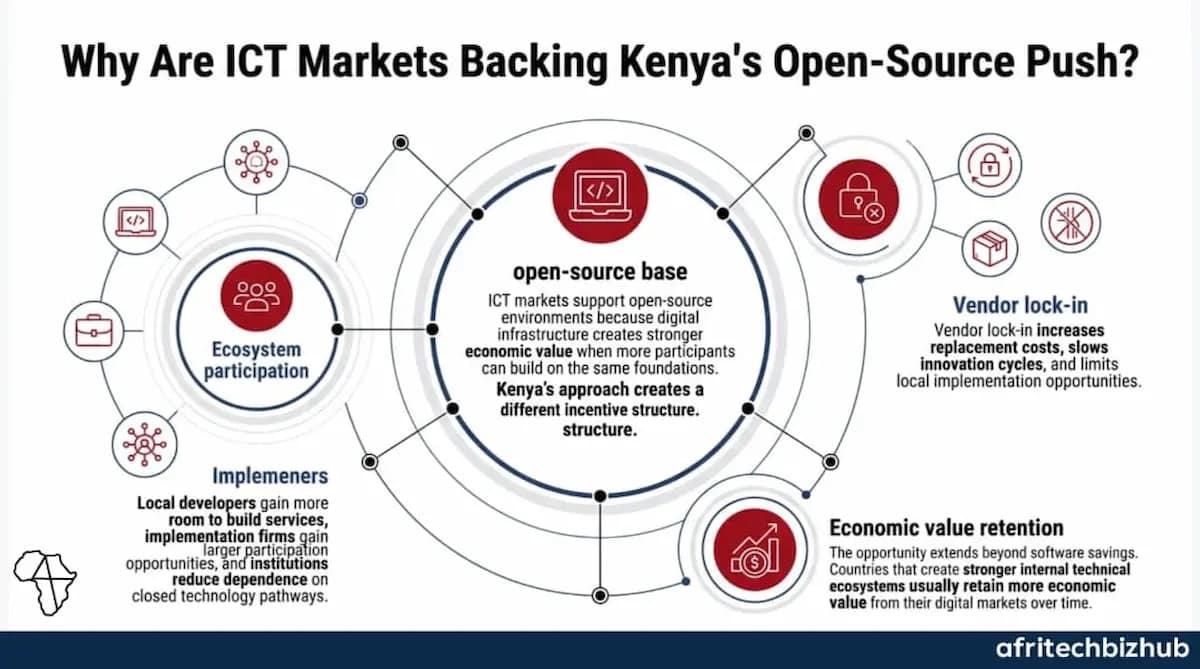
Why Are ICT Markets Backing Kenya’s Open-Source Push?
ICT markets support open-source environments because digital infrastructure creates stronger economic value when more participants can build on the same foundations.
Vendor lock-in increases replacement costs, slows innovation cycles, and limits local implementation opportunities.
Kenya’s approach creates a different incentive structure.
Local developers gain more room to build services, implementation firms gain larger participation opportunities, and institutions reduce dependence on closed technology pathways.
The opportunity extends beyond software savings. Countries that create stronger internal technical ecosystems usually retain more economic value from their digital markets over time.
Can Konza Technopolis Power Kenya’s GovStack Vision?
Konza Technopolis increasingly aligns with Kenya’s broader digital infrastructure direction as public institutions expand interest in reusable services, interoperable architecture, and stronger domestic technology capability.
GovStack principles place modular digital public infrastructure closer to long-term service delivery.
That expands what Konza represents operationally.
Instead of functioning only as a technology destination, it increasingly aligns with broader efforts around interoperable public services, digital coordination, and reusable public infrastructure.
GovStack becomes more valuable when digital services can be adapted and reused instead of repeatedly rebuilt.
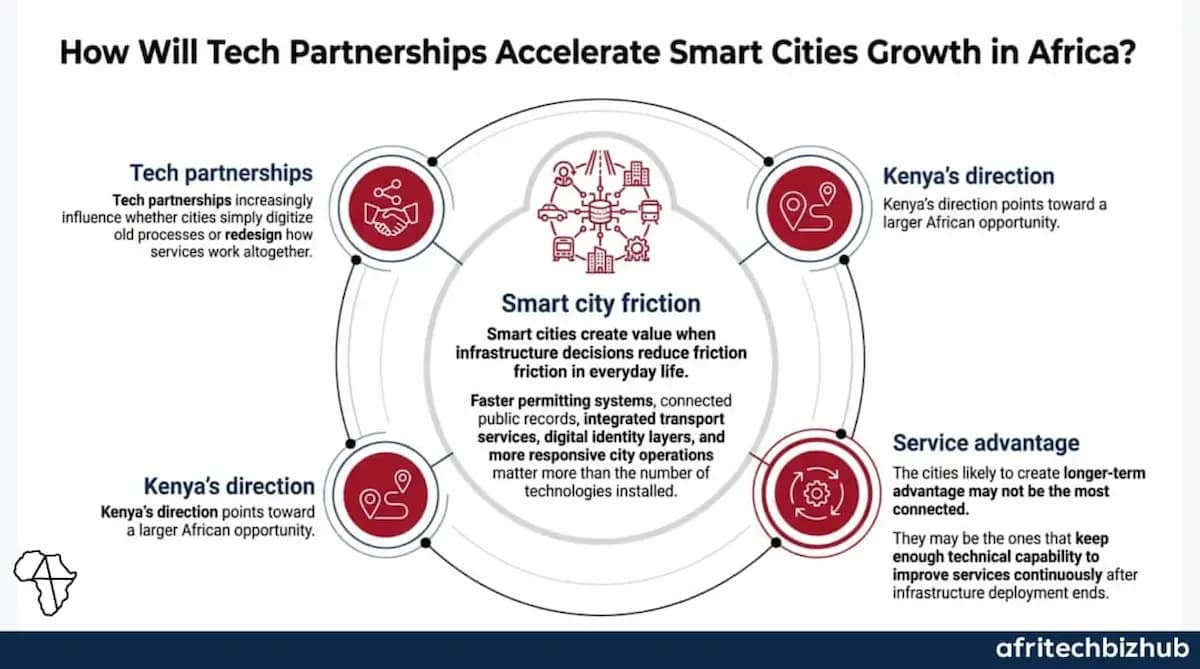
How Will Tech Partnerships Accelerate Smart Cities Growth in Africa?
Smart cities create value when infrastructure decisions reduce friction in everyday life. Faster permitting systems, connected public records, integrated transport services, digital identity layers, and more responsive city operations matter more than the number of technologies installed.
Kenya’s direction points toward a larger African opportunity.
Tech partnerships increasingly influence whether cities simply digitize old processes or redesign how services work altogether.
The cities likely to create longer-term advantage may not be the most connected.
They may be the ones that keep enough technical capability to improve services continuously after infrastructure deployment ends.


Recent Comments