


Featured Summary:
- Nigeria tax reform revealed a disconnect between policy announcements and public understanding.
- Tax Info emerged to help citizens navigate complex taxation discussions.
- Digital literacy Africa remains critical; access alone does not guarantee meaningful participation.
- Technology adoption Africa depends on how well people can use and interpret modern systems and services.
Access to digital tools has expanded rapidly across Africa.
Networks, smartphones, and online platforms now reach millions, but observed patterns show that access alone is insufficient.
Nigeria’s recent tax reform debate exposed this reality: citizens could access the discussion, yet confusion spread faster than clear explanations.
Tax Info emerged to bridge this gap, providing digestible interpretations of complex proposals.
The platform highlights a broader continental issue: as technology and information flow accelerates, understanding and actionable digital literacy must keep pace, or adoption and participation falter.
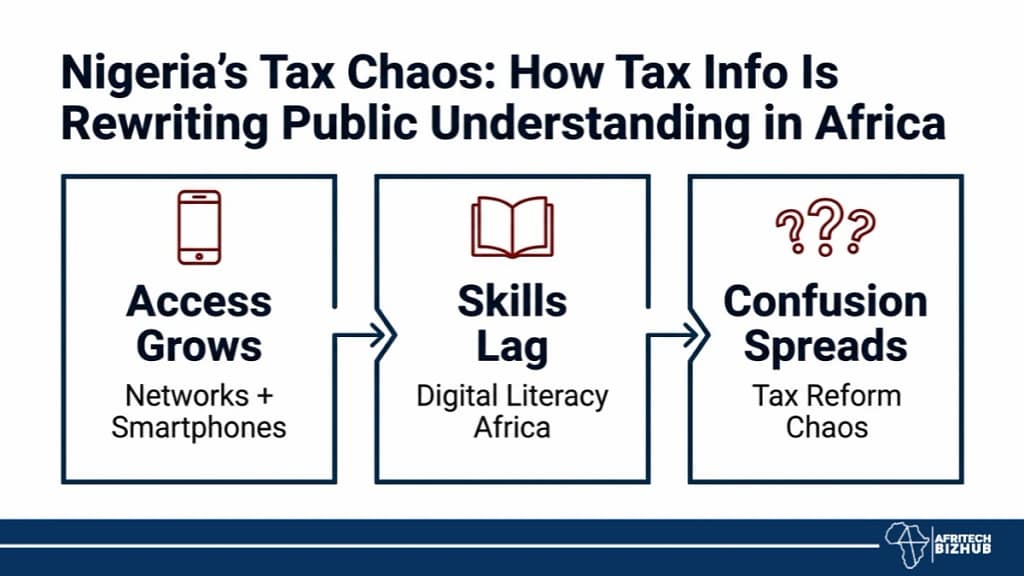
How did Nigeria Tax Reform Highlight Information Gaps?
New tax proposals created intense public debate, yet legal language, compliance requirements, and policy shifts were often opaque.
Observed patterns indicate that citizens and small businesses struggled to separate speculation from fact, amplifying confusion.
Tax Info simplified the discussion, translating legal and technical terms into accessible explanations.
Across Africa, similar gaps appear whenever policy or services move faster than public comprehension, showing that access without clarity can hinder engagement.
The lesson is observable: platforms that clarify complex information fill a systemic gap, ensuring citizens can engage meaningfully with digital systems.
Can Digital Literacy Africa Close these Gaps?
Digital literacy Africa extends beyond basic access.
Citizens may have smartphones or internet connectivity but still struggle to navigate applications, interpret official information, or complete online transactions.
Observed patterns show that digital literacy affects trust, adoption, and effective use of services.
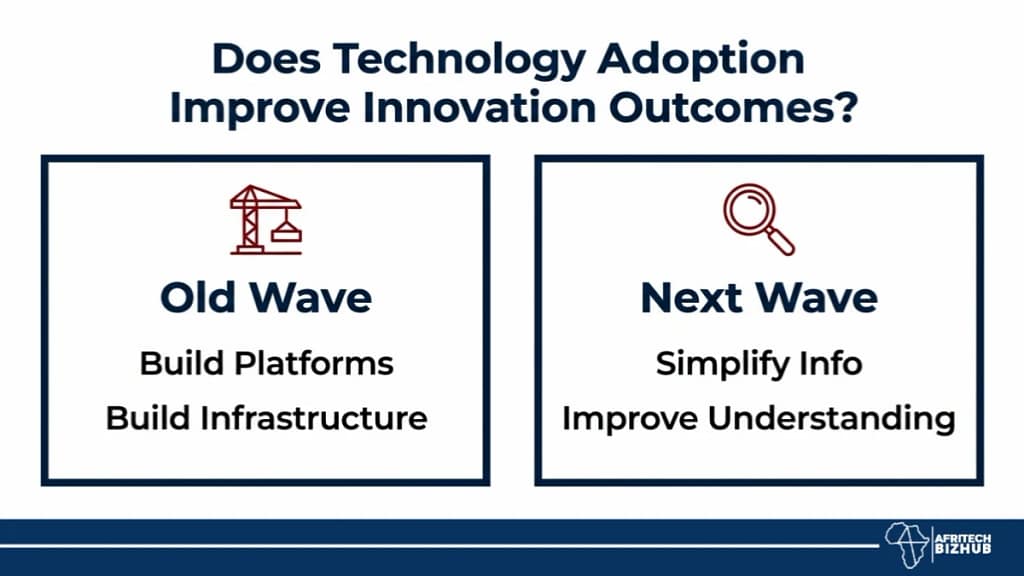
Countries investing in practical digital skills, not just infrastructure, position themselves to benefit more fully from technology adoption Africa.
Nigeria tax reform illustrates that information without comprehension is insufficient.
Skill development, guidance, and user education are essential to bridge the gap between access and participation.
How did Cybercafés Influence Early Technology Engagement?
Before smartphones were widespread, cybercafés introduced millions of Africans to online services.
Observed behavior shows these spaces fostered curiosity, exploration, and early digital literacy.
Entrepreneurs, developers, journalists, and designers first accessed the internet in these hubs, forming foundational skills for later technology adoption Africa.
The legacy persists: exposure drives engagement, but skill and guidance determine whether users benefit fully from digital tools.
Patterns suggest that early exposure matters, but structured support and interpretation platforms, like Tax Info, accelerate adoption and informed participation.
How are Institutional Frameworks Supporting Comprehension of Nigeria Tax Reform?
The National Office for Technology and Tax Policy (via advisory and research institutions like PwC Nigeria) provides regulatory guidance and clarification on tax changes.
Observed patterns show that when institutional frameworks explain reform clearly, citizen understanding improves and confusion decreases.
Tax Info complements these frameworks by translating official guidance into user-friendly content, illustrating the intersection between institutional policy and citizen comprehension.
This strengthens digital literacy Africa by connecting formal regulations with practical understanding.
Are Cross-border Payments Slowing Fintech Growth?
Cross-border payments do not prevent growth; they reveal structural weaknesses.
Observed patterns indicate that first-generation fintech success proved demand exists, but scaling across multiple markets exposes regulatory fragmentation.
Each additional market adds compliance obligations, reporting standards, and supervisory relationships.
Growth remains possible, but the path to scale is determined less by technology than by the ability to navigate these fragmented frameworks.
Africa’s next generation of fintech leaders will be defined not only by product innovation, but by skill in building regional businesses under complex regulatory conditions.


Recent Comments