

Featured Summary:
- Africa trade routes are becoming strategic assets in the global economy
- Global capital is concentrating around the logistics networks linking minerals, energy and manufacturing to world markets
- Industrial competition is increasing the value of Africa’s transport infrastructure
- The next investment race will extend beyond transport into the industries those trade routes support
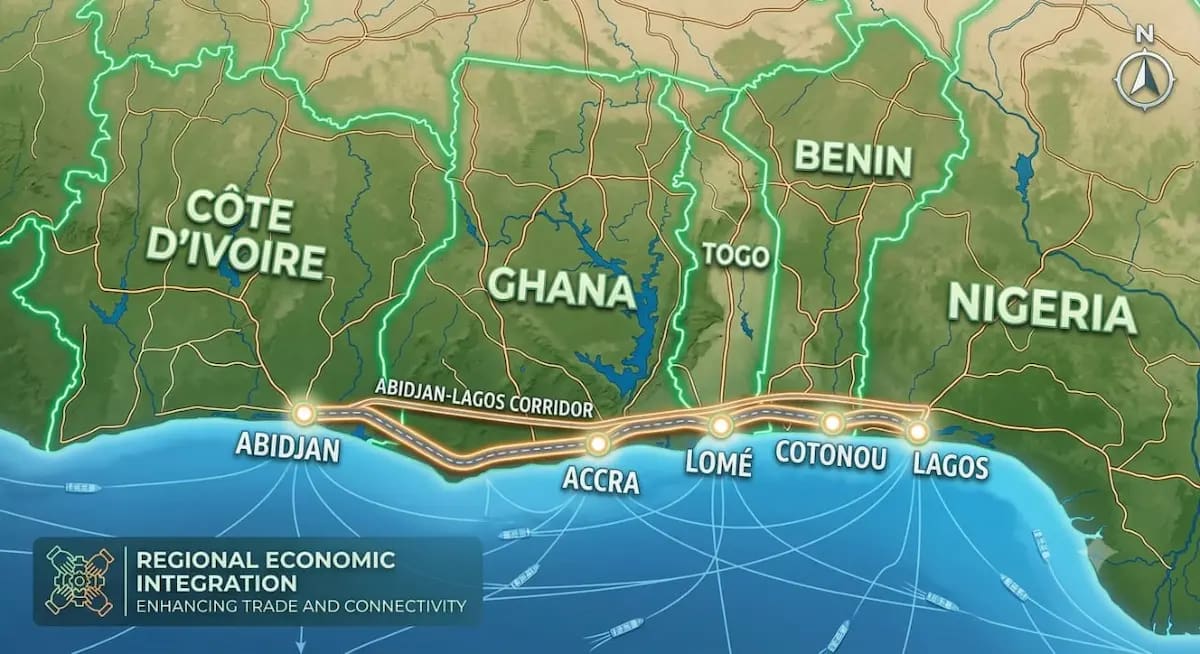
Global investors are repositioning around Africa trade routes rather than competing only for the continent’s resources.
The United Arab Emirates has invested an estimated $168 billion across Africa over the past decade with logistics, mining, agriculture and energy at the centre of its expansion, while the United States and its partners are assembling $3–5 billion to finance the Lobito Corridor linking Central Africa’s critical minerals to the Atlantic.
At the same time, DP World has launched a new Brazil–Africa logistics corridor connecting Latin American exporters to its African ports and inland logistics network.
Together, those investments suggest that Africa trade routes are becoming strategic supply-chain assets rather than transport infrastructure alone.
Critical minerals, energy exports, manufacturing and regional trade have increased the commercial importance of the logistics networks connecting African production to global markets.
Global capital is competing less for transport infrastructure than for the supply chains it controls.
Africa Trade Routes Are Becoming Strategic Supply Chain Assets
The commercial value of Africa trade routes is no longer determined primarily by the volume of cargo they handle.
Critical minerals, LNG, refined fuels and manufactured goods now move through logistics networks that connect African production to global supply chains.
As battery manufacturing, energy security and critical-mineral supply chains reshape global investment priorities, access to those logistics networks has become more valuable than transport demand alone would suggest.
That shift is visible across multiple investment models. The Lobito Corridor is being developed around copper and critical-mineral exports rather than rail transport alone.
DP World and AD Ports continue expanding logistics networks that connect African ports to international shipping and inland distribution, while Dangote’s integrated refinery, marine terminal and deep-sea port link industrial production directly to export markets.
The commercial value of Africa trade routes is no longer determined by the cargo they move, but by the industries they connect to global markets.
Economic Competition Is Raising the Strategic Value of Africa Trade Routes
The competition surrounding Africa trade routes is no longer driven by trade volumes alone.
Governments and private investors are positioning around the same logistics networks for different commercial objectives.
The United States and its partners continue supporting the Lobito Corridor to strengthen critical-mineral supply chains, Gulf investors are expanding logistics and port platforms that connect Africa to global trade, while China’s long-standing investments continue linking production centres to export markets.
The investments follow different strategies, but they converge around the same transport networks because those routes increasingly determine access to strategic industries.
That convergence reflects a broader change in the global economy. Energy security, battery manufacturing, critical minerals and regional industrialisation all depend on reliable access to production and export corridors rather than extraction alone.
As those industries compete for resilient supply chains, the commercial importance of Africa trade routes rises beyond the movement of goods to the movement of strategic value.
Global demand is increasing the strategic value of Africa trade routes faster than new trade routes are being built.
Africa Trade Routes Are Determining Where Industrial Value Accumulates
The commercial value of Africa trade routes is no longer measured by cargo throughput alone.
Development finance institutions are financing transport corridors as platforms for regional industrialisation, linking logistics infrastructure with manufacturing, processing and cross-border production networks.
The African Development Bank’s Regional Integration strategy identifies transport connectivity, regional value chains and market integration as complementary drivers of industrial competitiveness rather than separate investment priorities.
That approach changes where long-term returns are created. Copper, lithium and other critical minerals generate greater economic value when processing, logistics services, financing, warehousing and export industries develop around the same corridors moving those resources to market.
The infrastructure enables trade, but the surrounding industrial ecosystem captures the larger commercial opportunity.
The highest long-term returns will come from the industries built around Africa trade routes rather than the cargo moving through them.
Global Supply Chains Are Raising the Strategic Value of Africa Trade Routes
Artificial intelligence, energy security and critical-mineral demand are reshaping how global industries organise production and secure supply chains.
Those industries require reliable electricity, processing capacity and efficient export networks before they reach international markets.
That commercial reality is drawing greater attention to the infrastructure connecting African production with global demand.
The next phase of competition is unlikely to centre on transport infrastructure alone. The stronger commercial opportunity will emerge where trade routes support processing, manufacturing, energy systems and regional value chains.
Africa trade routes are moving beyond their traditional role as export corridors. Their long-term significance will be determined by the industries they enable rather than the cargo they carry.


Recent Comments