

Featured Summary:
- China-Africa partnerships are testing roles beyond infrastructure construction
- South Africa, Nigeria and Lafarge Africa represent three distinct models of Chinese participation
- Capital and operating expertise are entering before domestic capability has fully caught up
- The final value will depend on what African institutions retain after the partnerships begin
Chinese companies are beginning to move closer to the operation of Africa’s strategic industries rather than remaining at the edge as financiers and contractors.
South Africa’s investment mission to Beijing has added electricity transmission and generation to that shift as the government seeks partners for projects linked to its R2.2 trillion infrastructure programme.
Any commercial participation would still depend on negotiations, regulatory processes and project-level approvals, but the discussion itself reflects a broader commercial direction.
The same direction is emerging through different structures elsewhere on the continent. NNPC is discussing a potential technical equity partnership for the Port Harcourt and Warri refineries, while Huaxin has completed the acquisition of Holcim’s controlling interest in Lafarge Africa.
The transactions differ in structure and remain at different stages, yet they point to the same commercial development. China-Africa partnerships are moving beyond financing infrastructure toward participating more directly in the industries that drive it.
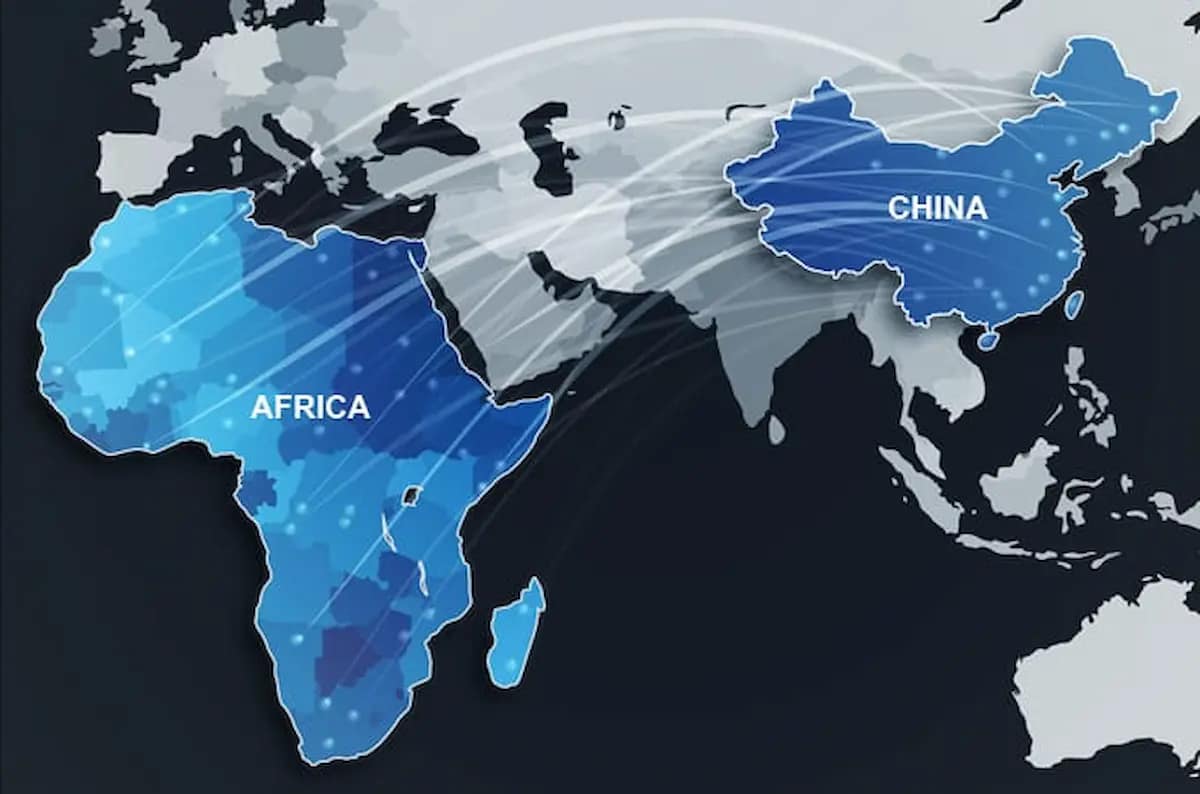
China-Africa Partnerships Are Moving Beyond Construction
South Africa is testing proposed Chinese participation in electricity transmission and generation linked to its R2.2 trillion investment programme, with any commitments still subject to negotiation and regulatory approval.
Nigeria is considering a different structure through NNPC’s memorandum of understanding with Sanjiang Chemical and Xinganchen, which covers a potential technical-equity role in completing, operating and maintaining the Port Harcourt and Warri refineries.
Lafarge Africa represents the completed ownership model. Huaxin has acquired Holcim’s 83.81% controlling interest, placing a Chinese industrial group directly inside one of Nigeria’s major manufacturing businesses.
Chinese participation is now being negotiated across financing, operations and ownership rather than through a single commercial model.
Operating Capacity Is Becoming the Commercial Bargain
Project completion is no longer the only performance threshold attached to the partnerships under discussion.
South Africa’s electricity programme will require transmission assets that remain operational after delivery, while NNPC’s proposed technical-equity arrangement places refinery operations and maintenance alongside the outstanding rehabilitation work.
Capital is entering the negotiations with longer-term operating responsibility attached.
Lafarge Africa reported 35% growth in net sales, a 97% increase in operating profit and a 101% rise in profit after tax in the first quarter of 2026.
Management attributed the result to higher volumes, plant stability, supply assurance, cost discipline and distribution efficiency, without attributing the improvement to Huaxin’s ownership.
Operating performance is becoming part of the investment proposition.
African Institutions Will Determine What the Partnerships Leave Behind
The long-term value of these partnerships will be set by the agreements governing the assets after investment arrives.
Risk allocation, operating obligations and performance oversight will shape whether technical expertise reaches domestic institutions or remains concentrated with the external operator.
The African Development Bank’s PPP Strategic Framework 2021–2031 places project preparation, institutional capacity and transaction management at the centre of effective private participation.
That shifts the benchmark from securing an operator to retaining the capability created during the partnership.
The agreement brings the operator in. African institutions determine what remains when the contract matures.
Strategic Revival Will Be Judged by Capability Retained
The next phase of China-Africa partnerships will be judged less by the number of projects delivered than by the capability those partnerships leave behind.
As Chinese participation extends from financing into operations, technical management and industrial ownership, the commercial benchmark will shift from asset recovery to institutional capability.
Restoring a strategic asset creates immediate economic value. Retaining the technical knowledge, operating responsibility and industrial capability to sustain it determines whether that value remains in Africa after the partnership has run its course.


Recent Comments