

Featured Summary:
- China tariff-free trade is creating new export winners across Africa
- Export capacity—not eligibility—is determining who gains most
- Businesses are capturing the gains faster than households
- Manufacturing and value addition will determine the next winners
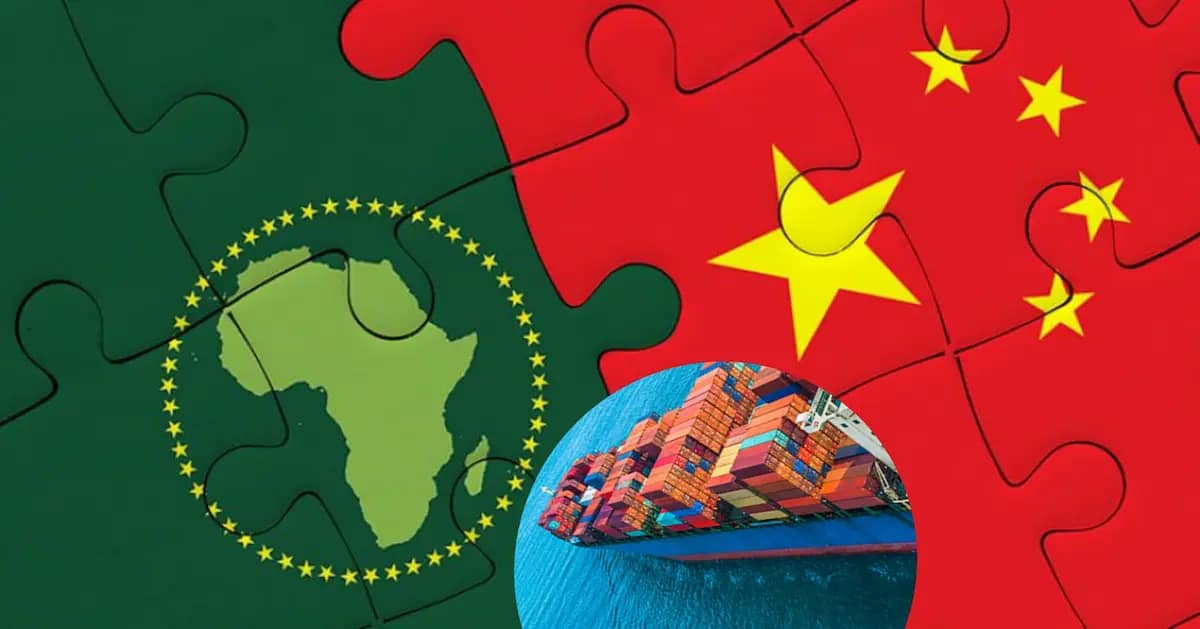
China has opened its market wider to African exporters.
Since May 1, 2026, the country has applied zero-tariff treatment across all tariff lines to the 53 African countries with which it maintains diplomatic relations, extending an arrangement that had covered 33 African least-developed countries since December 2024.
The policy has lowered a major cost at the border and widened the range of African products capable of competing in China.
The commercial gains, however, are not moving evenly across the continent. China tariff-free trade is rewarding countries that already have farms, mines, processors, exporters and logistics networks capable of supplying a large and demanding market.
Preferential access has created the opening, but production capacity is deciding who converts it into sales. Manufacturing and value addition will determine the next winners.
China Tariff-Free Trade Has Expanded Africa’s Export Opportunity
China’s policy has removed tariffs across 100 percent of tariff lines for its 53 African diplomatic partners.
The latest expansion brought 20 African countries outside the least-developed-country category into the arrangement from May 1, 2026, initially for two years.
Products governed by tariff quotas receive the zero rate within their allocated quotas, while existing out-of-quota duties remain in place.
The initiative enters an established trade corridor. China-Africa trade reached a record $348 billion in 2025, while Chinese imports from Africa increased by 5.4 percent to $123 billion.
Those figures predate the full continental expansion and cannot be treated as its result, but they show the scale of the market now being opened more widely to African producers.
China has also streamlined quarantine procedures and expanded green channels for agricultural and food imports, reducing some of the non-tariff friction that continues after duties are removed.
Tariff removal does not eliminate certification rules, product standards, transport costs or the need to secure Chinese buyers.
It does, however, make eligible African goods more price-competitive once those requirements have been met. Market access is no longer the primary barrier.
Export Capacity Is Creating Africa’s New Winners
The earliest shipments show where the commercial opportunity is moving first. South African apples became the first products cleared under the expanded policy, followed by South African wine and pharmaceutical raw materials.
Kenyan avocados, Egyptian citrus fruit, Moroccan gypsum and Nigerian bovine bone products also entered China during the policy’s first weeks.
These countries are gaining early because approved products, exporters and supply routes were already in place before the tariff changed.
Agriculture and food exports carry some of the clearest new advantages. China identified cocoa from Ghana and Côte d’Ivoire, Kenyan coffee and avocados, and South African citrus fruit and wine among products that previously faced tariffs ranging from 8 percent to 30 percent.
Ethiopia’s coffee sector and Zambia’s expanding agricultural exports are also positioned to benefit where producers can meet Chinese health, quality and volume requirements.
Zambia illustrates the advantage of readiness: after receiving full tariff-free access in December 2024, bilateral trade with China reached $3.56 billion in the first half of 2025, increasing 15.5 percent from the previous year.
Mineral exporters remain major beneficiaries because Chinese industries already buy African copper, cobalt, iron ore and other industrial inputs at scale.
Zambia and the Democratic Republic of Congo enter with established mineral supply chains, while South Africa, Egypt and Morocco have broader industrial and agricultural export bases.
The largest gains are therefore concentrating around three groups: agricultural producers with approved access, mineral economies with established buyers and manufacturers capable of supplying processed or specialised products. Production is deciding the winners.
Businesses Are Benefiting Faster Than Households
China tariff-free trade improves the commercial position of exporters before it changes household living standards.
Lower duties give producers and traders more room to compete on price, protect margins or expand sales.
Large farms, mining companies, processors, freight operators and businesses already connected to Chinese buyers can capture those benefits quickly because they control the products and infrastructure required to complete the trade.
The transmission to households is weaker and slower. Higher exports do not automatically produce higher wages, stronger farmgate prices or more secure employment when production remains capital-intensive, concentrated among large companies or disconnected from domestic suppliers.
The World Bank’s 2026 Africa Economic Update identifies low investment, weak productivity and limited job creation as structural constraints on African growth.
It argues that stronger demand for African goods will produce better jobs only when countries combine industrial policy with infrastructure, skills, finance and capable firms that can move into higher-value activities.
Export growth reaches households when it creates processing jobs, supplier contracts, transport demand, tax revenue and stronger returns for farmers and smaller businesses.
Without those links, the gains remain concentrated among established exporters. Trade growth has not yet become broad-based prosperity.
Africa’s Next Winners Will Create More Value
The next phase of China Africa trade will be decided by what African economies do before their products cross the border.
Countries that continue exporting raw cocoa, unrefined minerals, unprocessed coffee and other primary commodities can increase volumes, but most of the processing income, industrial knowledge and final consumer value will still be created elsewhere.
China tariff-free trade gives African products access; it does not guarantee that Africa captures more of the value chain.
The stronger opportunity lies in processed foods, refined minerals, packaged agricultural products, pharmaceuticals, industrial inputs and light manufacturing.
AfCFTA can strengthen that shift by connecting regional suppliers, expanding production scale and allowing countries to combine capabilities before competing in China.
Governments must use tariff-free access to attract investment into processing and manufacturing rather than treating higher commodity shipments as the final measure of success.
Preferential access has changed the commercial equation, but it will not remain a permanent competitive advantage on its own.
The next winners will be the countries and businesses that use the opening to build productive capacity, meet Chinese standards and sell higher-value goods.
They will not simply export more products to China. They will create more value before those products leave Africa.


Recent Comments