


Featured Summary:
- PayPal PYUSD is bringing stablecoin settlement deeper into global payment infrastructure.
- Digital payments Africa is increasing pressure for faster settlement and lower transaction friction.
- Digital currency in Africa is attracting attention around commercial settlement rather than speculation.
- Cross-border payments remain a structural opportunity for improving trade efficiency.
Money already moves globally.
The competition now sits elsewhere: how long settlement takes, how many intermediaries sit between sender and receiver, and how much value disappears before transactions arrive.
That pressure is pushing payment companies to rethink how money moves rather than simply where it moves.
PayPal PYUSD enters that environment as a payment-focused stablecoin designed to support digital transactions and settlement activity.
For African markets, the larger implication extends beyond crypto adoption.
The question increasingly becoming relevant is whether new payment layers can reduce settlement friction without increasing dependence on external financial infrastructure.
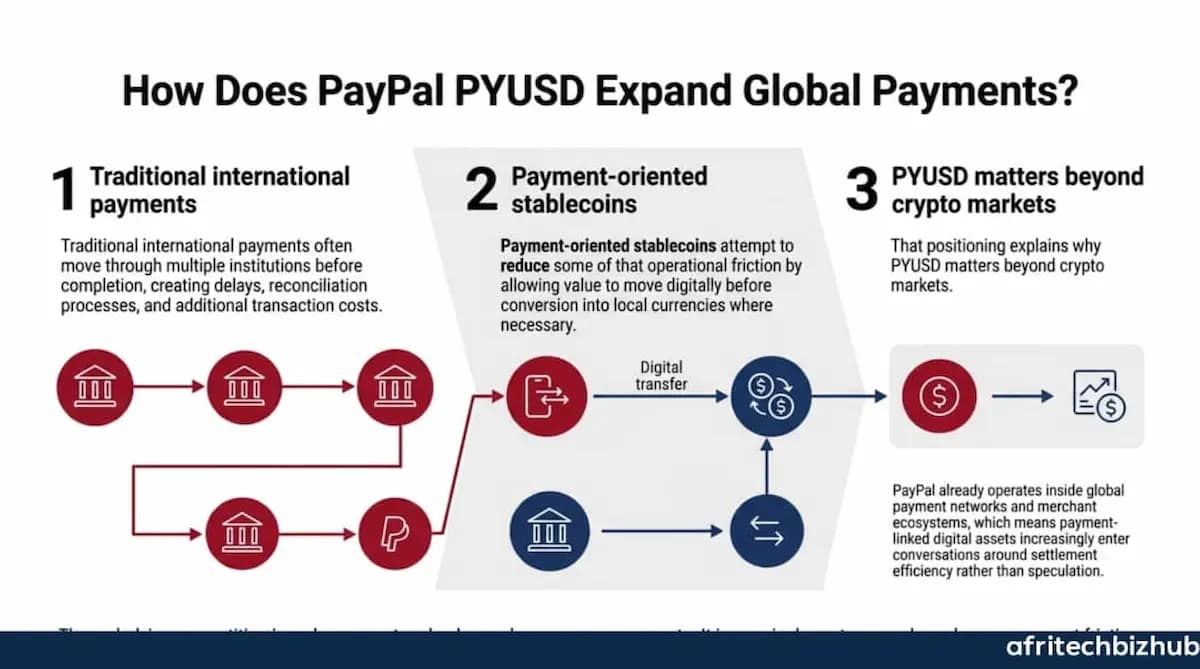
How Does PayPal PYUSD Expand Global Payments?
PayPal PYUSD expands global payments by introducing an additional settlement route inside digital payment environments.
Traditional international payments often move through multiple institutions before completion, creating delays, reconciliation processes, and additional transaction costs.
Payment-oriented stablecoins attempt to reduce some of that operational friction by allowing value to move digitally before conversion into local currencies where necessary.
That positioning explains why PayPal PYUSD matters beyond crypto markets.
PayPal already operates inside global payment networks and merchant ecosystems, which means payment-linked digital assets increasingly enter conversations around settlement efficiency rather than speculation.
The underlying competition is no longer centered only on who processes payments. It increasingly centers on who reduces movement friction.
Why Are Digital Payments Africa Growing Rapidly?
Africa’s payment growth reflects changing commercial requirements more than changing technology preferences.
Businesses selling online, sourcing internationally, and operating across multiple jurisdictions increasingly depend on systems capable of moving money faster than traditional settlement cycles allow.
Digital payments Africa is expanding because faster settlement improves cash circulation, reduces transaction delays, and allows businesses to operate more confidently across fragmented markets.
Payment speed is increasingly becoming part of competitiveness rather than convenience.
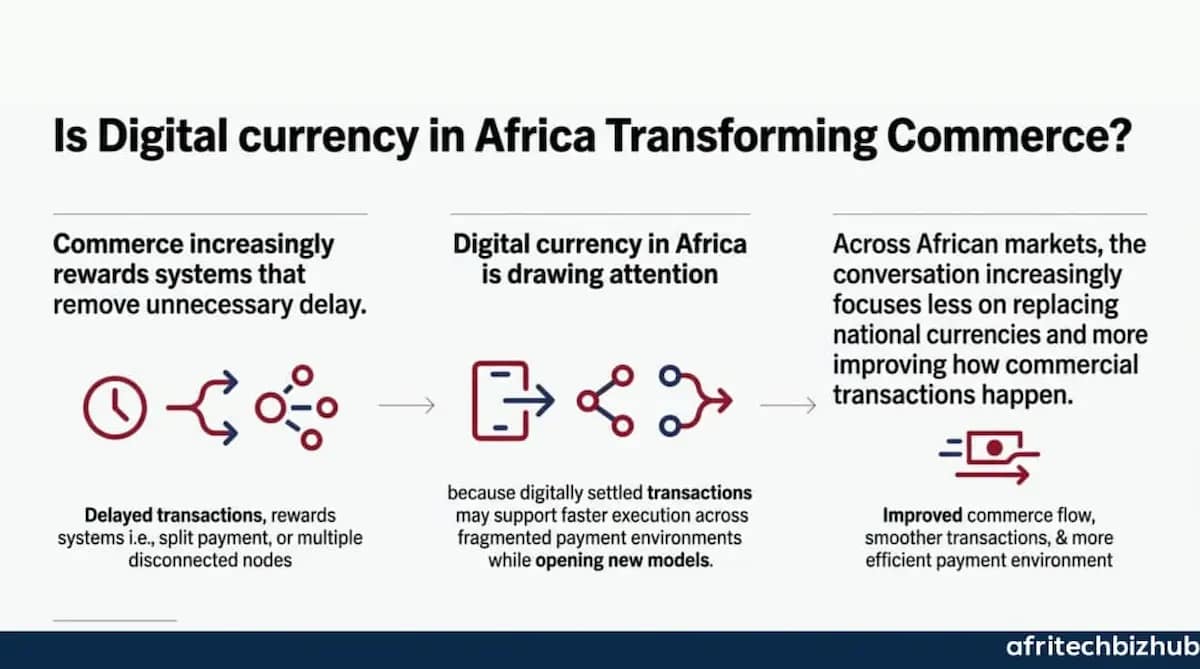
Is Digital Currency in Africa Transforming Commerce?
Commerce increasingly rewards systems that remove unnecessary delay.
Digital currency in Africa is drawing attention because digitally settled transactions may create new possibilities for settlement efficiency across fragmented payment environments while opening new models for value movement and settlement.
The International Monetary Fund has continued examining how digital money and evolving payment infrastructure could influence financial inclusion, settlement efficiency, and cross-border financial activity while raising regulatory and governance questions.
Across African markets, the conversation increasingly focuses less on replacing national currencies and more on improving how commercial transactions happen.
How Do Cross-border Payments Improve Trade Efficiency?
Trade inefficiency rarely starts when goods move.
It often starts when payments slow decisions, delay inventory cycles, and create uncertainty between counterparties operating across different markets.
Businesses that move capital faster usually gain advantages long before products reach customers.
Across Africa, the pressure around cross-border payments extends beyond transaction speed because fragmented settlement still affects how businesses trade, expand, and manage cash across markets.
Faster payment movement changes when suppliers receive capital, how quickly inventory returns to circulation, and whether smaller businesses can operate confidently beyond domestic borders.
The more consequential question is no longer whether money can move digitally.
It is whether payment infrastructure can reduce friction without creating new dependency layers underneath African commerce.


Recent Comments