

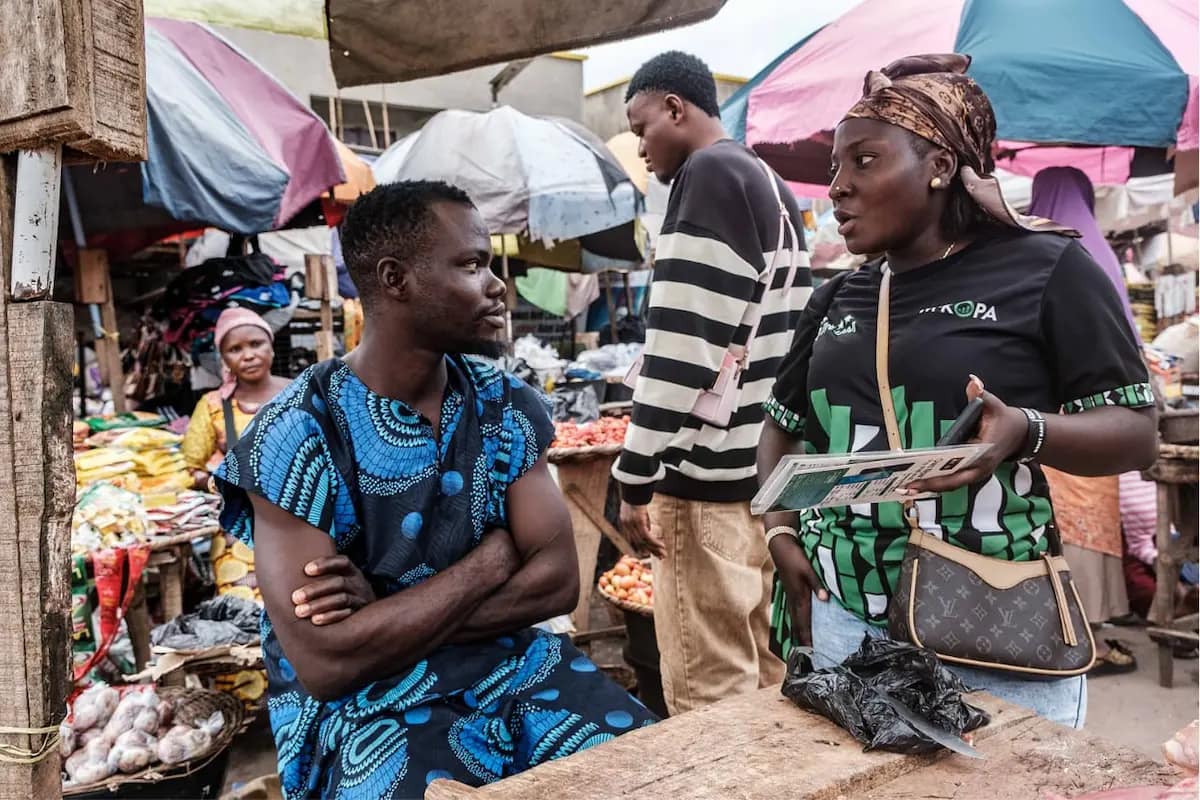
Featured Summary:
- M-KOPA has unlocked over GHS 1.2 billion in credit for more than 550,000 Ghanaian customers
- Smartphone financing is becoming a credit rail, not just a device purchase
- Health insurance is now a stronger hook for lower-income digital adoption
- Consumer finance can widen access, but repayment quality will decide the model
M-KOPA has pushed Ghana fintech into a sharper phase after reporting more than GHS 1.2 billion in credit unlocked for over 550,000 customers since entering Ghana in 2021.
Its first Ghana Impact Report shows a model built around smartphone financing, daily repayments, embedded health insurance, and a 3,000-plus direct sales force across all 16 regions.
The company is not only selling phones. It is using devices to build repayment histories, widen digital access, and pull low-income earners into formal financial channels.
How Is M-KOPA Transforming Ghana Fintech Credit Access?
M-KOPA is changing Ghana fintech credit access by replacing traditional bank entry barriers with asset-backed repayment behaviour.
The company’s model gives customers smartphones through flexible instalments, then uses repayment records to support access to additional products.
That matters in a market where formal credit histories remain thin for many low-income earners.
M-KOPA says 44% of Ghana customers accessed a product or service for the first time through its platform, while more than one-third bought their first smartphone through the company.
This is not soft inclusion language. It is credit infrastructure built around daily income patterns.
The phone becomes the access point, the repayment record becomes the financial identity, and the customer relationship becomes the platform.
Why Is Health Insurance Driving M-KOPA Smartphone Adoption?
Health insurance is giving M-KOPA a stronger reason to sit inside household spending.
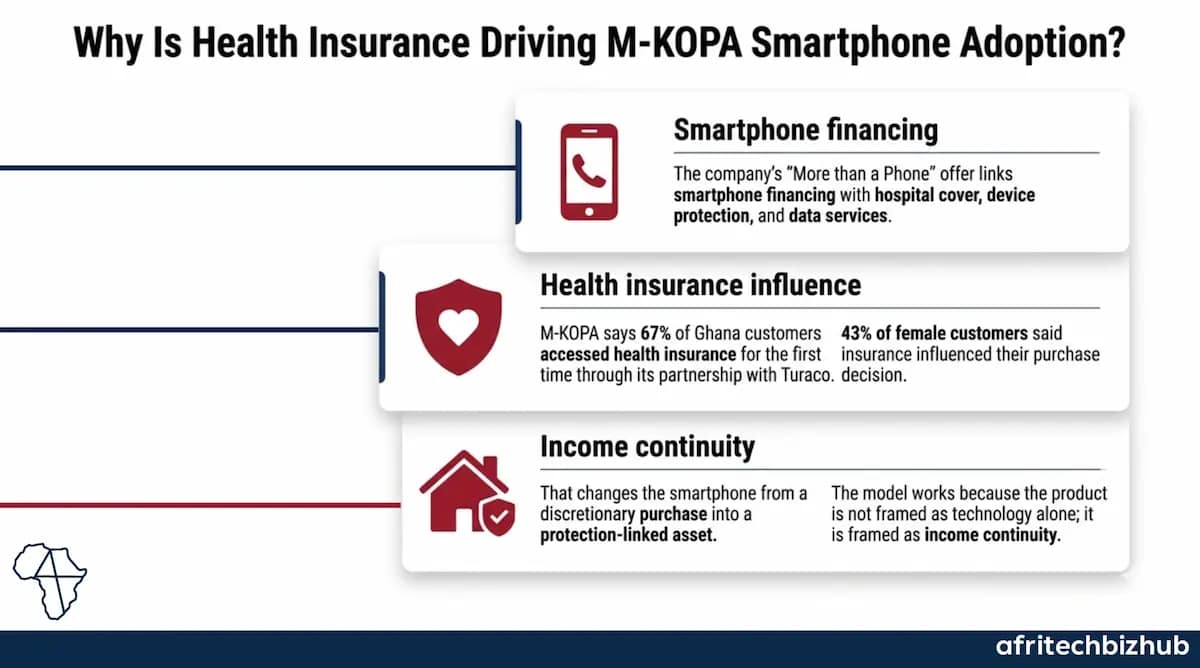
The company’s “More than a Phone” offer links smartphone financing with hospital cover, device protection, and data services.
M-KOPA says 67% of Ghana customers accessed health insurance for the first time through its partnership with Turaco, while 43% of female customers said insurance influenced their purchase decision.
That changes the smartphone from a discretionary purchase into a protection-linked asset.
For lower-income workers, health shocks can damage income faster than device costs. M-KOPA is using that vulnerability as a distribution channel.
The model works because the product is not framed as technology alone; it is framed as income continuity.
Can Mobile Payments Accelerate Africa’s Digital Economy?
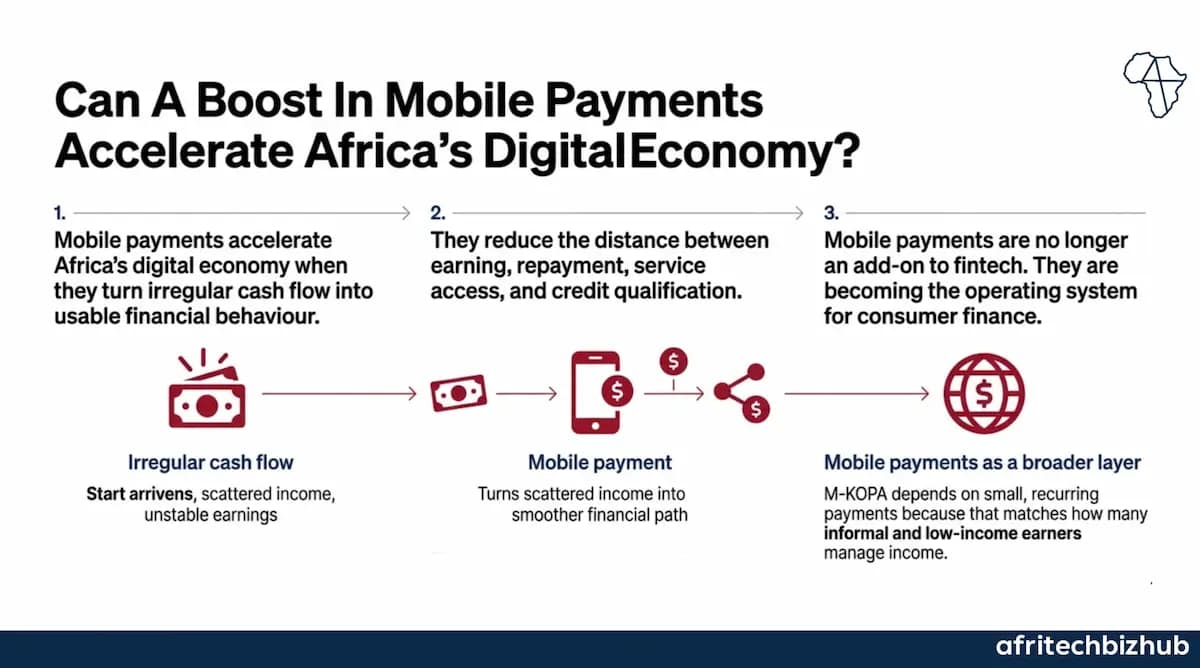
Mobile payments accelerate Africa’s digital economy when they turn irregular cash flow into usable financial behaviour.
M-KOPA depends on small, recurring payments because that matches how many informal and low-income earners manage income.
This is where mobile payments matter: they reduce the distance between earning, repayment, service access, and credit qualification.
The World Bank’s Global Findex 2025 identifies digital payments as central to financial inclusion, savings, borrowing behaviour, and account usage.
Ghana’s National Payment Systems Strategy 2025–2029 identifies digital payments as an important enabler of the country’s reported 80% financial inclusion level in 2024.
M-KOPA is therefore riding a larger African shift. Mobile payments are no longer an add-on to fintech. They are becoming the operating system for consumer finance.
Is Consumer Debt Fueling Ghana Fintech Growth?
Consumer debt is helping widen access, but it can also weaken the model if underwriting loses discipline.
M-KOPA’s Ghana numbers show the attraction: more customers, more smartphones, more insurance access, and more credit flowing into households that banks often overlook.
The risk sits inside the same growth engine. Device financing and bank mobile-style repayment systems create opportunity only when debt remains sized to income and tied to useful assets.
The stronger test is not customer acquisition. It is repayment resilience. Ghana fintech can scale through consumer finance, but bad debt would quickly turn inclusion into extraction.
M-KOPA’s model will be judged by whether daily repayment data continues to produce better access, not merely deeper household liabilities.


Recent Comments