


Featured Summary:
- PLA 2026 brings together product managers across Africa to strengthen product leadership and execution capability.
- Product management is gaining more influence as companies focus on building solutions with stronger market fit.
- Startup mentorship is increasingly tied to stronger product execution and long-term business outcomes.
- Digital transformation is placing greater value on stronger product operating models across African enterprises.
Africa’s digital transformation is creating stronger demand for organizations that can convert ideas into products with clear market value and long-term relevance.
As startups and enterprises expand digital capabilities across sectors, more attention is moving toward how products are designed, managed, tested, and improved rather than simply how quickly technology is adopted.
Against that backdrop, PLA 2026 brings together product leadership, mentorship, and product-led growth through a program designed to strengthen execution capabilities across African markets.
The initiative includes 48 product managers from 13 African countries and places emphasis on practical delivery, industry guidance, and broader participation across leadership pathways.
Its broader ambition extends beyond developing individuals.
PLA 2026 is structured to support companies in adopting a Product Operating Model that strengthens innovation, improves execution quality, and creates solutions that respond more effectively to market and consumer needs.
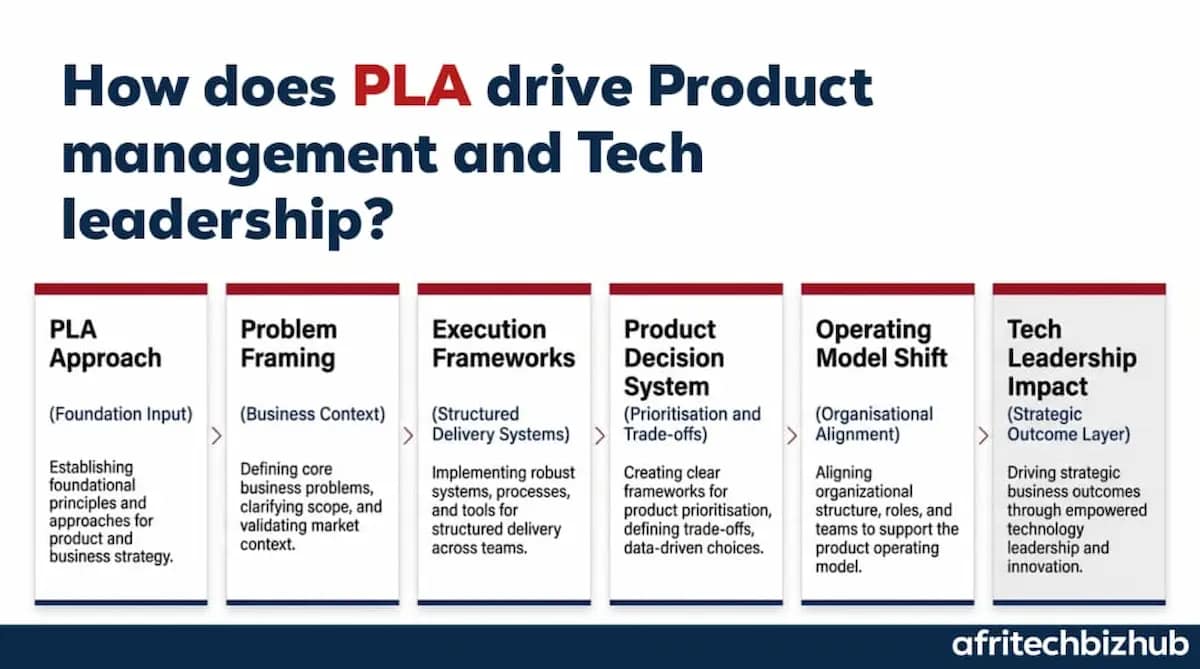
How does PLA Drive Product Management and Tech Leadership?
PLA 2026 approaches product management as a leadership capability rather than a delivery function.
Participants work through practical business problems, structured execution frameworks, product decision-making processes, and operating models designed to strengthen how ideas move into products with measurable outcomes.
That approach changes the role of tech leadership inside organizations.
Product leaders increasingly influence prioritization, customer direction, allocation of resources, and execution quality across teams.
Instead of measuring success through delivery speed alone, stronger product management creates conditions for products to solve problems repeatedly and perform more effectively over time.
Why is PLA 2026 Shaping Startup Mentorship and Product-led Growth?
PLA’s approach to startup mentorship focuses less on guidance in theory and more on improving operating capability.
Participants gain exposure to experienced product leaders, execution methods, and structured decision-making systems that strengthen how teams respond to customer behavior and market opportunities.
That distinction matters because product-led growth rarely comes from releasing more products.
It comes from building systems that improve adoption, increase retention, shorten learning cycles, and strengthen product outcomes over time.
Startup mentorship creates greater value when it improves decisions rather than simply increasing activity.
Can Tech Leadership redefine Africa’s Startup Success?
Tech leadership is moving closer to business leadership as startups face greater pressure to convert innovation into sustainable outcomes.
Product decisions increasingly influence customer experience, operating efficiency, growth quality, and long-term competitiveness across digital businesses.
The United Nations Economic Commission for Africa has repeatedly highlighted that stronger outcomes from innovation and frontier technologies depend not only on access to technology but also on institutional capability, productivity, and leadership systems.
Across African startup ecosystems, those conditions increasingly apply to organizations building stronger product operating disciplines.
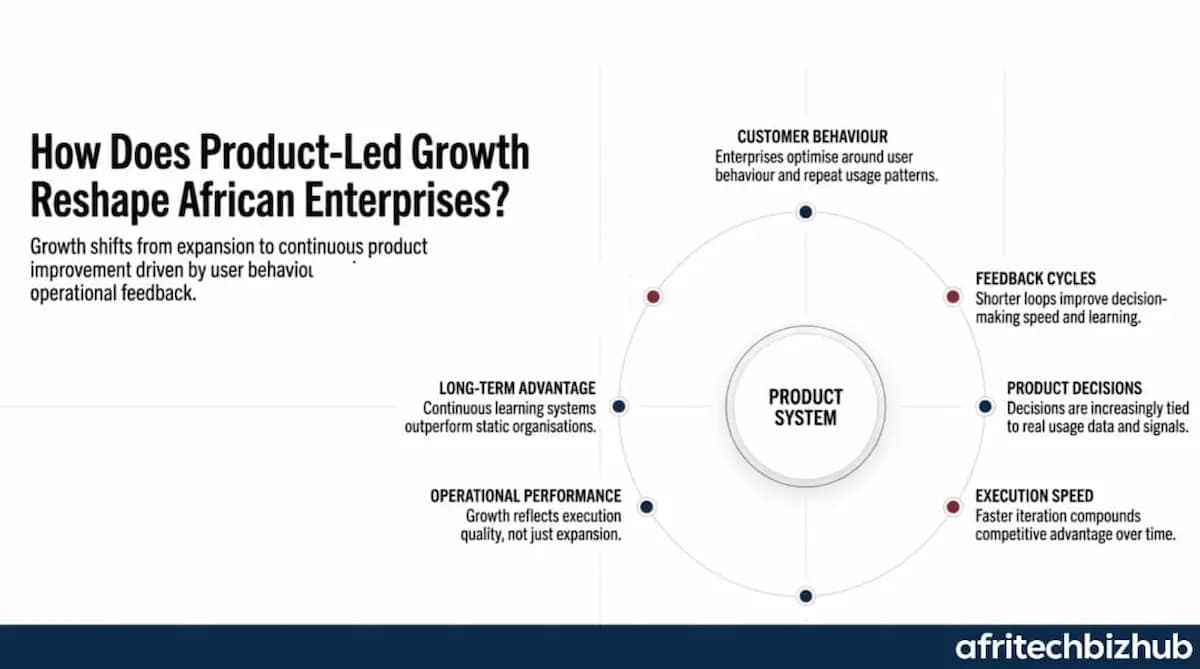
How does Product-led Growth Reshape African Enterprises?
Product-led growth is changing what enterprises optimize for.
Instead of treating growth as a function of expansion, funding, or technology adoption alone, organizations are placing greater attention on whether products improve customer outcomes, generate repeat usage, and create measurable business value over time.
That shift pushes enterprises to connect execution more directly to user behavior and operational performance.
Growth exposes whether an enterprise has built a product system or simply released a product.
Companies that shorten feedback cycles, improve decisions faster, and stay closer to customer behavior usually pull further ahead with time.
The harder question now sits elsewhere: when markets shift and conditions tighten, which organizations keep improving and which return to rebuilding from the beginning.


Recent Comments