


Featured Summary:
- Jumia is restructuring operations as AI tools and automation systems gain stronger influence across digital commerce platforms.
- Jumia e-commerce expansion is increasing pressure on companies to reduce operational costs and improve efficiency.
- AI jobs are reshaping global technology employment as automation spreads deeper into logistics, support, and digital operations.
- Africa jobs exposure to automation is becoming a larger concern as companies accelerate AI-driven restructuring across technology sectors.
Artificial intelligence is beginning to reshape employment structures across African technology markets as companies push for lower operating costs, faster automation, and stronger digital efficiency.
Jumia’s workforce reductions have widened debate around how AI systems, operational restructuring, and automation could affect Africa jobs as digital platforms across the continent move deeper into AI-driven business models.
Read: Africa Digital Workforce Enters AI Disruption Phase
Is Jumia Cutting Jobs for AI Efficiency?
Cost pressure and profitability concerns are increasing restructuring activity across African technology companies operating inside competitive digital markets.
Jumia has continued adjusting workforce structures, operational systems, and internal processes as the company pushes toward stronger efficiency, lower fulfillment costs, and improved financial performance across its jumia e-commerce operations.
The wider concern now extends beyond one company.
Technology firms across global markets are increasingly reducing operational dependence on large support teams as AI systems improve automation across customer service, logistics coordination, digital advertising, and platform management.
Jumia’s restructuring reflects growing pressure across technology businesses to maintain operational scale while controlling rising commercial costs.
How Is Jumia E-Commerce Using AI Tools?
AI systems are becoming more integrated into digital commerce operations across inventory forecasting, customer support, product recommendations, logistics coordination, fraud detection, and targeted advertising.
Jumia e-commerce operations are also expanding digital optimization systems as online platforms search for faster transaction processing, lower operational friction, and improved platform efficiency across African markets.
The shift reflects broader structural changes across global e-commerce where automation systems are increasingly influencing how digital marketplaces manage users, merchants, inventory systems, and commercial transactions.
AI tools are no longer operating only as support software. They are becoming more deeply integrated into how platform businesses reduce costs and improve operational performance.
Are AI Jobs Replacing Tech Employees Globally?
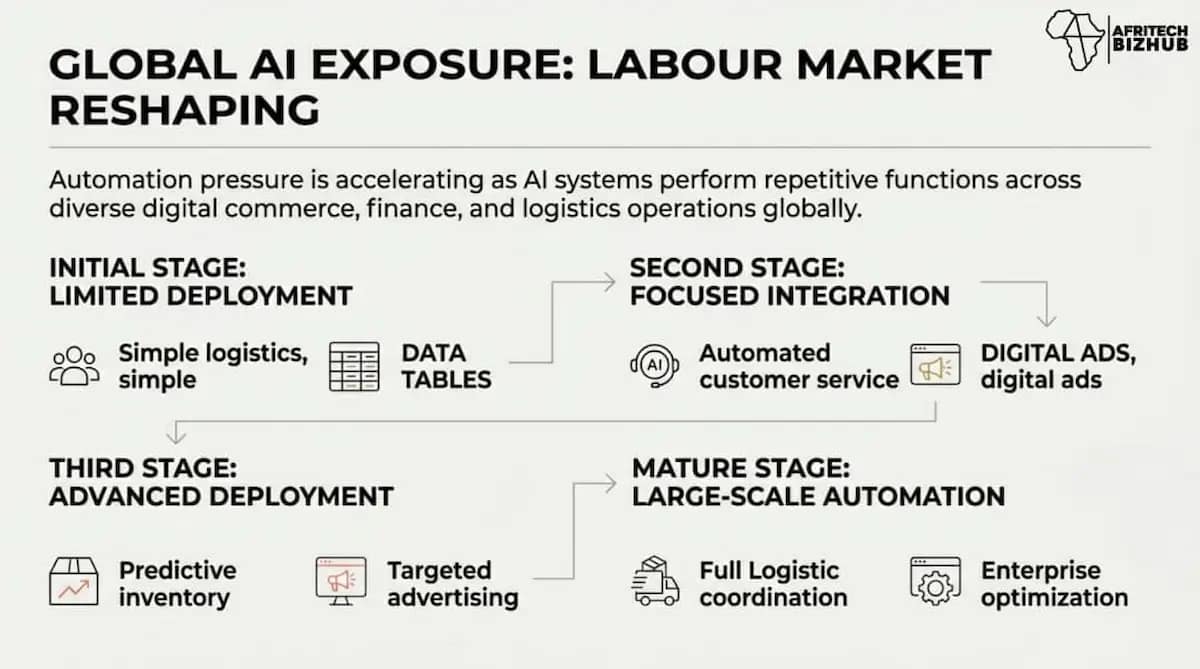
Automation pressure is increasing across global technology markets as AI systems begin replacing parts of administrative, operational, and customer-service workflows previously handled by human teams.
Companies across digital commerce, finance, logistics, media, and enterprise software sectors are accelerating investment into AI systems capable of performing repetitive operational functions more efficiently and at lower long-term cost.
The International Monetary Fund warned in its 2026 discussions on artificial intelligence and labor-market preparedness that AI systems could significantly reshape employment structures across both advanced and emerging economies.
The IMF also highlighted growing pressure on governments and businesses to strengthen workforce adaptation as automation expands deeper into commercial systems and productivity models.
That pressure is widening debate around how AI jobs and digital restructuring could affect long-term employment stability across developing technology ecosystems, including African digital markets.
Are Africa Jobs at Risk From Automation?
AI adoption is expanding faster across global markets than many labor systems are prepared to absorb.
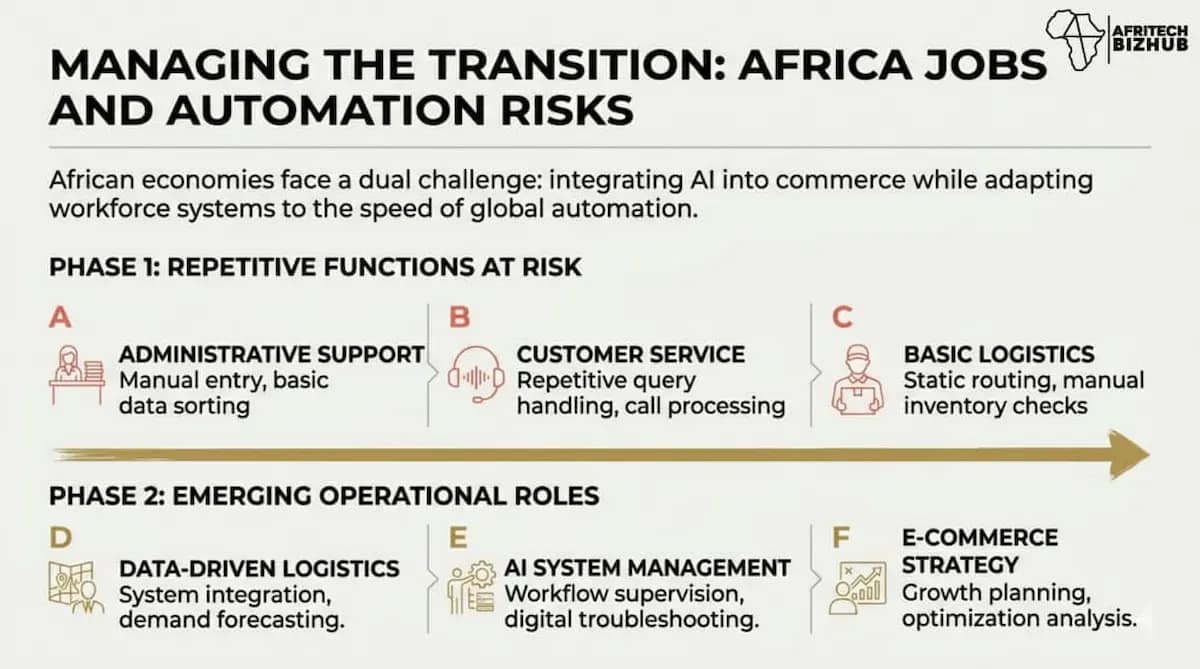
African technology ecosystems still remain relatively early in large-scale AI deployment, but automation pressure is already beginning to affect customer support systems, logistics coordination, fintech operations, digital advertising, and platform management across parts of the continent’s digital economy.
The deeper issue now is no longer whether automation will affect Africa jobs, but how quickly African economies can build workforce systems capable of adapting to AI-driven commercial environments already reshaping global employment structures.
Jumia’s restructuring reflects a wider transition unfolding across technology markets where companies increasingly prioritize efficiency, automation, and leaner operating models.
The next phase of Africa’s digital economy may depend less on how many technology platforms the continent produces and more on whether African workers can remain economically competitive inside global technology systems increasingly shaped by AI automation and machine-driven productivity.


Recent Comments