


Last updated: May 16, 2026
Africa’s outsourcing, freelance, and remote-work sectors are undergoing rapid disruption as companies increasingly replace routine online labor with AI systems.
Featured Summary:
- Africa digital workforce is entering a harder AI transition as automation begins replacing routine online labor across outsourcing, support, and remote service sectors.
- Big Tech firms are expanding AI infrastructure and workforce programs across Africa while companies quietly restructure around lower-cost automated systems.
- Africa risks becoming a cheap AI labor layer for foreign platforms unless local AI ownership, infrastructure, and high-value digital industries scale much faster.
Africa’s digital labor economy is entering a harder transition as AI agents begin replacing repetitive online work across outsourcing, support operations, administration, and remote digital services.
Businesses serving American and European markets are accelerating AI automation to cut labor costs and restructure online support operations across global outsourcing networks.
The shift is no longer experimental. It is becoming an active business infrastructure. The Africa Digital workforce now faces mounting disruption pressure as AI systems rapidly expand across global digital operations.
Is AI About to Disrupt Africa’s Outsourcing Boom?
Africa’s outsourcing economy is entering direct confrontation with AI automation as companies accelerate the replacement of routine online work with autonomous systems.
Customer support, moderation, scheduling, transcription, data processing, and repetitive administrative operations are increasingly being absorbed by AI agents designed to operate faster and at lower cost.
The restructuring is already moving through parts of the global outsourcing market.
The Africa Digital workforce now faces mounting pressure because many of the continent’s fastest-growing online jobs sit inside the exact categories businesses are automating first.
Companies that once expanded through large digital support teams are increasingly rebuilding around smaller human workforces supported by AI systems.
The low-cost labor model behind much of Africa’s outsourcing growth is now under pressure.
Which African Jobs Are Most Exposed to AI Automation?
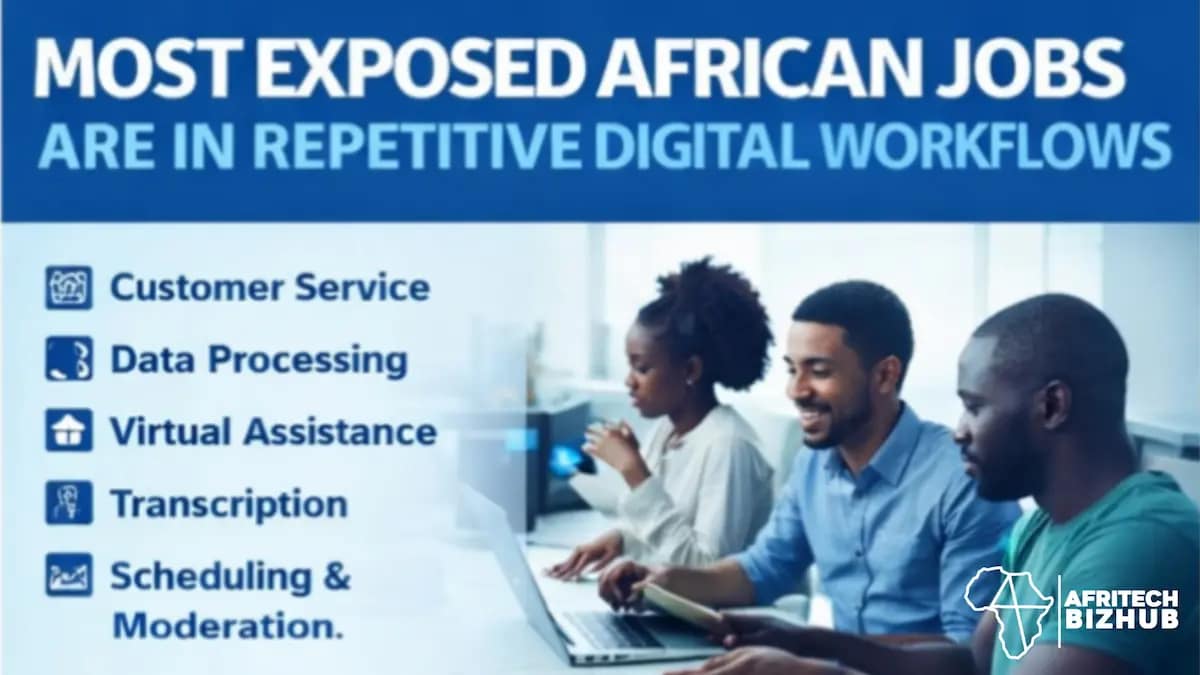
The most vulnerable Africa jobs are concentrated in repetitive digital workflows where AI systems can execute tasks continuously without expanding workforce costs.
Customer service, virtual assistance, moderation, transcription, scheduling, and entry-level coding support are facing growing replacement pressure as automation systems improve rapidly.
The Africa Digital workforce helped power the continent’s online labor expansion, but parts of that growth model are now colliding directly with large-scale AI automation deployment.
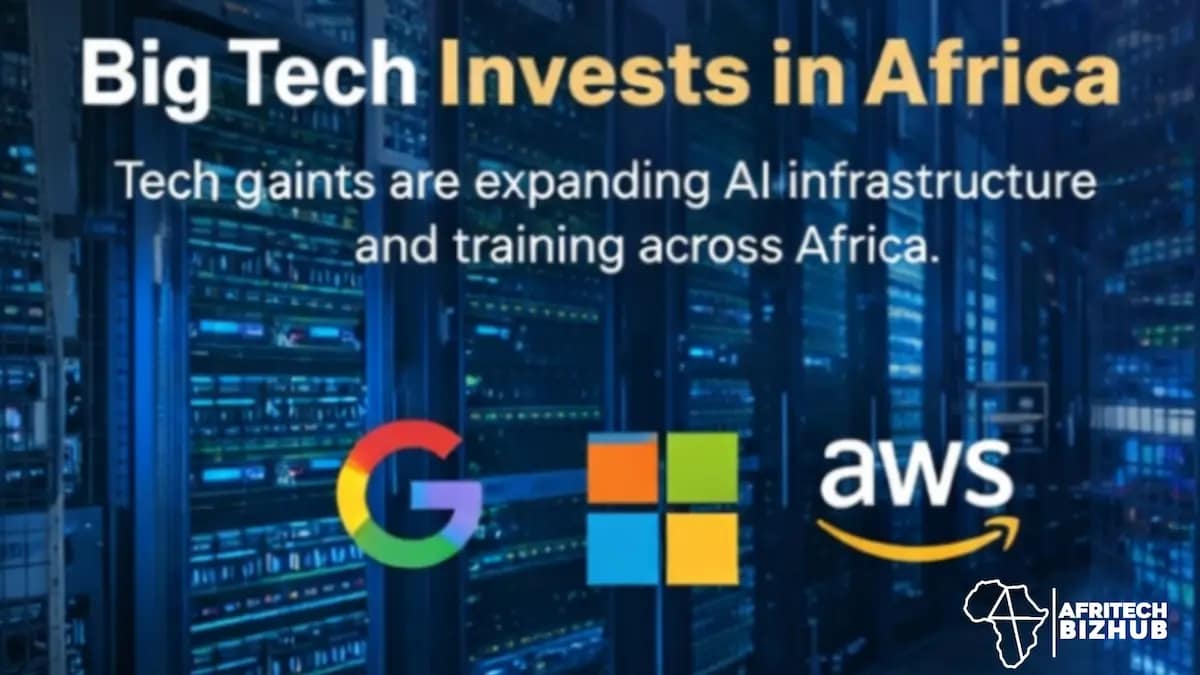
Why Are Big Tech Firms Training Africa for AI So Fast?
Major technology companies are aggressively expanding AI infrastructure, cloud systems, workforce programs, and technical education across African markets as competition for future AI dominance intensifies globally.
Companies including Google’s AI expansion initiatives across Africa are increasing investment in enterprise AI adoption, cloud ecosystems, and developer pipelines tied to long-term market influence.
The Africa Digital workforce is becoming strategically important as Big Tech firms race to secure infrastructure control and future AI talent ecosystems across emerging markets.
Is AI Replacing Africa’s Entry-Level Digital Workforce?
AI systems are beginning to replace parts of Africa’s entry-level digital workforce across outsourcing and online service industries.
Roles previously viewed as gateways into remote work and digital employment are losing pricing power as companies automate repetitive execution layers previously handled by junior workers and freelancers.
The Africa Digital workforce is increasingly shifting toward technical specialization, workflow management, AI supervision, and infrastructure capability as businesses deepen automation integration.
Can Africa Build AI Power Instead of Cheap AI Labor?
African governments, startups, universities, and cloud operators are under increasing pressure to build local AI ownership, infrastructure, and enterprise ecosystems instead of remaining low-cost labor providers for foreign technology platforms.
The next phase of automation expansion in 2026 will likely reward markets controlling compute infrastructure, cloud capacity, AI deployment systems, and enterprise software operations.
The Africa Digital workforce now sits at the center of a larger economic battle over AI ownership, industrial capability, and long-term digital power.


Recent Comments