

Featured Summary:
- Twiga Foods is expanding food logistics systems as agri tech platforms restructure produce distribution across African markets.
- Africa Agriculture networks are becoming more digitally coordinated as supply chain inefficiencies place pressure on food distribution systems.
- SMB retailers are gaining faster inventory access and stronger sourcing coordination through integrated merchant platforms.
- Food logistics expansion is becoming increasingly important to pricing stability, inventory movement, and agricultural trade efficiency.
Africa Agriculture systems are facing increasing pressure from fragmented supply chains, post-harvest losses, unstable distribution networks, and inconsistent market access across urban and rural economies.
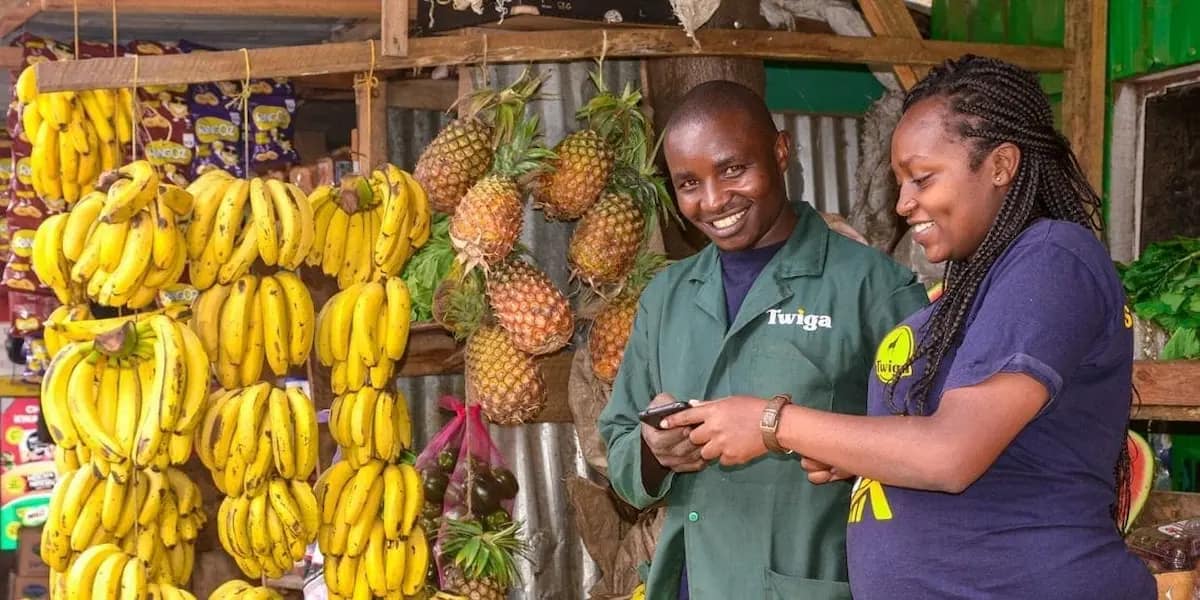
Twiga Foods has emerged as one of the companies expanding digitally coordinated food logistics infrastructure as agri tech platforms move deeper into merchant sourcing, inventory distribution, and agricultural supply chain integration across East Africa.
Read: AI Adoption in Africa: Banks, Telecoms, and Farms Put AI to Work.
How Is Twiga Foods Transforming Africa Agriculture Markets?
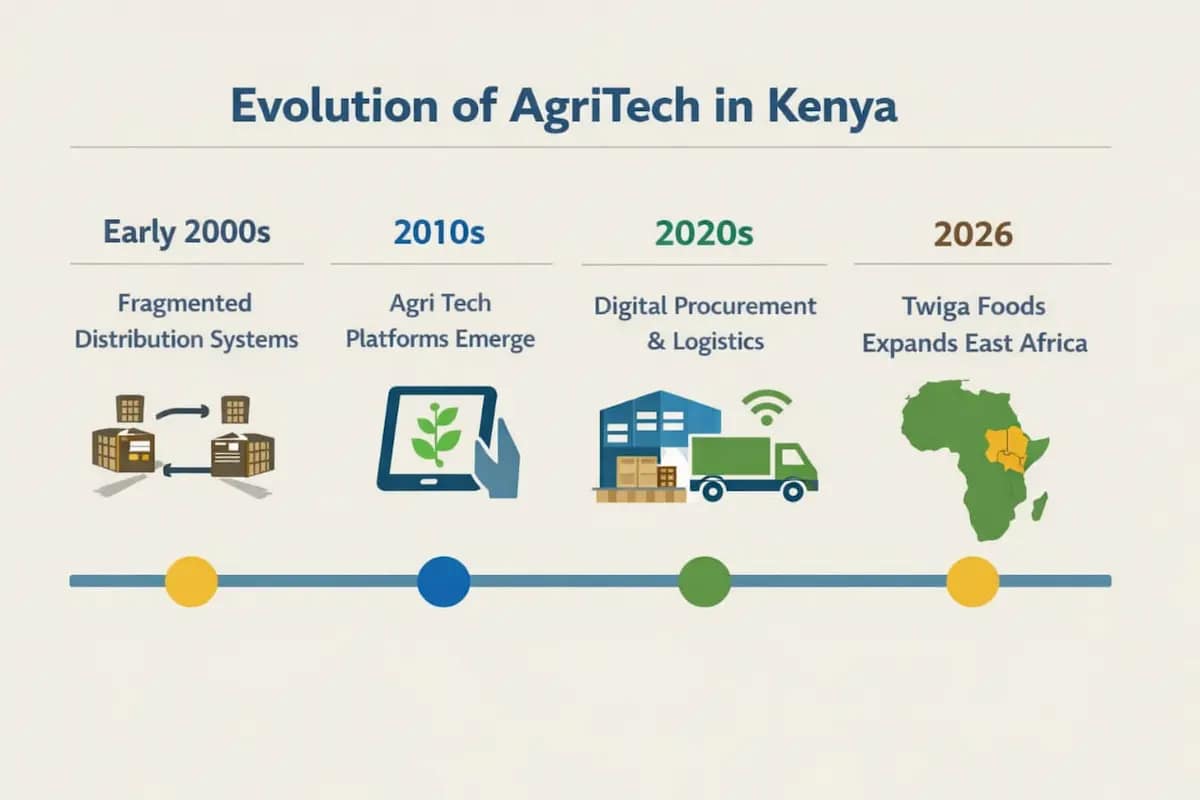
Fragmented distribution systems continue limiting efficiency across large sections of Africa Agriculture where farmers, distributors, and market traders often operate with weak logistics coordination and inconsistent market visibility.
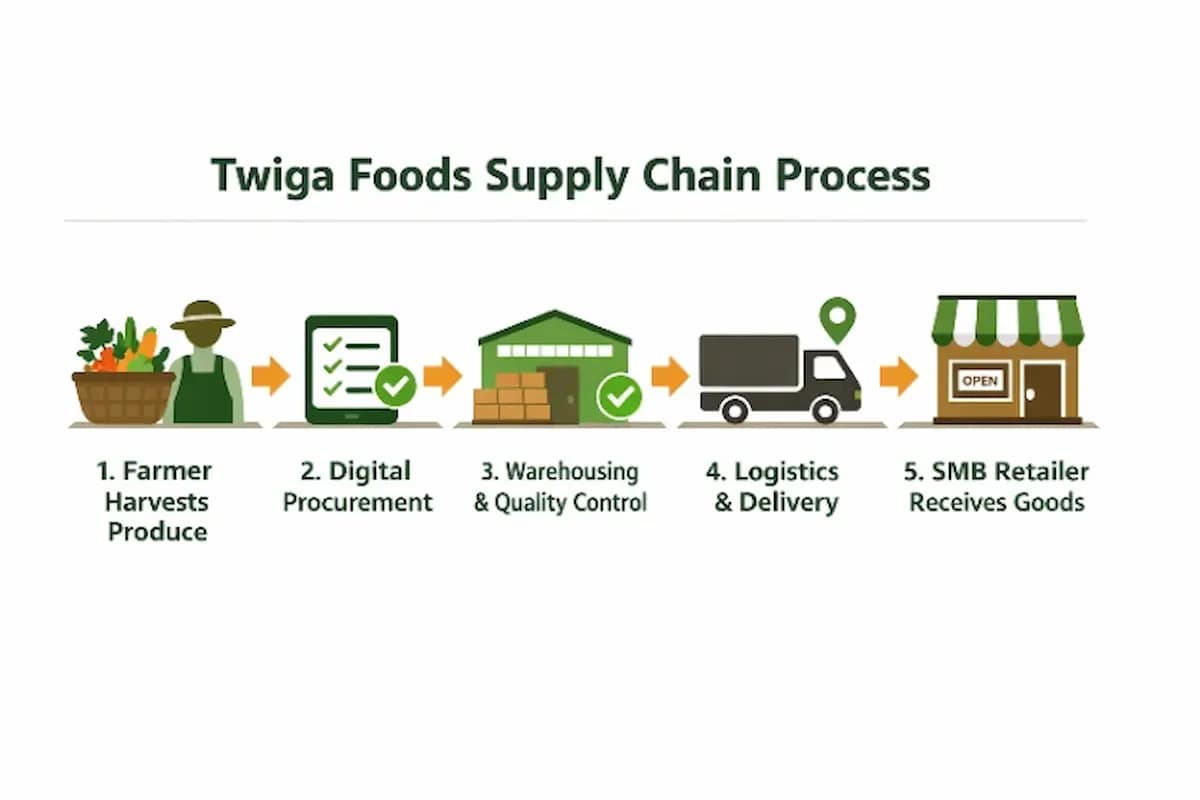
Twiga Foods is expanding digitally connected procurement and distribution systems that link producers directly to retailers through structured inventory, sourcing, and delivery networks designed to reduce supply instability across food markets.
The company’s expansion reflects broader pressure building across agricultural commerce systems where merchants increasingly depend on faster inventory coordination, stronger distribution visibility, and more stable produce movement across urban centers.
Agri tech platforms are becoming more commercially important as food supply systems struggle to keep pace with rising urban demand and expanding informal retail networks across African economies.
Why Is Agric Tech Reshaping Kenya’s Food Logistics Industry?
Rising urban consumption and inefficient produce movement are increasing pressure on Kenya’s food logistics systems.
Traditional agricultural distribution channels still expose merchants and retailers to delayed deliveries, inconsistent inventory quality, and higher transportation costs that weaken operational efficiency across food markets and informal commerce systems.
Agric tech platforms are increasingly restructuring food logistics by improving procurement coordination, delivery tracking, inventory visibility, and direct sourcing systems linking farmers to retailers more efficiently.
The shift is widening investment focus around logistics infrastructure, warehouse systems, merchant technology, and agricultural distribution platforms capable of improving produce movement across fragmented supply networks.
How Are SMB Retailers Benefiting From Twiga Foods Network?
Inventory instability and weaker sourcing coordination continue affecting SMB retailers operating across informal African food markets.
Twiga Foods is helping smaller retailers improve product access, reduce procurement delays, and strengthen inventory management through digitally coordinated sourcing and distribution systems built around merchant efficiency and structured food logistics operations.
The 2026 Africa Food Systems Transformation discussions organized by FAO and regional partners focused heavily on supply-chain coordination, food-system modernization, logistics efficiency, and innovation gaps affecting agricultural trade across African markets.
The discussions reinforced growing pressure around digital coordination, structured distribution systems, and logistics modernization as retailers, distributors, and food businesses face increasing operational pressure across Africa’s informal food economy.
Can Food Logistics Innovation Solve Africa Agriculture Challenges?
Food logistics systems are becoming increasingly central to how Africa Agriculture manages inventory movement, urban food demand, pricing pressure, and post-harvest losses across expanding commercial markets.
Distribution efficiency now shapes everything from retailer pricing stability to farmer market access as supply chains stretch across larger urban populations and more complex retail ecosystems.
The deeper shift unfolding across African food systems is no longer only about moving produce faster between farmers and retailers.
The real contest now is whether African markets can build supply chains capable of supporting long-term urban growth, food security, and commercial stability without depending on fragmented distribution systems that continue weakening agricultural trade across the continent.
Twiga Foods expansion reflects a wider structural transition already taking shape across Africa Agriculture where digitally coordinated food logistics networks are becoming increasingly important to how African cities, retailers, and food markets will function over the next decade.


Recent Comments