


Featured Summary:
- Sabi is expanding B2B retail infrastructure as merchants and distributors digitize trade operations across informal African markets.
- B2B retailers are gaining stronger influence across the Africa retail market as fragmented supply chains become more structured.
- Supply chain modernization is helping African startups improve inventory coordination, logistics efficiency, and merchant operations.
- Informal retailers are increasingly relying on digital B2B retail platforms to strengthen sourcing, pricing visibility, and business continuity.
Africa’s informal retail economy is moving deeper into digitally coordinated trade systems as merchants, distributors, and small businesses search for faster inventory access, stronger logistics coordination, and more stable supply chain operations.
Sabi has emerged as one of the companies building structured B2B retail infrastructure across fragmented commerce networks as African startups expand deeper into merchant technology, trade digitization, and supply chain integration across the continent.
Read: MNT-Halan Expands Digital Lending and Payments Across Africa.
How Is Sabi Transforming Africa’s Informal Retail Sector?
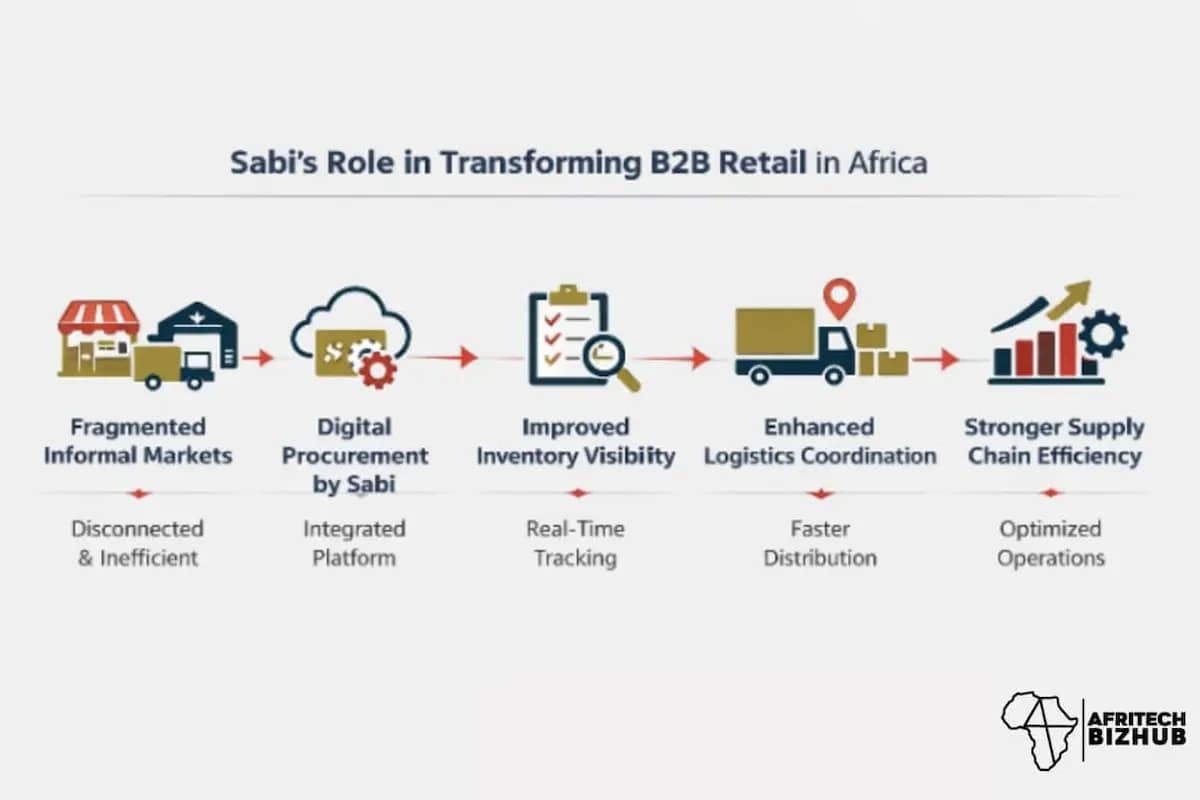
Fragmented distribution systems continue limiting efficiency across large sections of Africa’s informal retail economy where millions of merchants still operate with inconsistent inventory access, unstable pricing structures, and weaker supply coordination.
Sabi is expanding digitally connected B2B retail infrastructure that links retailers, wholesalers, and distributors through integrated procurement and transaction systems designed to improve sourcing visibility and inventory movement across informal markets.
The company’s expansion reflects broader structural changes inside the Africa retail market where merchants increasingly depend on digital trade systems to reduce supply instability, improve restocking coordination, and manage operational pressure more efficiently.
Informal commerce networks are becoming more digitally organized as retailers search for stronger supply chain visibility across rapidly expanding urban markets.
Why Are B2B Retailers Driving Africa Retail Market Growth?
Urban expansion, rising consumer demand, and fragmented logistics systems are increasing the strategic importance of B2B retailers across African commerce networks.
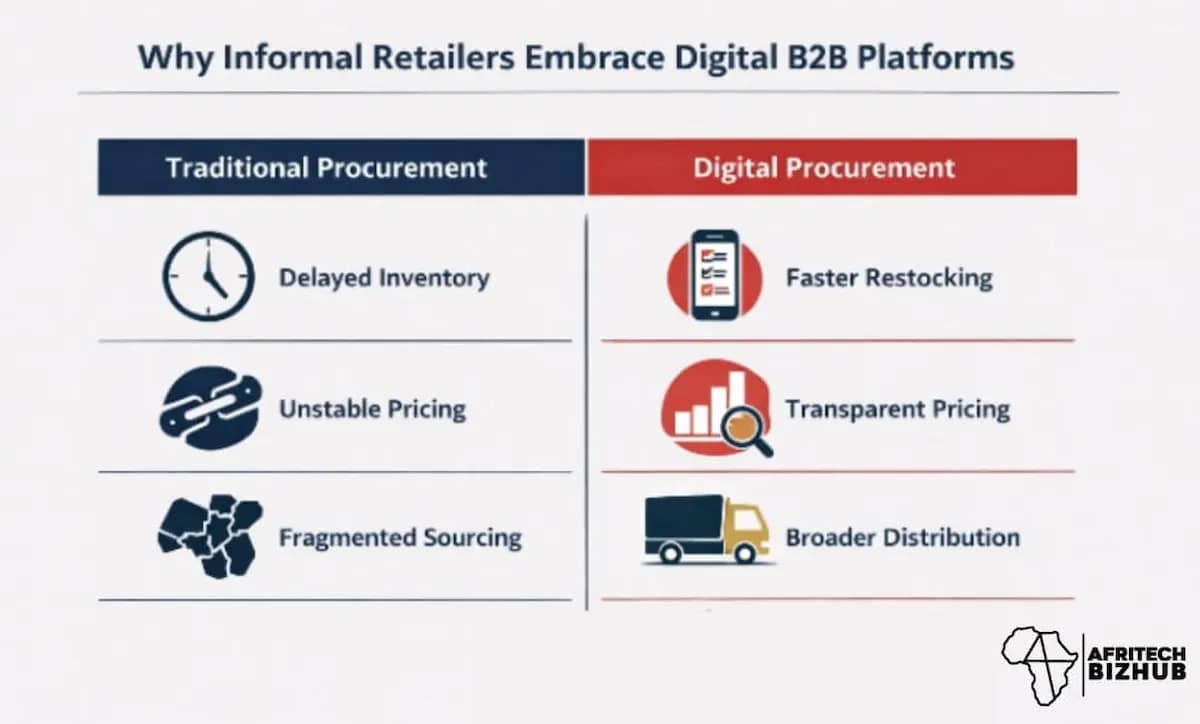
Traditional distribution systems still expose merchants to delayed inventory movement, inconsistent procurement channels, and pricing inefficiencies that weaken commercial activity across informal markets.
Digitally coordinated B2B retail systems are helping merchants operate inside more structured procurement networks capable of improving inventory flow, transaction efficiency, and product accessibility across expanding retail ecosystems.
B2B retailers are becoming increasingly central to how goods move across the Africa retail market as businesses seek stronger operational coordination and more stable sourcing systems.
How Does Supply Chain Innovation Empower African Startups Today?
African startups operating across retail and commerce markets are increasingly being forced to build around fragmented logistics systems, unstable inventory movement, and weak distribution infrastructure.
Supply-chain coordination is becoming less of a competitive advantage and more of a survival requirement as startups face mounting pressure to improve delivery speed, procurement efficiency, and inventory visibility across multiple African cities and informal trade corridors.
The International Finance Corporation continues to identify digital infrastructure and supply-chain modernization as important drivers of SME growth and operational efficiency across emerging markets.
The pressure is increasing investment attention around merchant technology, logistics coordination, inventory systems, and procurement infrastructure capable of helping African startups scale more efficiently across the Africa retail market.
Why Are Informal Retailers Embracing Digital B2B Retail Platforms?
Informal retailers across African markets are increasingly moving away from fragmented sourcing systems toward digital procurement platforms offering faster restocking, broader distributor access, and stronger pricing visibility.
Inventory instability, sourcing delays, and rising operating pressure are pushing merchants deeper into mobile B2B retail systems capable of improving product availability and reducing dependence on layered intermediary networks that often increase retail costs.
The shift is gradually reorganizing how goods move across Africa’s informal economy as merchants adopt more structured digital trade systems to manage procurement, transactions, and inventory operations.
Africa’s informal retail market is no longer operating entirely through disconnected open-market networks. Digital B2B platforms are increasingly becoming part of the infrastructure shaping how commerce scales across the continent.


Recent Comments