


Last updated: May 17, 2026
Featured Summary:
- MNT-Halan is expanding digital lending services as consumer demand for faster credit access continues rising across Egypt and emerging African markets.
- Loan marketplace platforms are reducing financing barriers for underserved consumers and informal businesses outside traditional banking systems.
- Financial lending companies are relying more heavily on mobile infrastructure, alternative credit systems, and embedded finance tools to scale efficiently.
- African business adoption of digital lending is accelerating as SMEs search for faster financing access and lower transaction friction.
Faster credit demand and weaker traditional banking access are accelerating digital lending growth across Africa’s financial ecosystem.
MNT-Halan has emerged as one of the most visible players inside that transition as mobile lending, digital payments, and embedded finance services expand across Egypt and other emerging African markets.
Pressure across financial systems is also intensifying as underserved consumers, informal businesses, and SMEs continue searching for quicker financing access, lower transaction friction, and broader financial inclusion outside conventional banking structures.
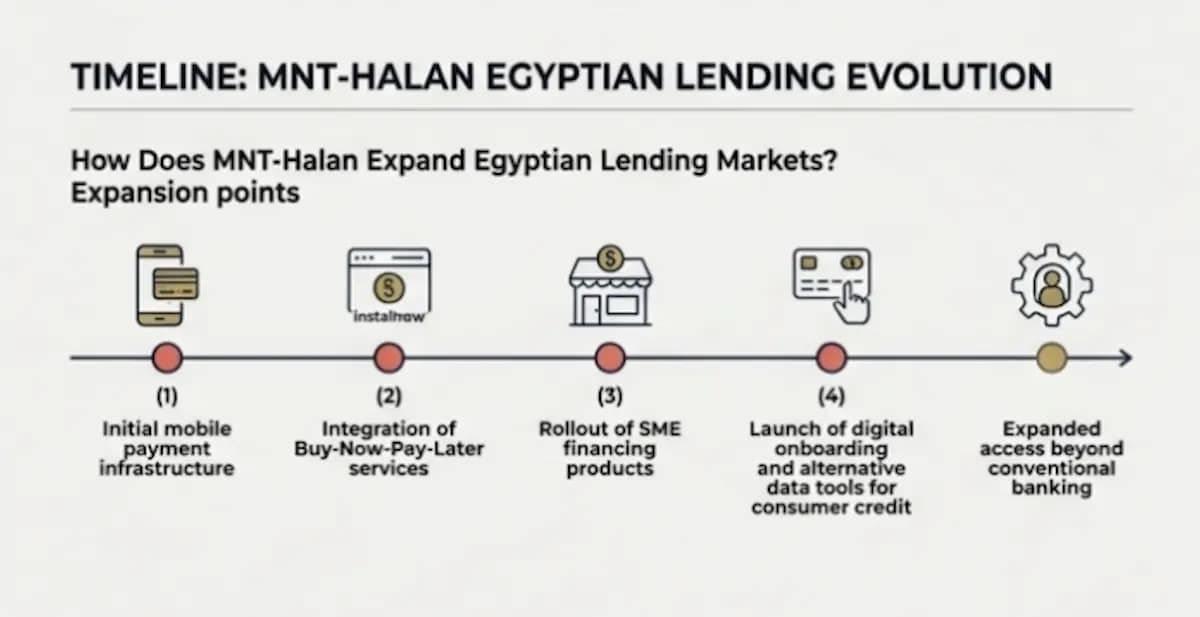
How Does MNT-Halan Expand Egyptian Lending Markets?
Consumer financing demand and limited traditional banking access are widening Egypt’s digital lending market.
MNT-Halan has expanded its lending ecosystem through mobile payments, buy-now-pay-later services, SME financing, and consumer credit products targeting underserved users across Egypt’s financial system.
The company’s platform model is also extending financing access beyond conventional banking channels through digital onboarding systems, alternative data tools, and mobile-based transactions.
Consumer demand for faster financing is increasing pressure on lenders to scale credit access without weakening repayment quality and operational efficiency.
MNT-Halan’s expansion reflects wider changes across emerging African finance markets where digital lenders are increasingly stepping into financing gaps left by slower traditional banking systems.
What Makes Loan Marketplace Drive Financial Inclusion?
Large sections of Africa’s population still operate outside formal banking systems, increasing reliance on alternative financial platforms.
Loan marketplace systems are widening access to credit by reducing documentation barriers, accelerating approval timelines, and extending financing access to underserved consumers and SMEs.
Alternative lending platforms are also pulling informal businesses deeper into commercial activity by improving payment access and short-term liquidity.
Mobile penetration and smartphone usage are also accelerating financial inclusion across lower-income and underbanked markets.
Loan marketplace expansion is increasingly becoming part of wider efforts across emerging African economies to widen access to digital payments, financing systems, and day-to-day commercial transactions outside traditional banking structures.
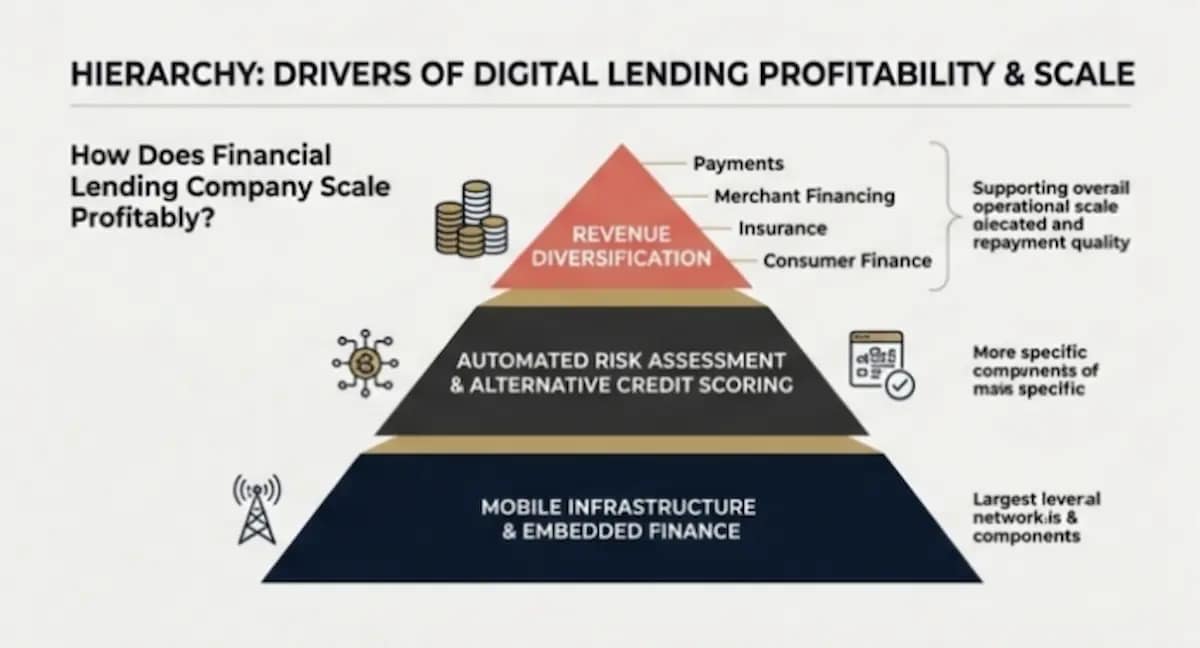
How Does Financial Lending Company Scale Profitably?
Operational scale, repayment quality, and transaction volume are becoming more important to digital lending profitability across emerging markets.
Financial lending companies are relying more heavily on mobile infrastructure, embedded finance systems, alternative credit scoring, and automated risk assessment tools to reduce servicing costs and improve lending efficiency.
Revenue diversification through payments, merchant financing, insurance products, and consumer finance services is also helping digital lenders strengthen profitability beyond direct loan issuance alone.
The expansion of embedded finance systems is also increasing pressure on financial lending companies to balance rapid user growth with long-term repayment stability.
Digital lenders scaling across emerging African markets are now operating inside increasingly competitive ecosystems where profitability depends heavily on transaction scale, operational efficiency, and stronger risk management systems.
Why Is African Business Adopting Digital Lending?
Cash-flow pressure, limited banking access, and slower traditional loan systems are increasing digital lending adoption across African business sectors.
SMEs and informal enterprises are increasingly turning toward mobile-based financing platforms for faster working capital access, payment flexibility, and shorter approval timelines.
Digital lenders are also helping businesses operate more efficiently by integrating financing, payments, and transaction systems into single mobile ecosystems.
African business activity is becoming more closely tied to mobile finance systems capable of supporting faster transactions, working capital access, and broader commercial operations across emerging markets.
Digital lending expansion is now moving beyond consumer finance into retail trade, logistics, fintech, informal commerce, and SME ecosystems where businesses increasingly depend on mobile financial infrastructure to scale operations and remain competitive inside Africa’s expanding digital economy.


Recent Comments