


Featured Summary:
- Africa critical minerals are becoming central to global competition around EVs, AI infrastructure, and industrial energy systems.
- Foreign firms still dominate large parts of lithium mining Africa and cobalt mining Congo through extraction partnerships and long-term licensing agreements.
- Africa mineral supply chain systems remain heavily dependent on external refining and processing infrastructure.
- Africa mining industry 2026 debates are increasingly shifting toward value retention, industrialization, and resource sovereignty.
The global race for critical minerals is moving aggressively into Africa as governments, commodity traders, and industrial powers compete for access to lithium, cobalt, copper, graphite, and rare earth supply chains tied to electric vehicles, AI hardware, and energy infrastructure.
What was once treated mainly as a mining story is now becoming a geopolitical and industrial struggle over who controls the systems surrounding Africa’s mineral wealth and who ultimately captures the long-term value attached to it.
Read: Critical Minerals in Africa Are Redrawing Global Industrial Power.
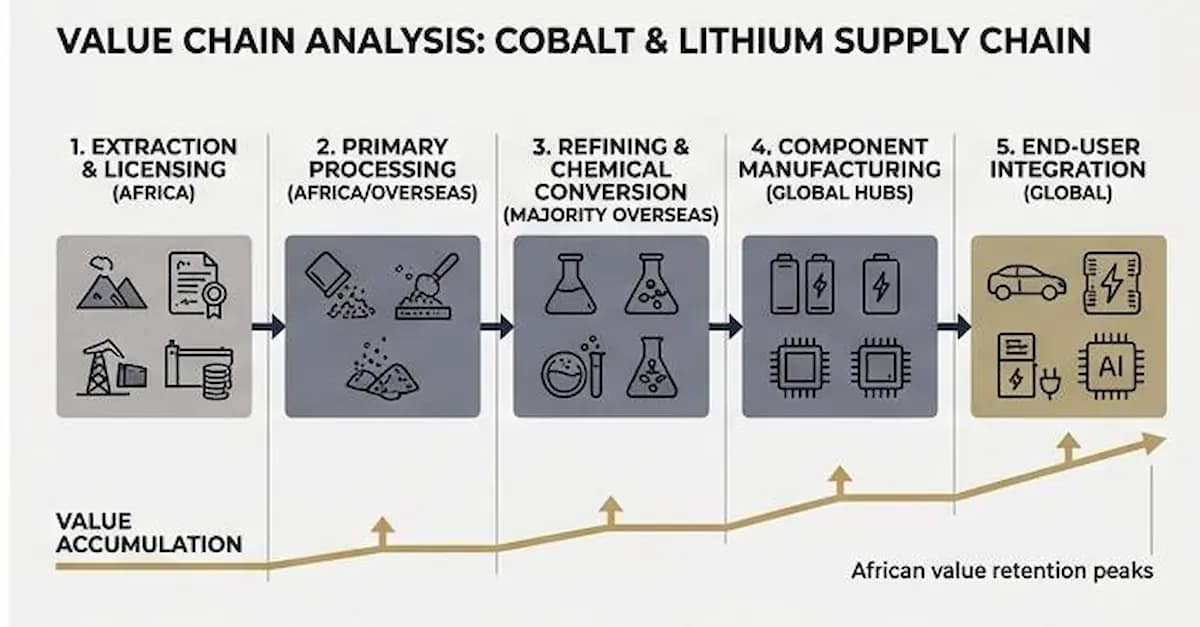
Why Africa Critical Minerals Are Becoming Strategic Assets
Critical minerals in Africa are becoming more strategically important as governments and corporations push to secure long-term supply chains linked to battery manufacturing, semiconductors, defense systems, AI infrastructure, and renewable-energy technologies.
The continent holds some of the world’s largest reserves of cobalt, manganese, platinum-group metals, graphite, and lithium, placing African mining regions closer to the center of future industrial competition.
That importance is also changing how foreign powers engage with African economies.
Infrastructure deals, railway projects, refining partnerships, and long-term mineral agreements are increasingly being shaped around supply-chain security rather than traditional commodity trade alone.
Africa critical minerals are no longer being viewed simply as exports. They are increasingly being treated as strategic assets tied to global industrial power.
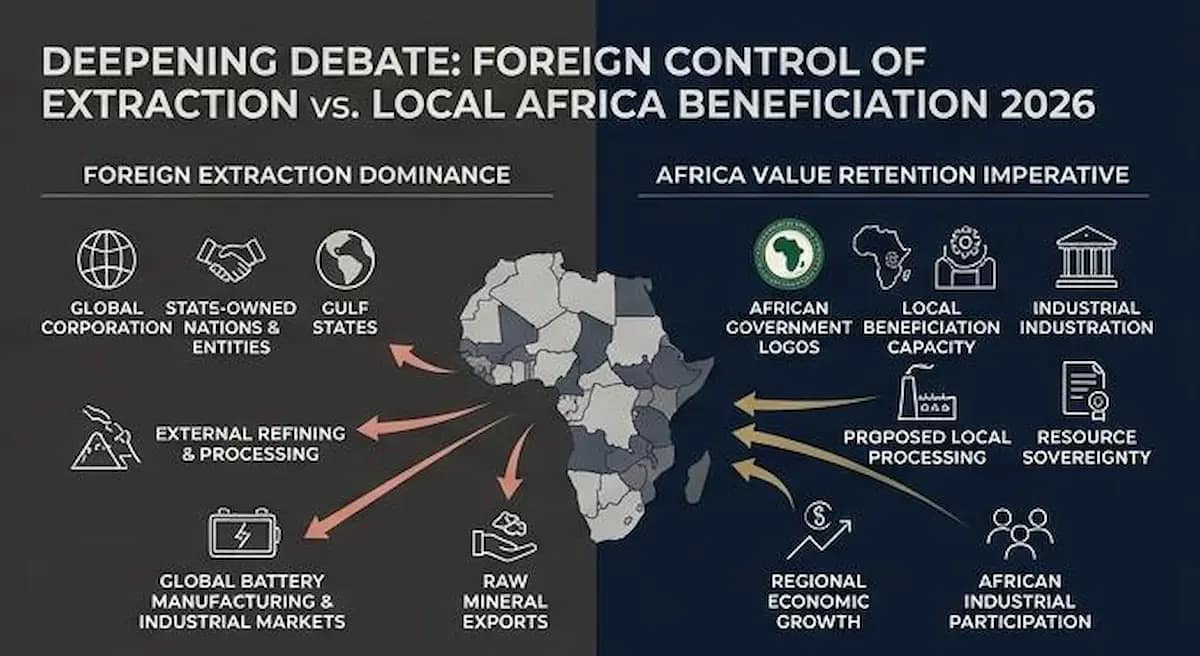
Foreign Control Over Extraction Is Deepening Debate Around Who Owns Africa Critical Minerals
Foreign firms still dominate large parts of extraction licensing, project financing, and mineral investment across African mining economies.
Chinese firms remain heavily positioned across cobalt mining Congo and battery-mineral processing systems while Western governments and Gulf investors continue expanding partnerships tied to lithium mining Africa and broader critical-mineral access.
The ownership debate now goes beyond who holds mining licenses.
Governments across Africa are increasingly questioning whether existing agreements leave enough long-term value inside local economies after extraction takes place.
The bigger concern is that Africa continues supplying raw minerals while industrial processing, battery manufacturing, and high-value refining remain concentrated outside the continent.
Why Africa Wants More Control Over Mineral Processing
Competition around Africa critical minerals is increasing pressure on governments to capture more value beyond raw extraction as global demand for battery minerals, industrial metals, and rare earth supply chains continues rising.
African governments are increasingly pushing beneficiation policies, refinery investment, and local-processing requirements as pressure grows to prevent strategic minerals from leaving the continent with limited industrial participation attached to them.
The World Bank noted that Africa’s long-term gains from critical minerals will depend heavily on whether governments expand refining systems, transport infrastructure, electricity access, and industrial linkages around mining activity instead of remaining concentrated mainly around raw exports.
The shift reflects wider concern that the continent still controls large mineral reserves while much of the processing, manufacturing, and industrial value attached to those resources remains concentrated outside African economies.
Africa’s Mineral Wealth May Matter Less Than Who Controls The Industry Around It
The biggest question now facing African mining economies is no longer whether the continent has strategic minerals.
The question is whether African governments can build enough refining capacity, electricity infrastructure, transport systems, industrial policy, and financing strength to control more of the value chain surrounding those minerals.
Resource ownership alone has rarely translated into industrial power without infrastructure and processing capacity attached to it.
The next phase of the Africa mining industry 2026 debate may become far more uncomfortable for governments and investors alike.
Countries that continue exporting raw minerals while other economies dominate refining, battery production, and industrial manufacturing could eventually discover that the real value was never inside extraction alone.
The African economies that move fastest on processing, industrial infrastructure, and supply-chain control may ultimately determine whether Africa becomes a permanent supplier of raw materials or a serious industrial force inside the next global energy economy.


Recent Comments