


Featured Summary:
- Meta is expanding beyond apps into AI-powered hardware through smart glasses and wearable devices.
- Meta wearables are increasingly positioned as new interfaces for accessing artificial intelligence.
- Workplace productivity is emerging as a major use case for wearable AI tech.
- Competition is shifting toward which companies control the next generation of consumer computing devices.
The artificial intelligence race is no longer focused solely on models, chatbots, and software platforms. Increasingly, it is becoming a contest over hardware.
Meta’s growing investment in smart glasses and wearable technology reflects a broader industry effort to place AI closer to users, creating devices capable of delivering information, assistance, and digital services without relying entirely on smartphones.
Read: Africa Digital Economy Faces a Cost Trap as Subscription Models Expand
Why Are Smart Glasses Driving Meta AI Growth?
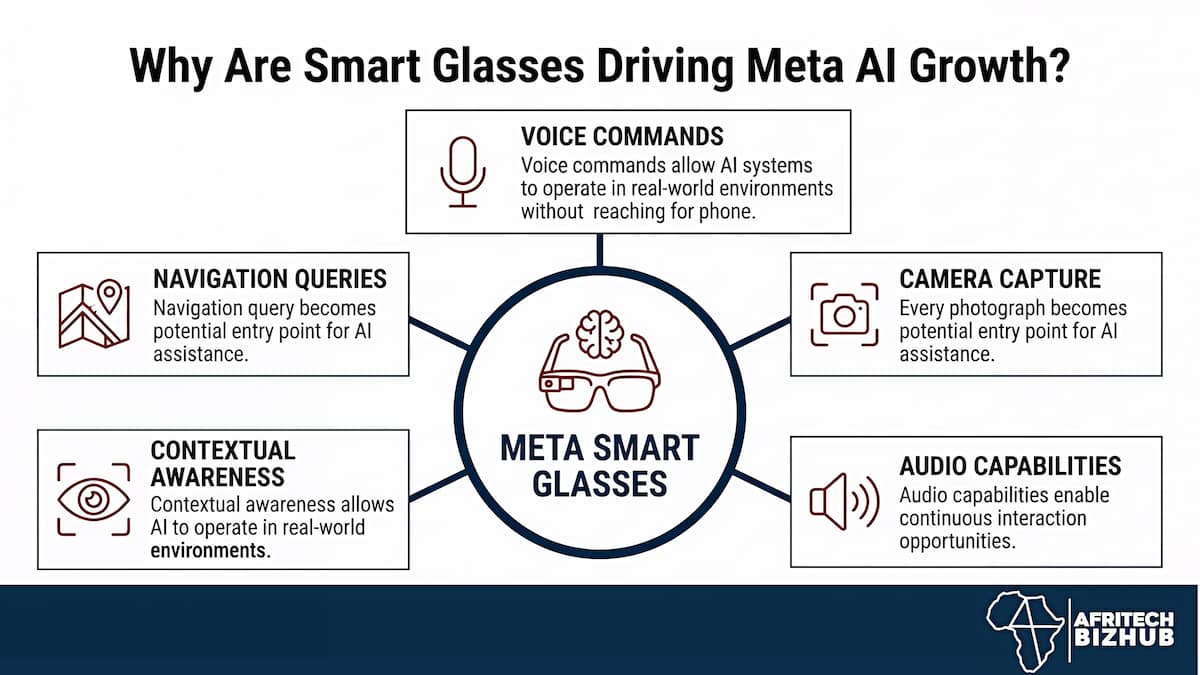
Smart glasses sit at the center of Meta’s hardware strategy because they bring artificial intelligence into everyday activity without requiring users to constantly reach for a phone.
Voice commands, cameras, audio capabilities, and contextual awareness allow AI systems to operate in real-world environments rather than behind application screens.
That shift gives Meta AI something software alone cannot provide: continuous interaction opportunities.
Every photograph, voice request, navigation query, or real-world observation becomes a potential entry point for AI assistance.
The strategic value extends beyond selling hardware.
Meta is building an ecosystem where AI becomes part of daily behavior rather than a service users access occasionally.
How Will Meta Wearables Transform Workplace Productivity?
Across industries, productivity gains increasingly come from reducing delays between information and action.
Meta wearables fit into that trend by placing communication tools, instructions, visual assistance, and AI support directly within a worker’s field of activity rather than requiring constant device switching.
The strongest opportunities appear in sectors where mobility matters.
Field technicians, logistics operators, healthcare workers, maintenance teams, inspectors, and industrial staff often lose time moving between tasks and information systems.
Wearable devices reduce that friction by bringing guidance, communication, and assistance directly into the workflow.
The result is not simply faster access to information but a more continuous working environment where interruptions become less frequent.
Can Wearable AI Tech Replace Traditional Mobile Devices?
The discussion around wearable AI tech increasingly reflects a larger industry question: whether smartphones will remain the dominant gateway to digital experiences.
AI-enabled wearables introduce a different model where users interact through voice, sight, and context rather than relying primarily on screens and touch interfaces.
Smartphones still provide capabilities wearables cannot fully match, particularly around content creation, entertainment, and complex applications.
What is changing is the balance of importance.
Many routine activities such as navigation, messaging, information retrieval, scheduling, and digital assistance can increasingly move to wearable devices.
The future may not involve replacing smartphones entirely.
It may involve reducing how often people need them.
That distinction is becoming increasingly important as Meta wearables gain more capabilities and stronger AI integration.
What Makes The Meta AI Pendant A Game-Changer?
The broader technology industry is moving toward devices that reduce the friction between users and artificial intelligence.
Unlike smartphones, which require deliberate engagement, always-on AI wearables are designed to make assistance available with minimal effort.
This is one reason wearable categories continue attracting investment and research attention.
According to industry forecasts from IDC, wearable devices remain one of the fastest-evolving consumer technology categories as companies search for new ways to integrate AI into daily life.
The significance extends beyond convenience.
Artificial intelligence becomes more valuable when access becomes easier.
Devices capable of providing assistance through voice, audio, vision, and context create more opportunities for interaction than systems dependent on screens alone.
If smart glasses bring AI into vision, always-on wearables bring AI closer to everyday behavior.
That is the direction much of the industry is pursuing.
How Will AI Wearable Device Adoption Surge In 2026?
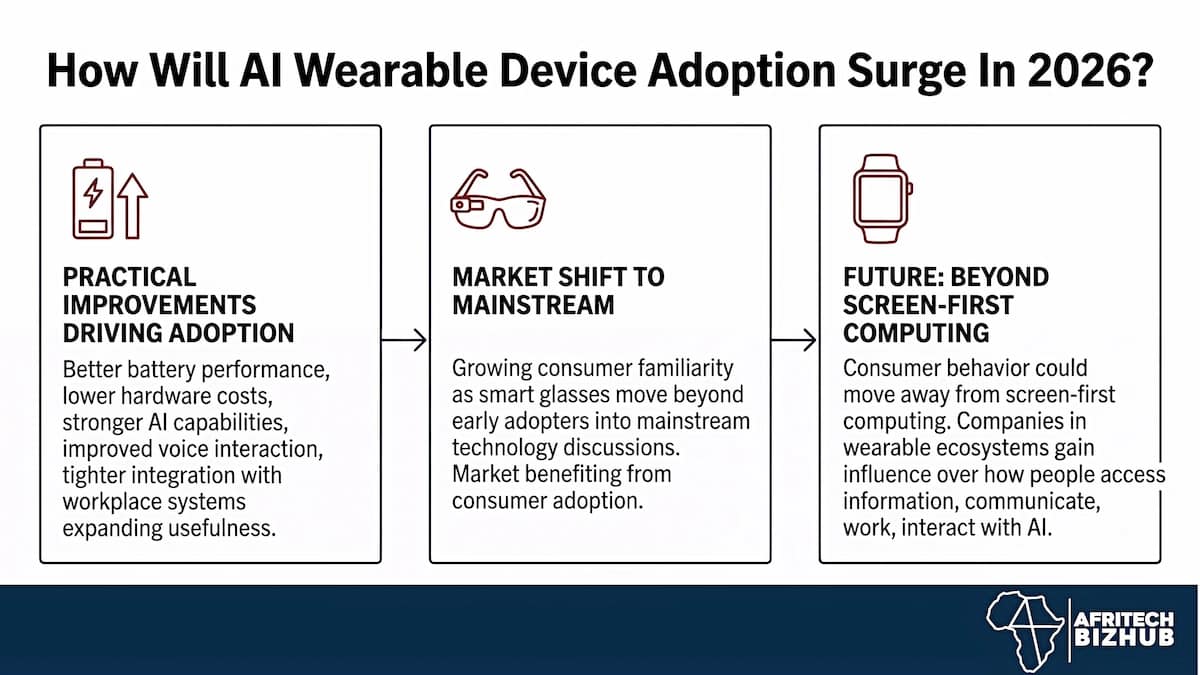
AI wearable device adoption is likely to be driven by practical improvements rather than novelty alone.
Better battery performance, lower hardware costs, stronger AI capabilities, improved voice interaction, and tighter integration with workplace systems are all expanding the usefulness of wearable devices.
The market is also benefiting from growing consumer familiarity.
Smart glasses are moving beyond early adopters into broader technology discussions, while Meta wearables continue gaining visibility as artificial intelligence becomes more deeply integrated into consumer products.
The larger shift extends beyond Meta hardware products.
If wearable AI tech continues improving while AI services become more capable, consumer behavior could gradually move away from screen-first computing.
Companies that establish strong positions in wearable ecosystems may gain influence over how people access information, communicate, work, and interact with artificial intelligence.
Smartphones are unlikely to disappear.
Their monopoly on how people access computing may.
That is the market Meta is trying to capture.


Recent Comments