

Featured Summary:
- America’s AI boom is pushing power demand higher and speeding up data-center construction
- Africa still has very little data-center capacity compared with the size of its digital market
- New facilities will drive spending on power, fibre, cooling, storage and construction
- The buildout will also create technical jobs in networking, cybersecurity, facilities and maintenance
U.S. electricity demand is expected to rise by more than 420 TWh through 2030, with data centers accounting for about half of that increase.
The IEA also projects U.S. data-center electricity use to rise by roughly 240 TWh between 2024 and 2030, while global consumption approaches 945 TWh by the end of the decade.
Electricity prices, water use, land, transmission and local disruption are already shaping opposition to new projects.
Trump criticized New York’s one-year moratorium on large facilities in July, arguing that jobs and tax revenue would move elsewhere.
His administration has also pressed major technology companies to finance more of the power generation required by their facilities.
Texas has seen a surge in proposed grid connections, prompting regulators to examine whether some requests are speculative and whether local networks can absorb them.
Africa has far less computing capacity in place as AI and cloud demand grows. New facilities will require power, substations, fibre, cooling, industrial land and technical workers.
The U.S. buildout is exposing the physical demands of large-scale AI. Africa now has a window to build more of that infrastructure and workforce inside its own digital economy.
America’s AI Boom Has Made Data Centers More Valuable
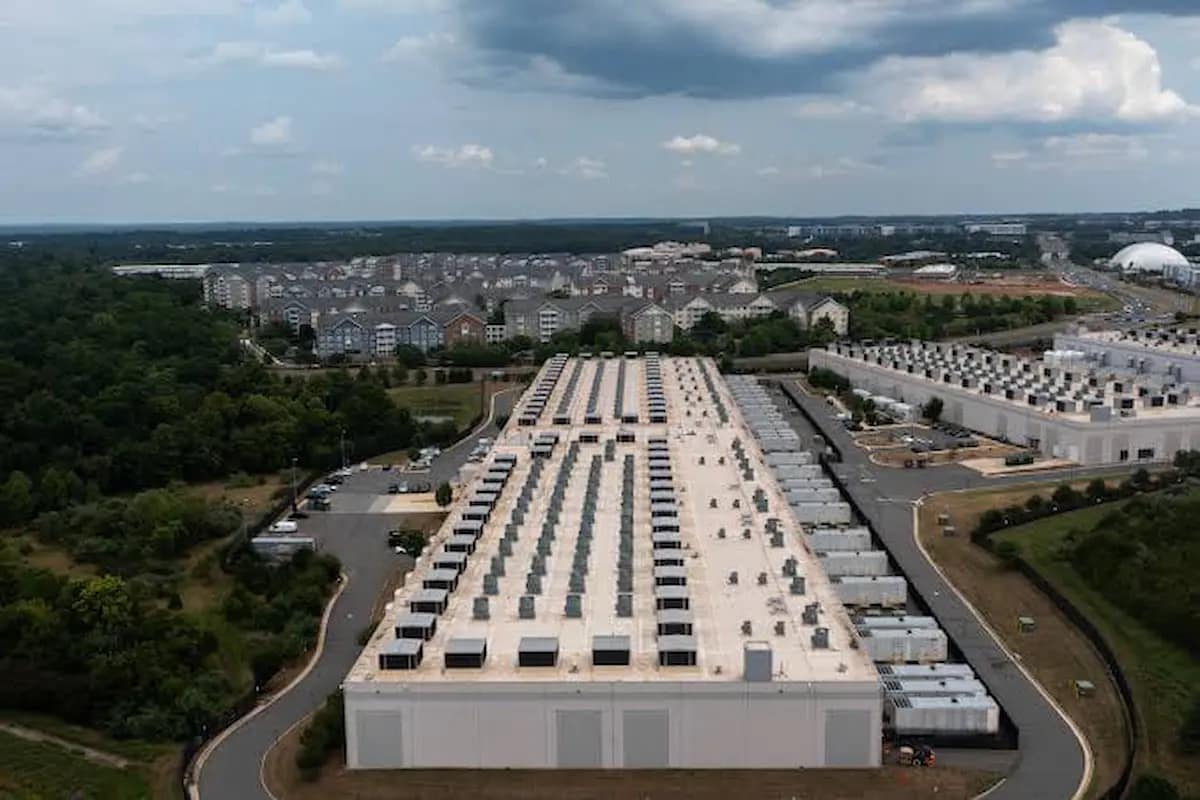
AI training and inference now require far more physical computing capacity. New facilities need substations, transmission links, backup power, cooling, fibre and specialised buildings before servers can be installed.
Utilities, equipment suppliers, construction firms, network operators, land developers and technical contractors are already taking on more of the work surrounding those projects.
Trump has promoted data centers for the jobs and tax revenue they can bring. The White House’s Ratepayer Protection Pledge also requires large operators to shoulder more of the cost of the generation and supporting infrastructure needed for new facilities.
Most employment arrives during construction, when projects need electricians, civil contractors, equipment installers, network specialists and power-system workers. Smaller technical teams remain once the facilities are operating.
AI spending is now reaching industries that once sat outside the centre of the technology boom, from power and construction to networking and specialised maintenance.
Africa Data Centers Have a Capacity Gap the AI Boom Is Expanding
Africa has about 360 MW of active data-center capacity, with another 238 MW under construction and 656 MW planned.
The continent still accounts for only about 0.6% of global capacity, and the African Data Centres Association says the current pipeline would mostly preserve that share.
New projects are running into power constraints. Large facilities need generation, substations, transmission, battery storage and cooling, alongside fibre and subsea-cable access.
Serviced industrial land, grid connections and backup systems are also required before operators can add new computing capacity.
The next wave of projects is likely to favour markets with stronger enterprise demand, reliable electricity, dense fibre networks and faster permitting.
Power infrastructure, land development and network access are becoming central to Africa’s data-center expansion.
Africa’s Data Center Buildout Is Opening a New Technical Jobs Market
Large data-center projects require electricians, electrical and civil engineers, fibre installers, cooling technicians, substation specialists and construction managers before operations begin.
Once a facility opens, the workforce becomes more specialised. Network engineers, cloud specialists, systems administrators, cybersecurity teams, facilities engineers and maintenance staff handle day-to-day operations.
Electrical contractors, fibre companies, cooling providers, equipment-maintenance firms, security services and training businesses also gain from a larger project pipeline.
U.S. policy is already attaching local hiring and technical training requirements to new facilities, showing how workforce development is becoming part of the industry’s expansion.
Africa’s buildout will increase demand for people who can install, operate and maintain power systems, networks, cooling equipment and computing infrastructure.
Africa’s Digital Economy Will Need More Compute at Home
Mobile technologies and services contributed about $240 billion to Africa’s economy in 2025, equal to roughly 7.8% of GDP, while supporting about 13 million jobs and generating around $45 billion in public revenue.
AI will add demand for cloud services, cybersecurity, electricity and network capacity. More computing hosted inside African markets would keep a larger share of construction work, supplier contracts and technical spending on the continent.
Electrical engineers, network specialists, cloud professionals, cybersecurity teams, cooling technicians and facilities operators will become more important as that infrastructure expands. Universities and technical institutions will have a larger role in supplying those skills.
Power supply, fibre, industrial land, permitting and data rules will influence where new facilities are built. Markets with stronger foundations will be able to absorb more of the investment.
The U.S. and China already dominate the global race around chips, cloud infrastructure and AI capacity. Africa is coming into that competition with a much smaller computing base and a fast-growing digital market.
Over the next decade, the economic prize will be keeping more of the construction, supplier activity and technical work generated by African digital demand inside African economies.
Africa’s digital economy is growing faster than the physical computing base beneath it.


Recent Comments