

Featured Summary:
- Electric motorcycles are taking a larger share of Africa’s commercial transport market
- Kenya and Uganda are leading the shift through motorcycle taxis and delivery fleets
- Spiro, Roam and Ampersand are expanding battery swapping, financing and local assembly
- Battery manufacturing and component supply are becoming the next constraint on growth
Electric two-wheeler sales in Africa rose from fewer than 1,000 in 2020 to about 70,000 in 2025, according to the International Energy Agency.
Uganda recorded more than 30,000 sales, while Kenya sold more than 25,000 and electric models accounted for about 15% of new two-wheeler registrations in the country.
Commercial transport has driven much of that growth. Motorcycle taxis and delivery fleets operate for long hours, making fuel one of the largest recurring costs for riders.
The 2026 rise in petrol prices increased that burden for conventional motorcycle operators, while riders already using electric models avoided part of the additional fuel expense.
Kenya and Uganda now have some of the continent’s largest electric motorcycle fleets, with battery-swapping networks and financing supporting wider commercial use.
Most of the battery cells and electronics used in those vehicles are still imported, although local assembly is expanding and manufacturers are sourcing more components within Africa.
Electric Motorcycles Are Cutting Daily Fuel Costs for Commercial Riders
Motorcycle taxis and delivery riders spend much of the day on the road, making fuel a significant daily business cost.
In Kenya, conventional motorcycle-taxi riders can spend 40% to 60% of daily earnings on petrol. Some electric models use less than $2 a day in energy.
A Nairobi field study found that electric-motorcycle riders cut median energy costs per kilometre by about 71% without materially reducing working hours or distance travelled.
Petrol-price increases in 2026 raised daily operating costs for riders using conventional motorcycles.
Battery-swapping networks have shortened charging downtime, and financing has allowed more riders to spread vehicle costs over time.
Lower daily energy costs are giving electric motorcycles a stronger commercial case in taxi and delivery work.
Spiro, Roam and Ampersand Are Building the Infrastructure Around Electric Motorcycles
Investment around electric motorcycles now includes battery swapping, local assembly and vehicle finance across several African markets.
Spiro has expanded its fleet and swapping network and raised debt and equity for new stations and further expansion.
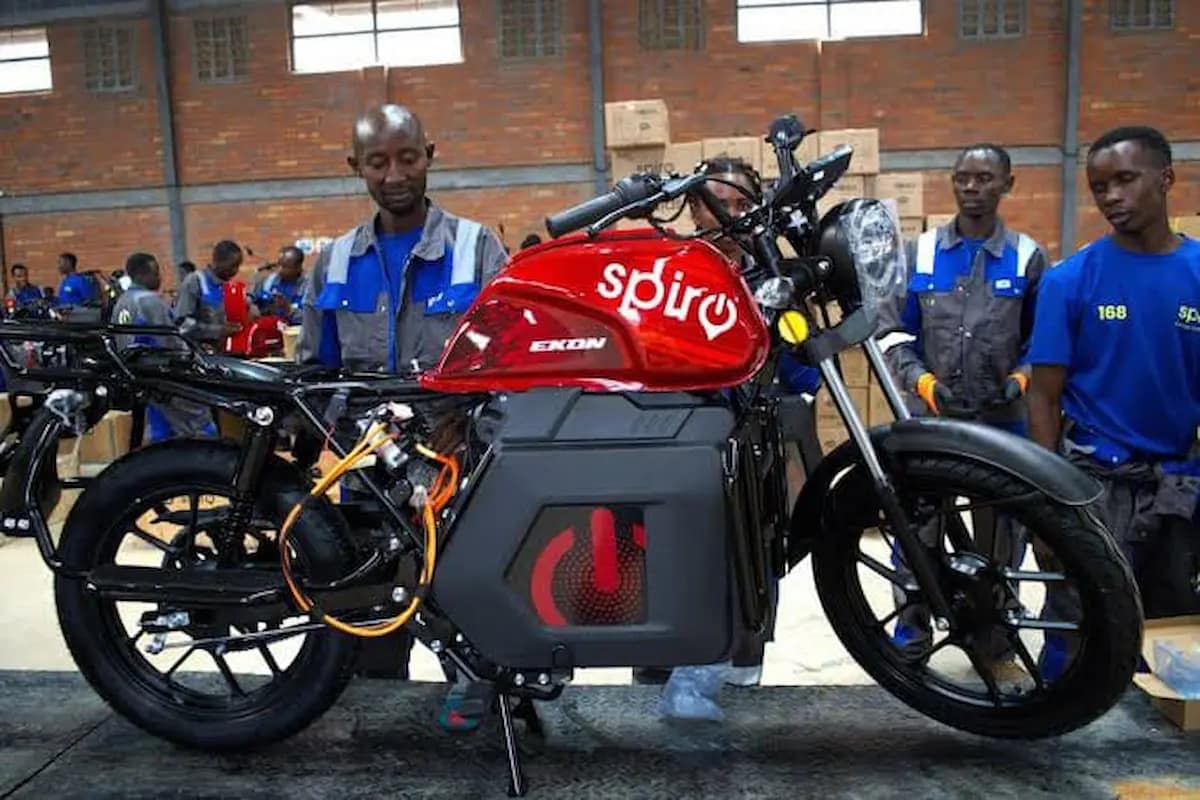
Roam is manufacturing motorcycles in Kenya and sourcing more components locally. Ampersand has expanded battery swapping for commercial riders in Rwanda and Kenya.
Other operators are using leasing and fleet finance to place motorcycles with riders who cannot pay the full purchase price upfront.
Revenue is also coming from battery access and fleet services, giving companies recurring income beyond vehicle sales.
Electric motorcycles are now supporting a wider business around energy, finance and transport services in markets where commercial use is already established.
Africa’s EV Market Is Outpacing Local Battery Production
Africa has large reserves of battery minerals, including cobalt, lithium and graphite, but most cells and several key components used in electric motorcycles are still manufactured abroad.
Roam has increased the share of components sourced in East Africa, while Spiro has expanded engineering and research operations on the continent.
Afreximbank and other development financiers are backing mineral-processing and battery projects in the Democratic Republic of Congo and Zambia, including plans tied to electric-vehicle manufacturing.
Asia still accounts for most large-scale battery manufacturing, leaving African producers dependent on imported cells even as local assembly expands. Electric motorcycle sales are growing faster than the battery industry supplying them.
Most of the activity retained locally is still in assembly, engineering and transport services rather than cell production.
Africa’s EV Transition Is Starting From Commercial Transport, Not Cars
Geopolitical tension has made Africa’s dependence on imported fuel more expensive at the same time that demand for the continent’s battery minerals is rising.
That combination is giving electric transport a different role across African markets.
China, Europe and the United States are building their EV transition largely around passenger cars, while parts of Africa are moving first through motorcycle taxis, delivery fleets and three-wheelers that operate every day and respond quickly to changes in fuel costs.
The mineral side of the transition is moving more slowly. Africa supplies large amounts of cobalt, copper, manganese, lithium and other inputs used in batteries, but much of the refining, cell production and component manufacturing still takes place elsewhere.
That leaves two very different parts of the same market developing at once: commercial electric transport is gaining ground on African roads, while much of the higher-value battery industry remains outside the continent.
The next phase of the transition will be shaped by whether more of that mineral demand is converted into processing, battery production and manufacturing inside Africa.
If that happens, the continent would no longer be participating in the EV shift mainly as a source of minerals and a market for imported technology. It would begin capturing more of the industrial value created by the transport transition already underway.


Recent Comments