


Featured Summary:
- African tech funds are pulling Africa’s digital economy into a direct battle over infrastructure, capital, platforms, and data control
- Africa Finance Corporation approved up to $100 million for African tech funds as institutions accelerate investment in AI infrastructure, digital finance, and venture capital
- Africa’s largest startups still depend heavily on foreign cloud providers, offshore corporate structures, and externally controlled technology systems
- Africa’s technology race now centers on ownership, not startup growth alone
Africa built its digital economy on foreign infrastructure, offshore capital, and externally controlled technology systems.
Cloud infrastructure, venture funding, payment rails, AI compute, and major startup holding structures across African markets still operate heavily outside African ownership.
Africa Finance Corporation’s approval of up to $100 million for African-focused technology funds marks a broader institutional push to reclaim influence over the systems shaping Africa’s technology future.
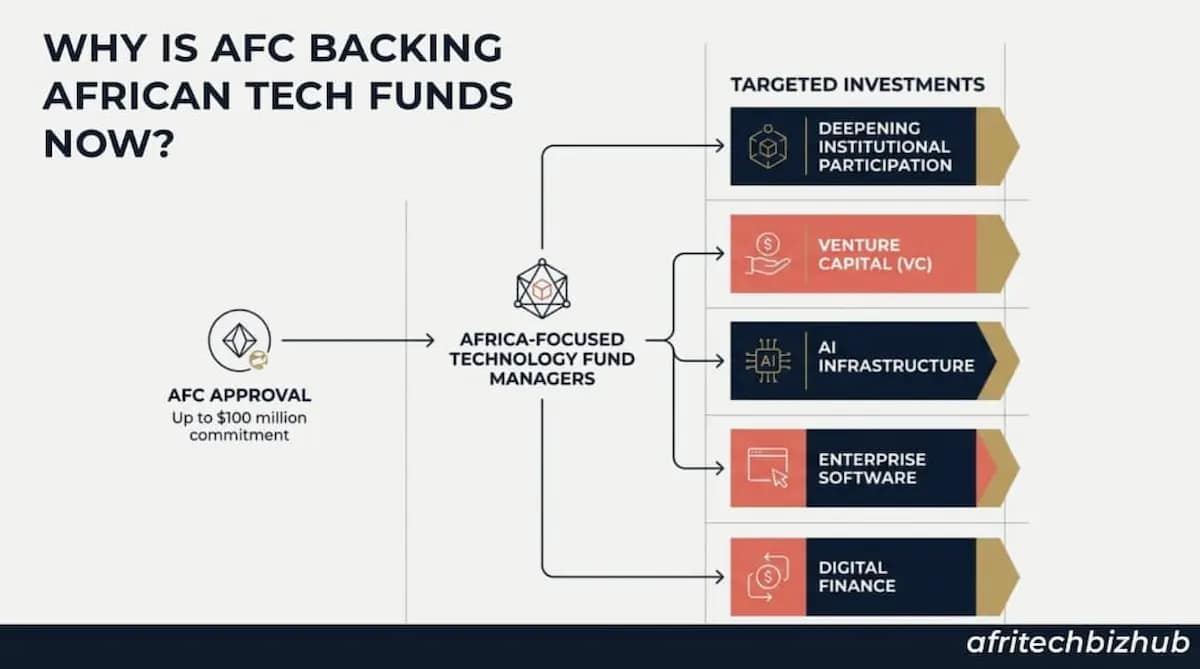
Why Is AFC Backing African Tech Funds Now?
African tech funds are becoming a strategic priority as African institutions move to regain influence over a digital economy still heavily controlled by foreign capital and external technology infrastructure.
Africa Finance Corporation approved up to $100 million for Africa-focused technology fund managers, including commitments into Lightrock Africa Fund II and Future Africa Fund III, deepening African institutional participation across venture capital, AI infrastructure, enterprise software, and digital finance.
The shift goes beyond startup financing.
Africa’s largest technology companies still depend heavily on foreign investors and offshore structures that often retain long-term influence over intellectual property, platform expansion, and capital control.
African tech funds are now emerging as part of a wider institutional effort to increase African ownership across the systems driving the continent’s digital economy.
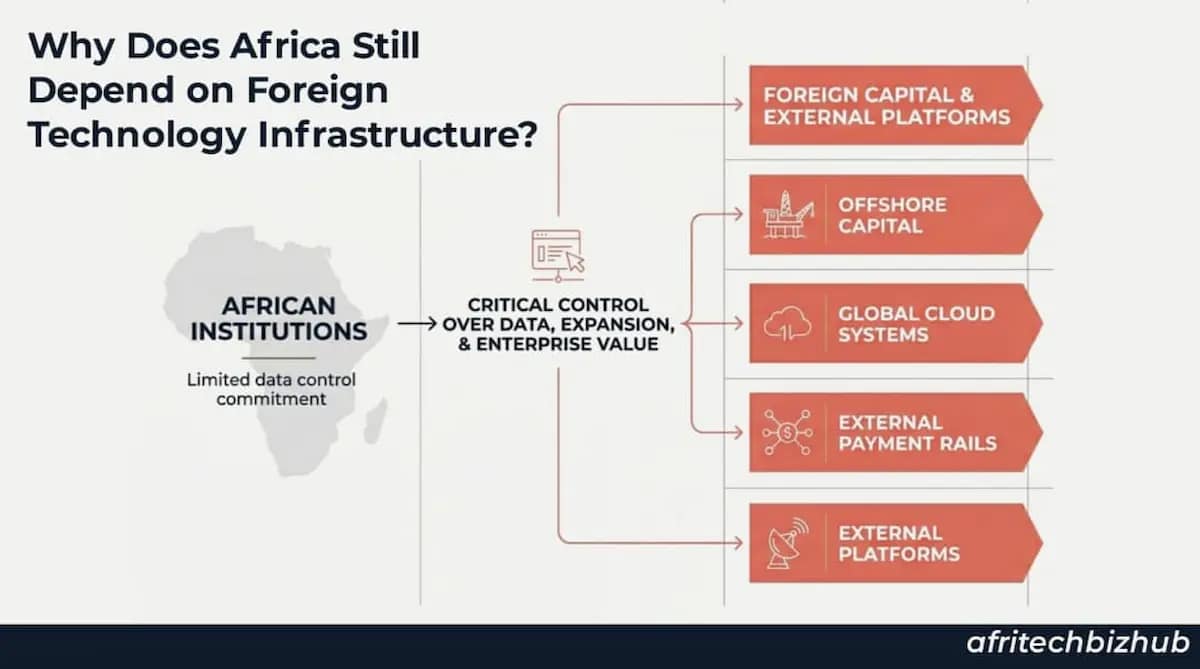
Why Does Africa Still Depend on Foreign Technology Infrastructure?
Africa’s digital economy still runs heavily on foreign cloud systems, offshore capital, external payment rails, and globally controlled technology platforms.
Many of Africa’s largest startups continue operating through investment and ownership structures built outside the continent, leaving critical control over data, expansion, and long-term enterprise value beyond African institutions.
That reality is forcing a recalculation across African finance and technology circles.
African tech funds are now moving beyond startup financing into a broader contest over who controls the systems powering Africa’s digital economy.
Can African Tech Funds Rebuild Ownership Across Africa’s Digital Economy?
African tech funds are moving to the center of a broader institutional effort to increase African control across venture capital, digital infrastructure, fintech systems, and long-term technology ownership.
The Africa Finance Corporation said its technology fund commitments are intended to expand local institutional participation inside African venture ecosystems, where foreign investors and offshore structures still retain dominant influence over capital and strategic ownership.
The fight now extends far beyond startup funding.
Africa’s largest technology companies still scale through foreign cloud systems, external payment infrastructure, and offshore corporate structures that often keep data control, intellectual property, and long-term enterprise value outside African markets.
African tech funds are increasingly entering a harder contest over who controls the systems driving Africa’s digital economy.
Why Is Africa’s Technology Race Turning Into an Ownership Battle?
Africa’s technology expansion is now colliding with a harder reality: the continent built major digital growth without securing equivalent control over the systems behind it.
African institutions are moving deeper into venture capital, technology infrastructure, and digital finance as concerns grow around foreign dominance across cloud infrastructure, platform ownership, and long-term capital influence inside African markets.
That shift is redefining the purpose of African tech funds themselves.
The contest no longer centers only on producing billion-dollar startups or attracting foreign investment into African technology markets.
It now centers on whether Africa can retain ownership, strategic leverage, and long-term economic power inside the digital systems driving the continent’s next phase of growth.
If Africa fails to increase ownership across its technology stack, the continent risks scaling digital growth while exporting long-term enterprise control, platform leverage, and economic value outside its own markets.


Recent Comments