


Featured Summary:
- Africa Tech Summit is drawing deeper investor activity into climate tech, AI services, digital payments, and infrastructure-focused startups across African markets
- Climate tech capital is moving more aggressively into African energy, mobility, and sustainability sectors as long-term demand signals strengthen
- African startups are expanding across fintech, ecommerce, enterprise software, and digital commerce as competition tightens across major markets
- Global investors now treat Africa Tech Summit as a strategic entry point into Africa’s technology economy
Africa Tech Summit is becoming less important as a conference and more important as a signal of where technology capital is repositioning across Africa’s digital economy.
The earlier phase of startup growth rewarded user acquisition and expansion narratives.
The next phase increasingly rewards infrastructure, recurring demand, and businesses capable of supporting payments, AI services, climate systems, and digital operations at scale.
That shift is changing where investors look and how early they move.
Africa Tech Summit now sits closer to those decisions as venture firms, operators, and institutions position around infrastructure layers expected to carry the next phase of digital growth across African markets.
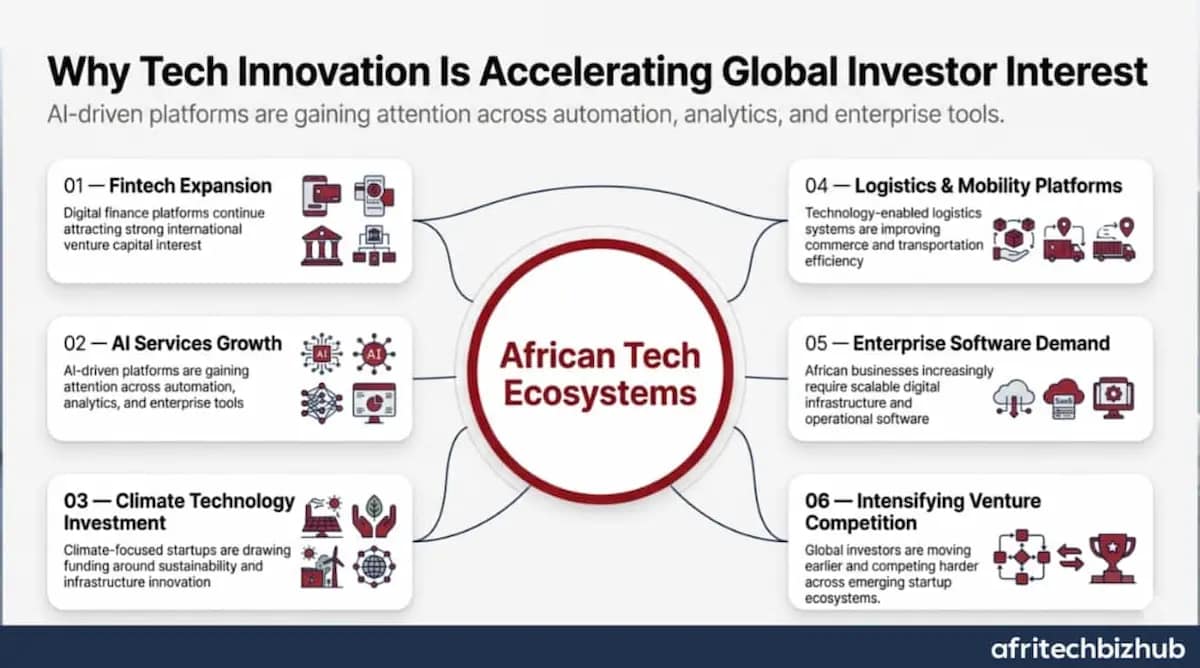
How Is Africa Tech Summit Expanding Venture Capital Opportunities?
Africa Tech Summit is becoming a stronger convergence point for venture activity because capital is moving beyond startup visibility into infrastructure readiness and commercial durability.
Venture firms are increasingly paying attention to fintech, climate technology, AI services, digital payments, and infrastructure startups positioned closer to recurring economic demand.
The bigger shift is not simply that investors are entering African markets. It is that they are moving earlier and competing more selectively.
As growth slows across more mature technology environments, African venture activity is increasingly being evaluated through market structure, operating conditions, and long-term demand rather than expansion headlines alone.
Why Is Africa Tech Summit Driving Climate Tech Growth?
Climate technology is attracting stronger capital flows across African markets as energy instability, fuel costs, and transport inefficiencies continue shaping commercial demand across cities and industrial sectors.
Within this shift, Africa Tech Summit reflects growing attention around electricity access, mobility systems, battery storage, clean transport, and energy-financing infrastructure.
Climate tech is moving out of the margins of venture capital discussion and into core infrastructure strategy tied directly to long-term economic expansion across African markets.
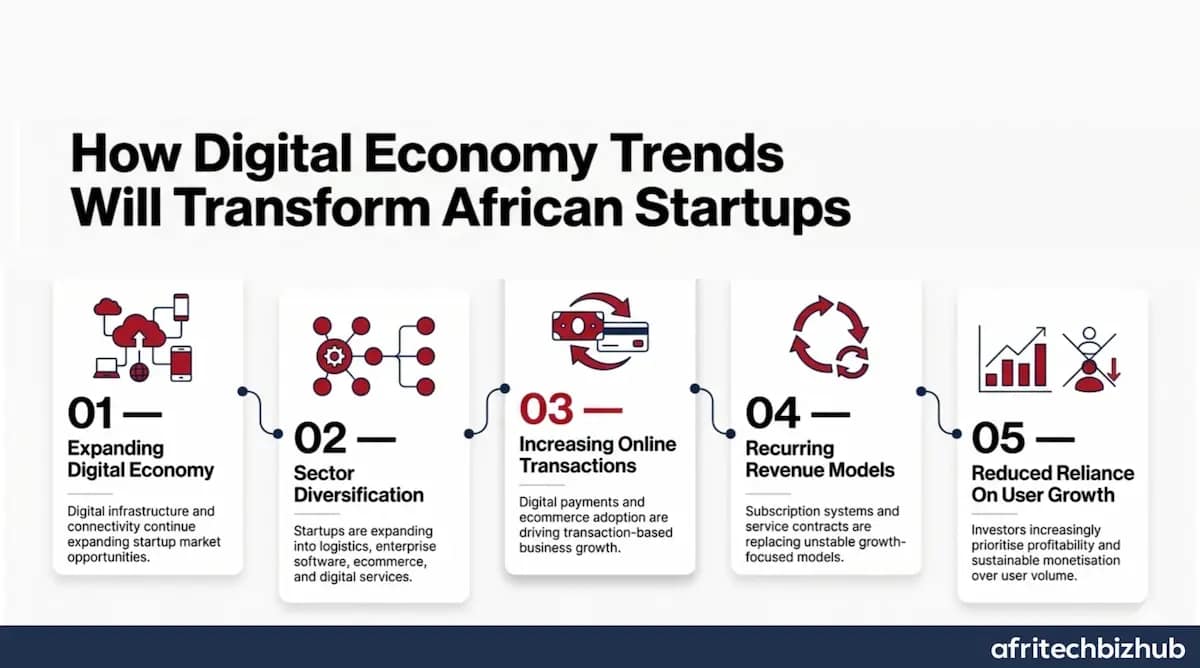
How Will Digital Economy Trends Transform African Startups?
Africa’s digital economy continues reshaping startup activity across fintech, ecommerce, enterprise software, logistics, and digital payments as online transactions and platform adoption deepen across major markets.
The International Finance Corporation estimates Africa’s internet economy could reach $712 billion by 2050, reinforcing long-term interest around the continent’s technology ecosystem.
That outlook is changing how founders build and scale. Companies are moving closer to recurring revenue models tied directly to payments, commerce, logistics, infrastructure, and enterprise demand instead of relying mainly on user-growth narratives.
Why Are Global Investors Positioning Earlier Across African Technology Markets?
Africa Tech Summit is gaining stronger weight inside global technology investment circles because parts of Africa’s digital economy are beginning to move from startup formation into infrastructure formation.
Investors are paying closer attention to businesses positioned around payments, AI services, climate systems, logistics, enterprise software, and digital operations that increasingly sit closer to long-term economic activity.
The larger competition is no longer simply identifying the next African startup after growth becomes obvious.
Venture firms are moving earlier, competing harder, and positioning around the infrastructure layers expected to support the next phase of digital expansion across the continent.
The companies attracting durable capital may increasingly be those building systems markets continue using long after growth narratives lose attention.


Recent Comments