


Featured Summary:
- Nigerian economy pressures are pushing the government toward the UAE loan as it seeks dollar funding for the budget, infrastructure, and refinancing.
- The UAE-Nigeria deal could ease short-term financing pressure, but its structure raises questions about transparency, collateral, and repayment risk.
- Nigeria loan funds may support debt restructuring if they refinance more expensive obligations and reduce near-term cash pressure.
- IMF red flags matter because complex financing instruments can hide fiscal risks unless reporting, oversight, and accountability are clear.
Nigeria’s $5 billion UAE deal is not just another borrowing story.
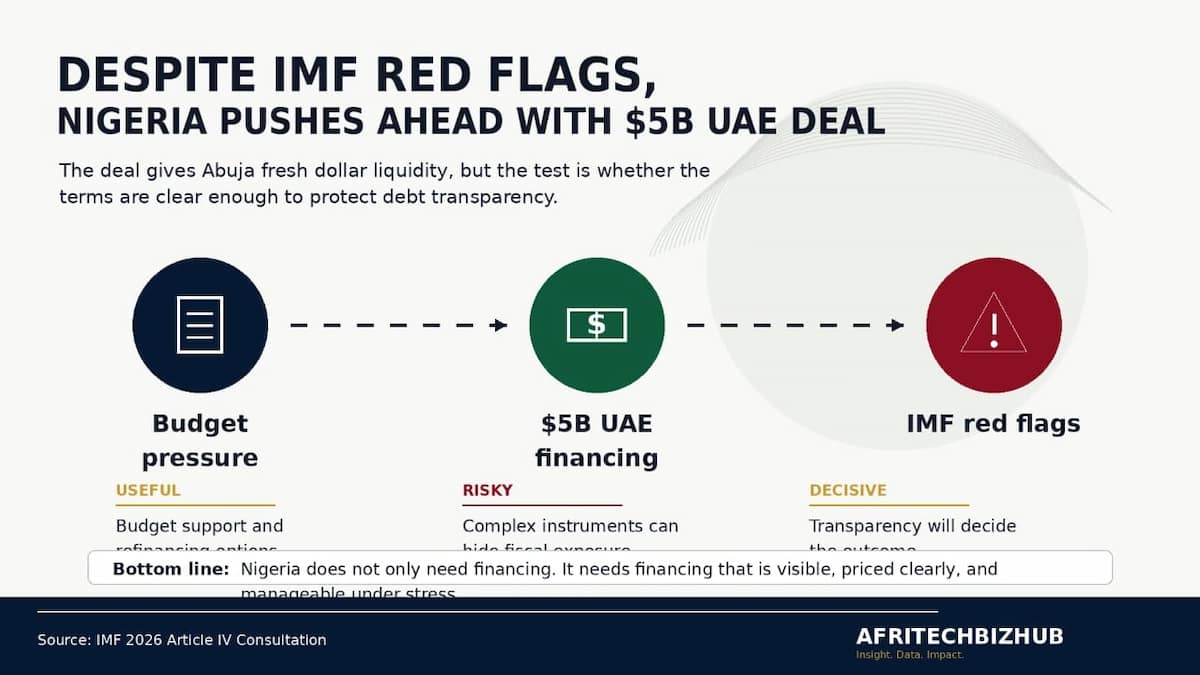
It sits at the centre of a difficult fiscal trade-off: the government needs external funding to support its budget and refinance expensive obligations, yet the structure of the deal has raised warnings from the IMF about transparency and complex financing instruments.
That tension is what makes the transaction politically and economically sensitive.
The Nigerian economy is still trying to manage high debt-service costs, infrastructure needs, foreign exchange pressure, and tight fiscal space.
A UAE-linked facility can provide quick dollar liquidity, but fast financing can become expensive later if the terms are unclear or if repayment risks are not properly managed.
The question is not whether Nigeria needs money.
The sharper question is whether this kind of financing improves debt strategy or simply moves fiscal pressure into a less visible corner of the balance sheet.
How Will the UAE Loan Affect Nigeria’s Fiscal Budget?
Nigeria’s fiscal budget gains short-term breathing room from the UAE loan because external dollar funding can support spending plans, infrastructure commitments, and debt-service management.
A government facing heavy financing needs often looks for funding that can arrive faster than traditional multilateral lending or public bond issuance.
The UAE-Nigeria arrangement gives Abuja another source of liquidity at a time when budget execution depends heavily on borrowing, revenue performance, and investor confidence.
The budget risk lies in what happens after the money enters government accounts.
If the funds are used to refinance expensive debt or support productive infrastructure, the deal could ease near-term pressure.
If the financing adds opaque obligations, collateral complications, or repayment demands that are not clearly reflected in fiscal reporting, it could weaken budget credibility.
The real fiscal impact will therefore depend on transparency, pricing, maturity, collateral terms, and whether the loan reduces Nigeria’s debt burden or only delays it.
Why Is the Nigerian Economy Embracing the UAE Loan?
The Nigerian economy is embracing the UAE loan because the government needs foreign currency funding at a time when domestic borrowing is costly and external market conditions remain difficult.
Nigeria’s reform agenda has improved parts of the macroeconomic story, but the country still needs money for infrastructure, social spending, debt service, and budget support.
A large UAE-linked facility offers access to dollars without waiting for slower financing routes.
The appeal is also strategic. The UAE has become a major capital source for African governments looking beyond traditional Western lenders and Eurobond markets.
For Nigeria, the deal fits a wider effort to diversify financing partners while keeping the economy supplied with foreign exchange. That does not remove the risk.
It only explains the attraction. When a government is under pressure to fund development and manage debt at the same time, quick external financing can look useful even when watchdogs warn that the structure needs more scrutiny.
How Will Nigeria Loan Funds Drive Debt Restructuring?
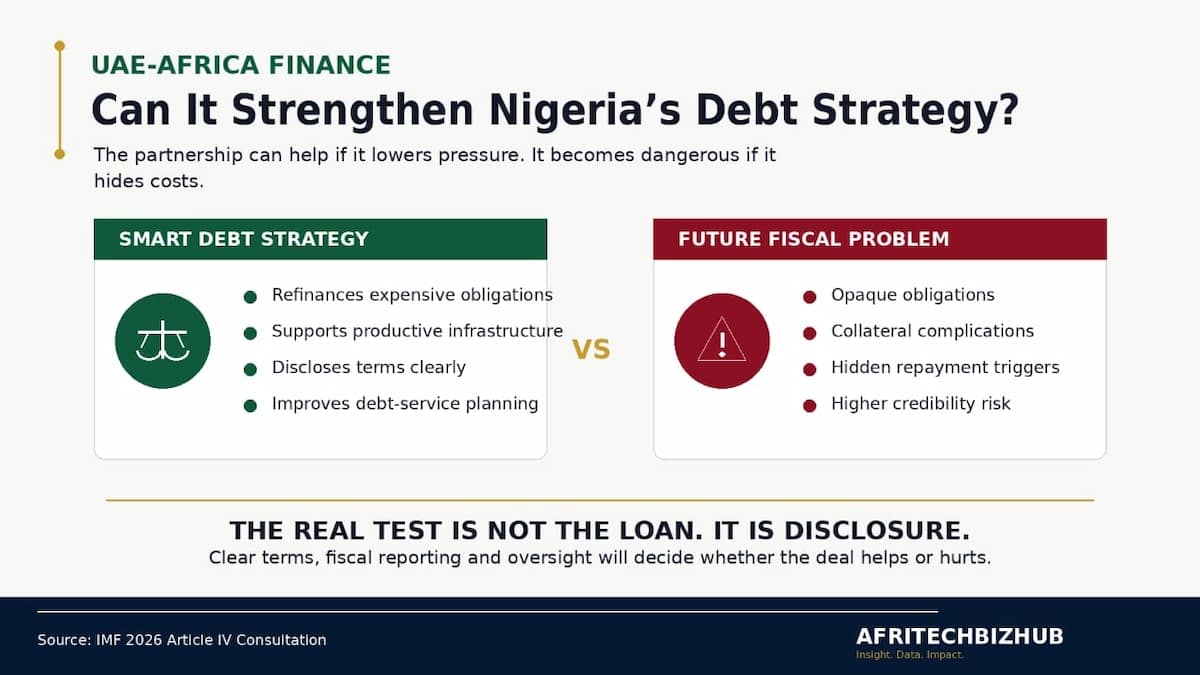
Nigeria loan funds can support debt restructuring if they are used to replace more expensive obligations with financing that has better cost, maturity, or currency terms.
Refinancing can help a government reduce immediate repayment pressure, smooth debt maturities, and create more space for capital spending.
In a country where debt service absorbs a large share of revenue, any instrument that lowers near-term pressure can appear attractive to policymakers.
The danger is that debt restructuring should reduce risk, not disguise it.
If the UAE loan is linked to complex derivative structures, collateral demands, or margin-call exposure, the refinancing benefit may come with new vulnerabilities.
Nigeria’s debt strategy needs instruments that are cheaper, clearer, and easier to manage under stress. Borrowing to refinance old debt can be sensible.
Borrowing through structures that are hard to explain can make the debt position less transparent and harder for investors, citizens, and lawmakers to assess.
Why is the UAE-Nigeria Loan Deal Facing IMF Criticism?
The UAE-Nigeria loan deal is facing IMF criticism because complex financing instruments can create risks that are not always visible in ordinary budget documents.
These structures may offer fast cash, but they can also involve collateral, market-value changes, exchange-rate exposure, and repayment triggers that complicate fiscal management.
For a country already dealing with debt-service pressure, those hidden risks matter.
The IMF’s official 2026 Article IV consultation statement on Nigeria highlighted concerns about off-budget spending and complex financing instruments.
It also called for stronger budget processes, public financial management, fiscal reporting, risk frameworks, transparency, and accountability.
That is the core of the warning around the UAE loan. The issue is not simply that Nigeria is borrowing.
The issue is whether the borrowing is fully visible, properly reported, and safe enough under exchange-rate or market stress.
Can the UAE-Africa Partnership Reshape Nigeria’s Debt Strategy?
The UAE-Africa financing relationship can reshape Nigeria’s debt strategy if it provides credible alternatives to expensive borrowing without weakening transparency.
African governments need broader financing options because infrastructure gaps are large, concessional finance is limited, and global borrowing costs remain high.
UAE-linked capital can become useful when it supports productive investment, longer maturities, and refinancing that reduces pressure on public finances.
Nigeria’s test is whether it can turn the deal into disciplined debt management rather than another layer of complex exposure.
A stronger strategy would clearly disclose terms, show how the funds reduce borrowing costs, explain repayment risks, and link disbursements to productive spending.
If Nigeria uses UAE financing to refinance expensive debt and build infrastructure with transparent reporting, the partnership could strengthen fiscal flexibility.
If the deal hides costs or creates new repayment shocks, it will confirm the IMF’s concerns.
The difference between a smart debt strategy and a future fiscal problem will come down to transparency, accountability, and execution.


Recent Comments