


Featured Summary:
- Fintech regulatory compliance increasingly determines which companies can expand successfully across Africa.
- Legal strategy now shapes expansion decisions as much as technology, funding, and customer adoption.
- African payments systems remain fragmented despite growing demand for regional financial services.
- Cross-border payments reveal structural opportunities and weaknesses in Africa’s fintech market.
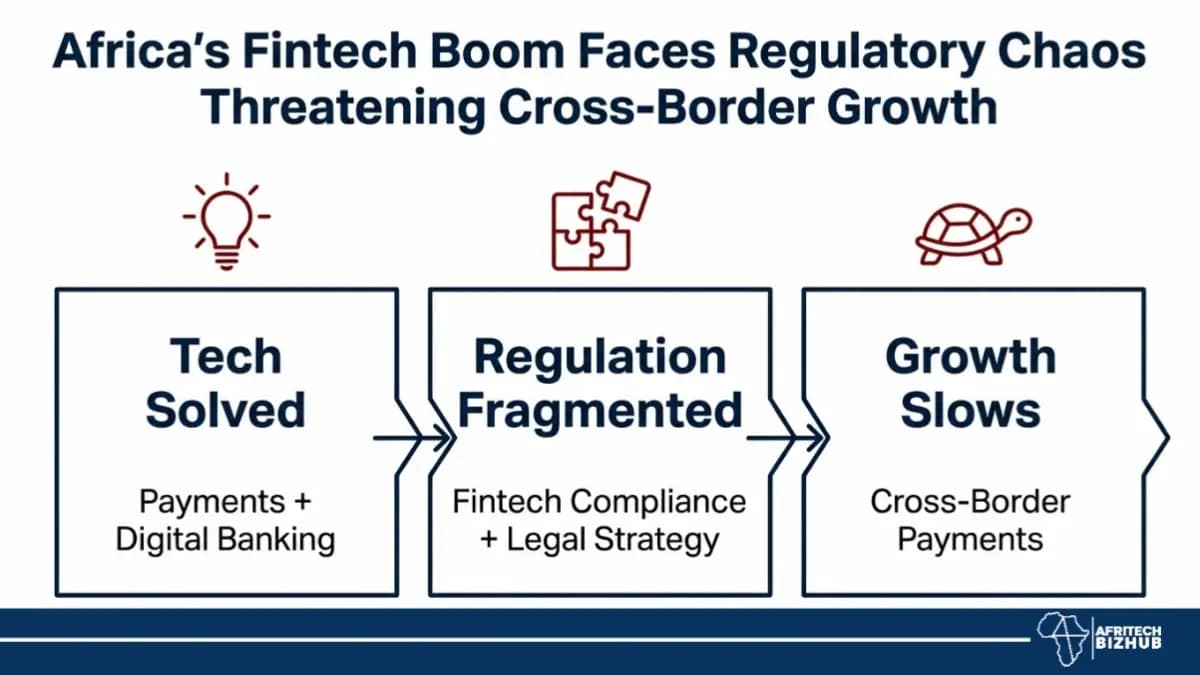
Africa’s fintech industry spent years solving the problem of moving money. Payments that once took days now take minutes.
Digital banking and mobile financial services expanded access to consumers and businesses.
New payment rails linked markets in ways that were difficult to imagine a decade ago.
By most measures, the sector should be entering an easier phase of growth.
Observed patterns, however, show that expansion beyond domestic borders encounters a challenge that technology alone cannot fix.
Customers and businesses increasingly operate regionally, yet regulations remain largely national.
Growth is no longer determined by product development alone.
Navigating fragmented legal frameworks has become the sector’s defining challenge.
How does Fintech Regulatory Compliance Shape Expansion?
Regulatory compliance determines whether a fintech can translate domestic success into regional scale.
Observed patterns show that licensing, reporting, capital requirements, and operational standards vary widely across African countries.
Many companies assume growth follows a simple sequence: build, acquire, expand.
In practice, expansion is interrupted by regulatory complexity.
Fintechs scaling most effectively are often those that integrate compliance capabilities early, before obligations become constraints.
Compliance is therefore not a secondary concern.
It defines which companies can scale efficiently, which remain confined to domestic markets, and which may face costly delays or legal exposure.
What Drives Fintech Compliance Across Africa?
Africa’s Fintech compliance is anchored in trust.
Financial systems rely on confidence that customer funds are secure, transactions are transparent, and institutions operate within acceptable risk thresholds.
Regulatory measures, anti-money laundering, know-your-customer, fraud control, cybersecurity standards, reinforce that trust.
Observed adoption patterns show that compliance is uneven across countries, meaning that fintechs must navigate multiple interpretations of acceptable oversight.
Compliance has become a strategic capability, influencing investor confidence, partnership formation, and operational decision-making.
How Legal Strategy Shapes Fintech Scaling Decisions?
Legal strategy now guides expansion decisions as much as market opportunity.
Entering new markets often requires years of approvals, local partnerships, and licensing arrangements.
Observed patterns indicate that predictable regulatory environments can outweigh sheer market size in influencing investment decisions.
Countries with clear rules attract more fintech investment, partnerships, and innovation.
Conversely, opaque frameworks slow scaling, increase risk, and shape which companies can expand successfully.
Legal strategy is now embedded in growth planning, not confined to compliance teams.
Why African Payments Systems Complicate Expansion Rules?
African payments systems remain largely organised around national boundaries, even as fintechs and customers operate regionally.
Observed patterns show that cross-border trade frequently encounters multiple settlement frameworks, supervisory authorities, and licensing requirements.
Fintechs therefore operate regionally while complying as national businesses, creating duplication, increased costs, and slower expansion.
Institutions such as the Pan-African Payment and Settlement System (PAPSS) address these frictions by reducing transaction barriers and supporting financial integration.
Are Cross-border Payments Slowing Fintech Growth?
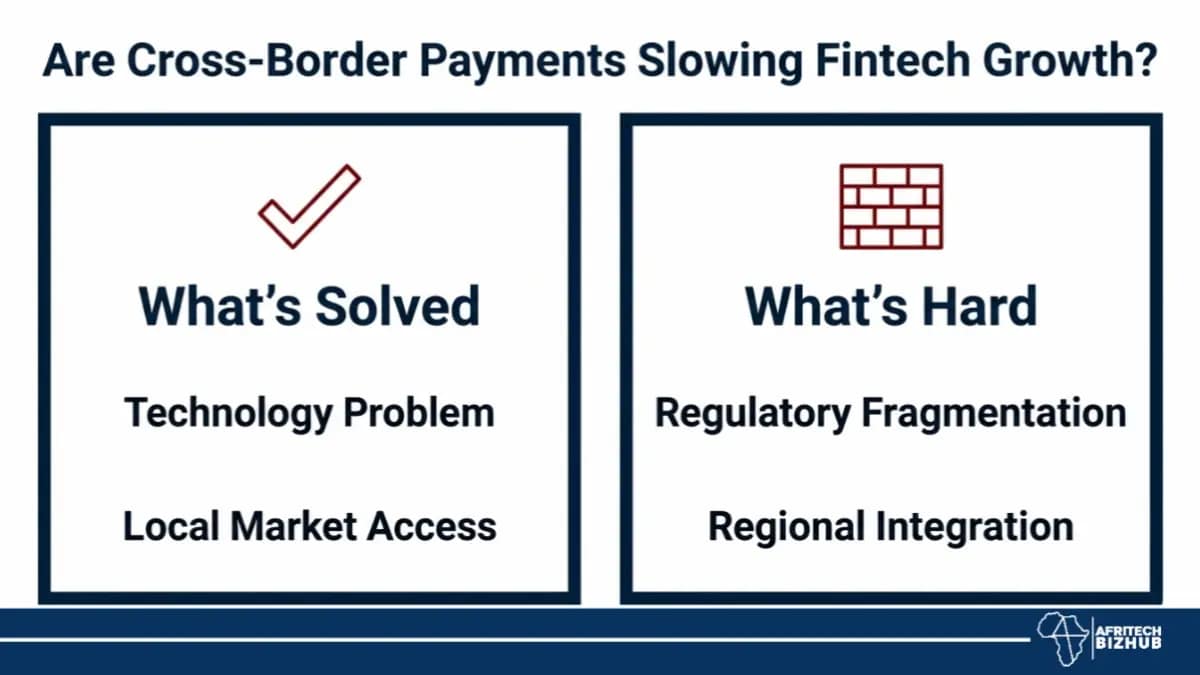
Cross-border payments do not prevent growth; they reveal structural weaknesses.
Observed patterns indicate that first-generation fintech success proved demand exists, but scaling across multiple markets exposes regulatory fragmentation.
Each additional market adds compliance obligations, reporting standards, and supervisory relationships.
Growth remains possible, but the path to scale is determined less by technology than by the ability to navigate these fragmented frameworks.
Africa’s next generation of fintech leaders will be defined not only by product innovation but by skill in building regional businesses under complex regulatory conditions.


Recent Comments