


Feature Summary:
- African Development Bank (AfDB) funding positions skills development closer to economic infrastructure.
- Morocco’s workforce strategy places stronger emphasis on digital skills and employability.
- Vocational training modernization moves beyond classroom expansion into labour-market alignment.
- Women empowerment increasingly shapes how skills investment converts into economic participation.
Economic competitiveness increasingly depends on whether people can adapt as quickly as industries change.
Infrastructure still matters, but roads, ports, and connectivity alone no longer determine productivity if labour systems cannot supply the capabilities economies demand.
Morocco’s latest programme backed by the African Development Bank (AfDB) places skills closer to national economic strategy.
The $232 million investment targets workforce readiness through digital skills, vocational training modernization, broader access models, and stronger participation outcomes.
The deeper signal reaches beyond education policy.
Morocco is treating skills as infrastructure that determines whether future economic growth can be absorbed locally.
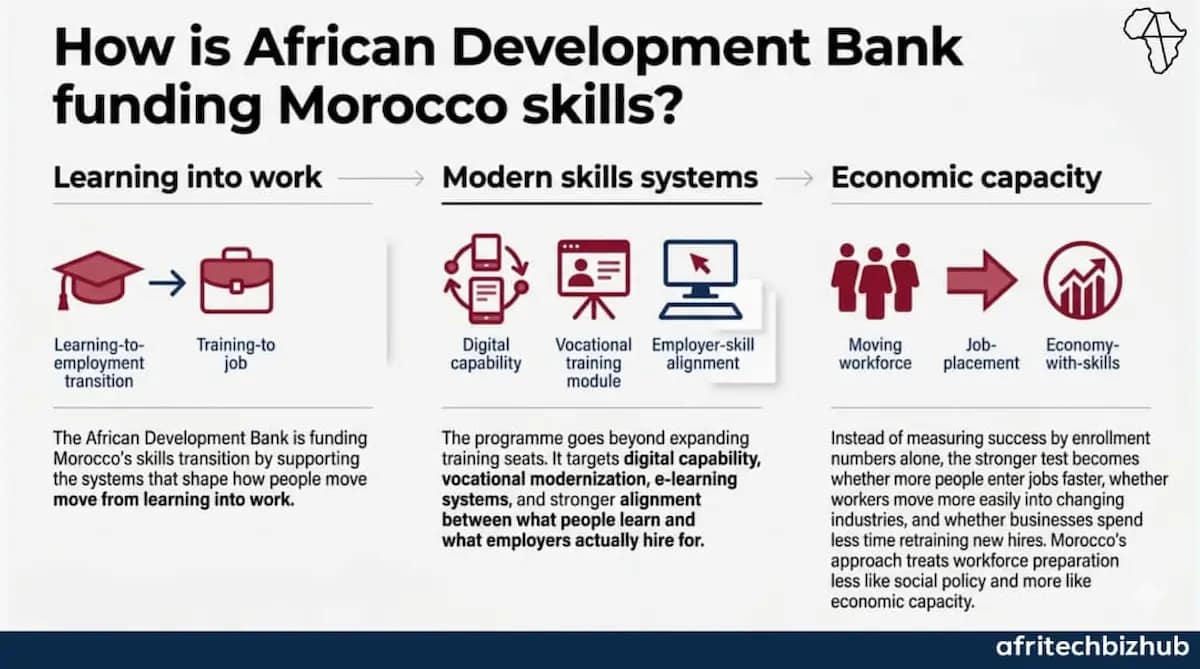
How is African Development Bank Funding Morocco Skills?
AfDB is funding Morocco’s skills transition by supporting the systems that shape how people move from learning into work.
The programme goes beyond expanding training seats.
It targets digital capability, vocational modernization, e-learning systems, and stronger alignment between what people learn and what employers actually hire for.
That changes what skills funding produces.
Instead of measuring success by enrollment numbers alone, the stronger test becomes whether more people enter jobs faster, whether workers move more easily into changing industries, and whether businesses spend less time retraining new hires.
Morocco’s approach treats workforce preparation less like social policy and more like economic capacity.
Why Boost Digital Skills in Morocco?
Digital skills receive more attention because work changed faster than many education systems.
Jobs increasingly require workers to operate across digital tools, data environments, online processes, and technology-supported workflows regardless of sector.
Morocco’s investment direction reflects a broader African pressure point.
Young populations continue entering labour markets while employers increasingly reward adaptability over routine capability.
Countries that strengthen digital readiness earlier place more workers in position to enter newer industries instead of competing for shrinking traditional opportunities.
Is Vocational Training Modernized Through AfDB Programme?
Vocational training delivers stronger outcomes when it reflects how work actually happens.
Morocco’s modernization agenda combines practical delivery, digital learning tools, flexible access pathways, and stronger links between training outcomes and employer demand rather than treating vocational education as a separate track.
The African Development Bank positions human capital development, employability, and skills alignment as core conditions for economic competitiveness across member countries.
Morocco’s programme reflects that direction by connecting vocational training, digital capability, and labour-market participation into one operating system rather than isolated education interventions.
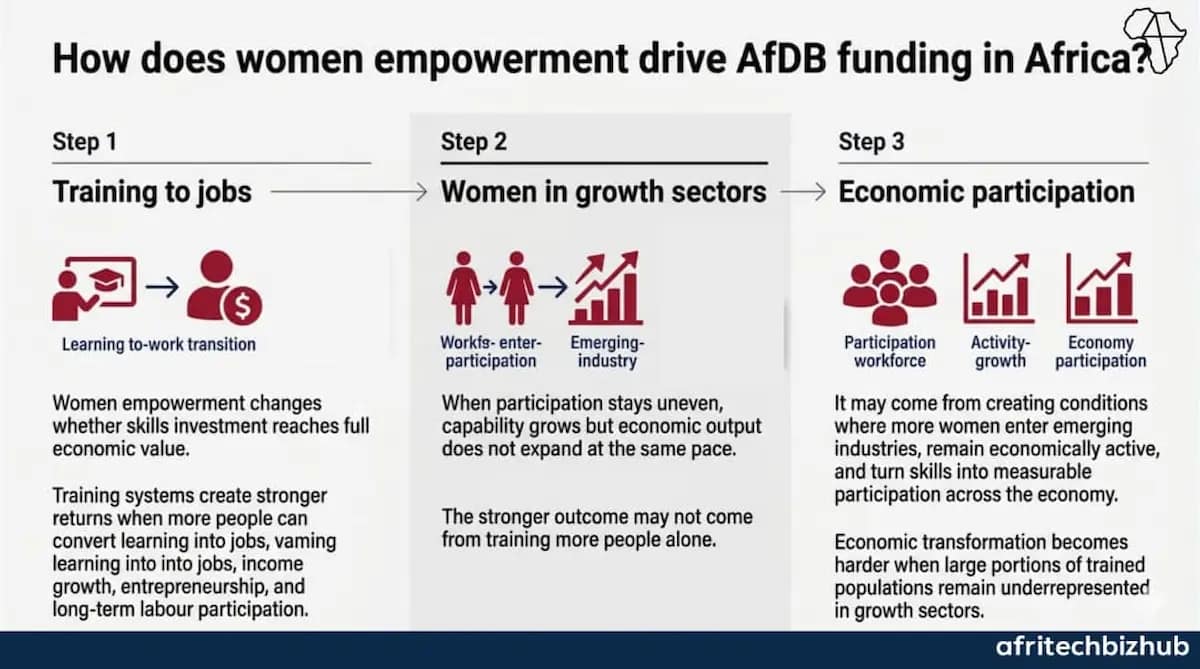
How does Women Empowerment Drive AfDB Funding in Africa?
Women empowerment changes whether skills investment reaches full economic value.
Training systems create stronger returns when more people can convert learning into jobs, income growth, entrepreneurship, and long-term labour participation.
When participation stays uneven, capability grows but economic output does not expand at the same pace.
Morocco’s approach points toward a broader challenge across African labour markets.
Economic transformation becomes harder when large portions of trained populations remain underrepresented in growth sectors.
The stronger outcome may not come from training more people alone.
It may come from creating conditions where more women enter emerging industries, remain economically active, and turn skills into measurable participation across the economy.


Recent Comments