


Featured Summary:
- Teen social media increasingly turns participation into something teenagers feel publicly aware of rather than privately experienced.
- Social media pressure often builds through comparison, visibility, and continuous audience awareness.
- Confidence can weaken when self-expression feels exposed to constant evaluation.
- More TikTok teens appear to remain active online while becoming more selective about public visibility.
Teen social media changed more than communication.
It changed how identity is experienced.
Social media in teenagers increasingly operates as a place to connect, express, compare, observe, and be observed at the same time.
For many teenagers, pressure no longer comes from being online alone.
It comes from feeling visible while being online.
How does Teen Social Media Affect Self-worth?
Teen social media affects self-worth when social feedback becomes easier to measure and harder to ignore.
Likes, comments, follower counts, reactions, and visible engagement do not define value, but they create signals that teenagers often notice while forming identity and understanding belonging.
Digital identity becomes more visible because expression now happens in environments where reactions appear immediately and publicly.
That visibility changes participation.
Teenagers are not only deciding what they think or enjoy.
They increasingly decide how those choices appear to others.
Self-worth does not disappear inside social media, but confidence can feel more exposed when identity develops inside spaces designed to make attention visible.
Why is Social Media Overwhelming Many Teenagers Today?
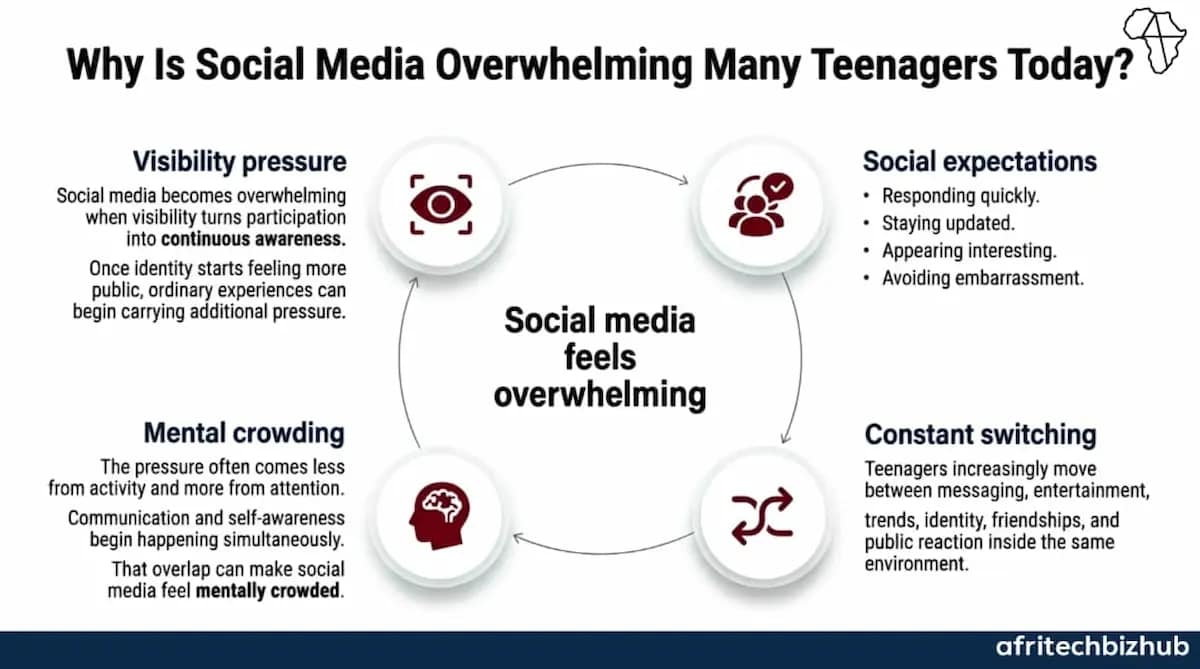
Social media becomes overwhelming when visibility turns participation into continuous awareness.
Once identity starts feeling more public, ordinary experiences can begin carrying additional pressure: responding quickly, staying updated, appearing interesting, avoiding embarrassment, or maintaining a version of yourself that feels socially acceptable.
The pressure often comes less from activity and more from attention.
Teenagers increasingly move between messaging, entertainment, trends, identity, friendships, and public reaction inside the same environment.
That overlap can make social media feel mentally crowded because communication and self-awareness begin happening simultaneously.
Read: African Tech Funds Ignite Battle Over Africa’s Digital Ownership
Can Social Media Pressure Damage Teenage Confidence?
Social media pressure can affect confidence when visibility changes behavior.
Confidence usually develops through experimenting, changing opinions, making mistakes, and expressing uncertainty.
Public environments can make those normal experiences feel more exposed and more permanent than teenagers expect.
That does not mean Teen social media creates the same experience for everyone.
But when teenagers begin avoiding actions mainly to reduce judgment, comparison, or unwanted attention, confidence starts shifting from self-expression toward self-protection.
Social media pressure becomes less about criticism and more about managing visibility.
Why are TikTok Teens Avoiding Public Posting?
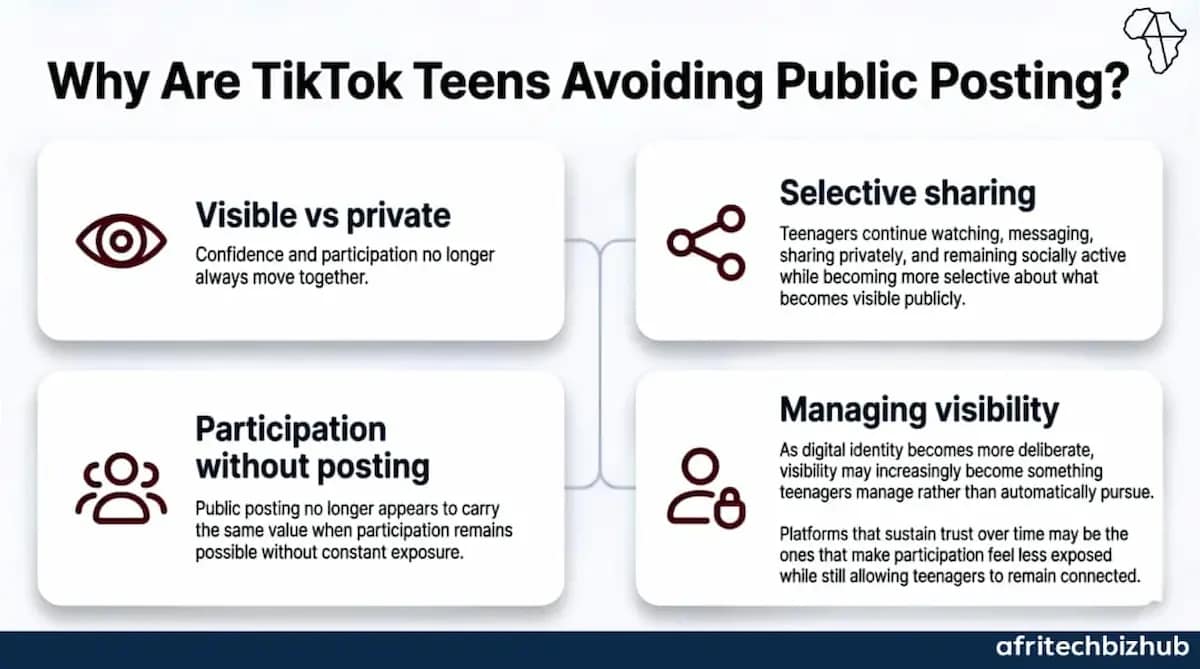
Some TikTok teens avoid public posting because confidence and participation no longer always move together.
Teenagers continue watching, messaging, sharing privately, and remaining socially active while becoming more selective about what becomes visible publicly.
That behavior suggests less rejection of social media and more adaptation to it.
Public posting no longer appears to carry the same value when participation remains possible without constant exposure.
As Digital identity becomes more deliberate, visibility may increasingly become something teenagers manage rather than automatically pursue.
Platforms that sustain trust over time may not be those that encourage more posting.
They may be the ones that make participation feel less exposed while still allowing teenagers to remain connected.


Recent Comments