

Featured Summary:
- EIB financing supports the modernisation of Albania’s 34-kilometre Durrës–Rrogozhinë railway, a section of Corridor VIII
- Durrës handles substantial maritime freight, but Albania’s limited railway infrastructure restricts inland cargo movement
- European financing supports the initial railway works, while unfinished sections prevent a continuous connection to North Macedonia and Bulgaria
- Construction progress, cross-border rail services and freight demand will determine the investment’s commercial impact
The European Investment Bank (EIB) highlighted transport investment in the Western Balkans on November 24, 2026, including Albania’s Durrës–Rrogozhinë railway modernisation.
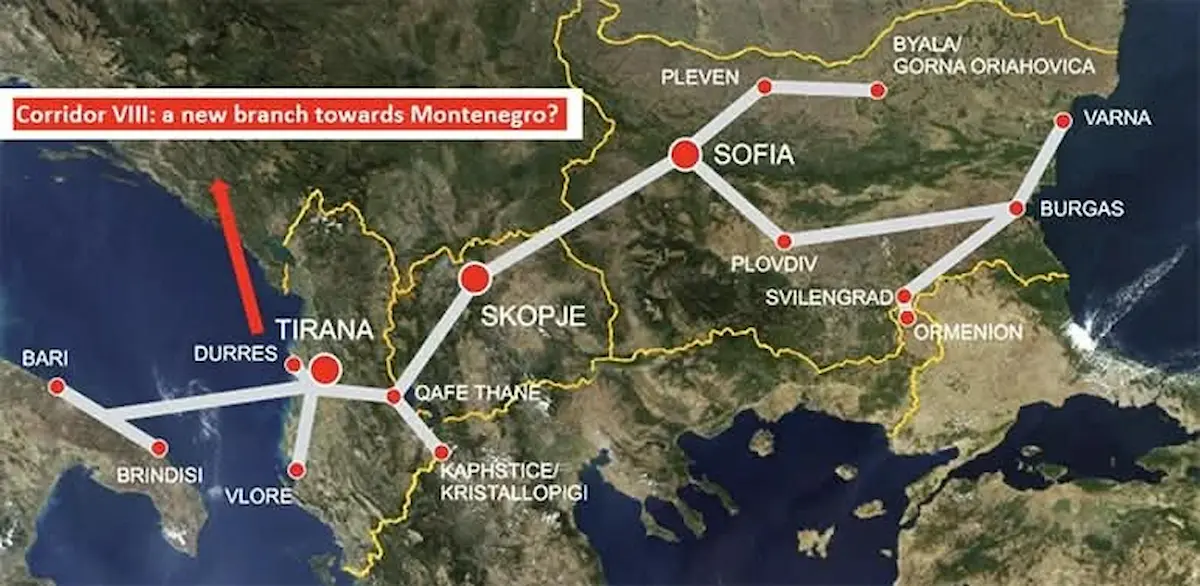
The 34-kilometre section forms part of Corridor VIII, a planned rail connection between Albania’s Adriatic coast, North Macedonia and Bulgaria’s Black Sea ports.
Albania’s existing railway does not provide a continuous freight route across these countries, limiting the potential for rail shipments between Durrës and markets farther east.
The Port of Durrës handled approximately 3.8 million tonnes of cargo in 2025, according to figures attributed to the Durrës Port Authority, an increase of 6.3% from the previous year.
Imports accounted for roughly 2.8 million tonnes, compared with 1 million tonnes of exports. The port serves businesses importing industrial materials, machinery and consumer goods, alongside exporters shipping Albanian products to overseas markets. These figures cover maritime cargo handled at the port, rather than freight transported on the railway.
Albania’s railway network has received limited modernisation, with ageing infrastructure, restricted operating speeds and substantial sections lacking electrification.
The Western Balkans Investment Framework identifies the Durrës–Rrogozhinë section for rehabilitation, including track improvements, station reconstruction, electrification and railway systems.
Further infrastructure development is planned east of Rrogozhinë towards the North Macedonian border. The proposed works form part of efforts to improve the railway’s operating capacity and compatibility with European transport standards.
The EIB agreed a €30 million sovereign loan in 2025, alongside approximately €60.5 million in European Union grants through the Western Balkans Investment Framework.
The European Bank for Reconstruction and Development (EBRD) committed up to €30 million in separate financing, with the project’s estimated cost reported at €120.5 million.
The funding covers the Durrës–Rrogozhinë modernisation rather than the full international railway. The EBRD’s project record lists the investment as disbursing, although that financial status does not establish the extent of physical construction completed.
Durrës Freight Trade Faces Inadequate Inland Rail Connections
Albania’s maritime freight is concentrated in industrial commodities. INSTAT’s 2025 transport statistics show that coke and refined petroleum products accounted for 16.3% of cargo handled at the country’s seaports, followed by basic metals and fabricated metal products at 15.4%.
Other non-metallic mineral products represented 14.2%, while coal, crude petroleum and natural gas contributed 7.5%. The figures cover Albania’s seaports collectively, rather than Durrës alone, and identify commodity groups relevant to bulk freight operations.
Rail freight volumes remain small compared with the scale of Albania’s maritime cargo activity. INSTAT recorded 85,900 tonnes transported by rail in the third quarter of 2026, down 45% from the corresponding period in 2025.
The operational railway network extends across 253 kilometres, including the Durrës–Elbasan, Rrogozhinë–Fier and Fier–Vlorë lines. Recorded freight movements were concentrated within the 0–49 kilometre distance category, reflecting the short operating distances served by the existing network.
Bulgaria exported goods worth 253.3 million lev to Albania in 2025, according to its National Statistical Institute, a decline of 50.4% from the previous year.
Imports from Albania reached 100.3 million lev, increasing 2.7%. The trade statistics provide a measure of commercial exchange between Albania and the eastern end of Corridor VIII, but do not identify the transport modes used or the volume of goods that could move by rail.
North Macedonia’s position between the two markets makes its unfinished railway connections essential to establishing a continuous freight route.
The Western Balkans Investment Framework identifies operating speeds below 60 kilometres per hour, obsolete signalling and telecommunications equipment, and limited electrification across Albania’s railway network.
Its assessment also records frequent service interruptions and inadequate freight operations. Corridor VIII’s planned Albanian works include rehabilitation between Durrës, Rrogozhinë and Lin, alongside a new railway connection towards North Macedonia.
The project’s technical specifications and terminal arrangements will determine the freight services that operators can provide once the relevant sections are completed.
EIB Railway Investment Faces Unfinished Cross-Border Connections
The Durrës–Rrogozhinë railway project involves rehabilitating and electrifying approximately 34 kilometres of track, alongside reconstruction of station infrastructure. Albania’s state-owned railway company, Hekurudha Shqiptare, is responsible for implementing the project.
The European Bank for Reconstruction and Development (EBRD) approved its financing participation in June 2025, alongside the European Investment Bank and European Union.
The EBRD lists the investment as disbursing, while the Western Balkans Investment Framework (WBIF) identifies the wider Albanian Corridor VIII programme as being at the tendering stage, with a projected completion date of December 2031.
The planned route continues east from Rrogozhinë towards Lin, near Lake Ohrid, before reaching the North Macedonian border. WBIF documentation identifies 136 kilometres of rehabilitation between Durrës, Rrogozhinë and Lin, together with a proposed 2.8-kilometre connection towards North Macedonia.
An earlier assessment separately identified approximately 110 kilometres between Rrogozhinë and Lin for technical preparation. The proposed cross-border railway through Struga remains within the project-development pipeline, with further design and financing decisions required for the outstanding Albanian sections.
North Macedonia’s eastern Corridor VIII railway programme covers approximately 89 kilometres between Kumanovo and the Bulgarian border. WBIF estimates investment of €282.1 million for the Kumanovo–Kriva Palanka works, including €191.4 million in loans and €79.9 million in grants.
The programme includes 30.8 kilometres between Kumanovo and Beljakovce and another 34 kilometres towards Kriva Palanka. A separate project covers approximately 23.4 kilometres of new railway towards Bulgaria and electrification works. In July 2026, a €149 million EU grant agreement supported preparations for a new construction tender on the final section.
The Kriva Palanka–Bulgarian border railway carries an estimated investment requirement of €573.2 million, according to WBIF project records.
An EU investment grant of approximately €154.5 million forms part of its financing structure, with the implementation schedule extending to December 2031.
The project includes new railway construction through mountainous terrain and infrastructure required to establish the international connection. Its delivery remains tied to procurement and construction progress on the eastern section of Corridor VIII.
Rail Freight Operators Need Lower Costs and Reliable Cross-Border Services
Albania’s railway modernisation is intended to reduce operating costs and attract freight from roads. The Western Balkans Investment Framework (WBIF) reports that the existing network operates at speeds below 60 km/h, with outdated signalling, no electrification and frequent service interruptions.
Its investment programme covers the rehabilitation of 136 km between Durrës and Lin, alongside a proposed 2.8 km connection towards North Macedonia.
Faster journeys and lower maintenance costs are expected benefits, although the published project summary does not quantify savings for freight operators.
The Port of Durrës is central to the proposed freight route, which would connect Adriatic shipping with inland markets and Bulgaria’s Black Sea ports.
However, Albania’s 2026 European Commission assessment reported that no concrete steps had been taken to transfer freight operations from Durrës and Vlorë to the planned Porto Romano port.
The procurement process for the new commercial port was cancelled after the remaining bidder failed to submit a final financial offer. These developments leave an important part of Albania’s future port logistics arrangements unresolved.
Cross-border freight services also depend on completing railway connections beyond the initial investment. The European Commission reported in November 2026 that Durrës–Rrogozhinë remained at the procurement stage, while detailed design was being finalised for Rrogozhinë–Pogradec.
Preparations were underway for a feasibility study to determine the railway connection point with North Macedonia. Albania’s February 2026 procurement notice specifies ETCS Level 1 signalling and GSM-R telecommunications for the first section, with infrastructure designed to accommodate subsequent electrification.
These improvements address technical requirements on the Albanian network, but international freight operations will also require compatible infrastructure and coordinated border procedures.
Commercial demand will ultimately determine how much freight the modernised railway attracts. Albania’s Ministry of Infrastructure indicated in May 2026 that Durrës–Rrogozhinë was scheduled for modernisation by the end of 2029, with further work towards North Macedonia phased over 2028–2032.
The published programme identifies prospective infrastructure improvements, but does not establish contracted freight volumes, confirmed international train services or tariffs that would allow operators to calculate their expected savings.
Until those commercial arrangements are documented, Corridor VIII’s projected freight benefits remain dependent on the completion of the wider network and the willingness of cargo owners to use it.
Completed Corridor VIII Links Could Strengthen Albania’s Freight Trade
Albania’s Ministry of Infrastructure has targeted the end of 2029 for completing the Durrës–Rrogozhinë modernisation, with further railway development towards North Macedonia planned through 2032.
The European Commission’s November 2026 assessment places the first section at procurement, while detailed design continues on Rrogozhinë–Pogradec.
Preparations for the proposed border crossing remain at the feasibility-study stage. Construction contracts and agreement on the international connection are the next significant steps towards establishing a continuous railway.
Albania, North Macedonia, Bulgaria, Italy and Romania signed a declaration in February 2026 supporting Corridor VIII’s development as a strategic transport connection.
The planned route would link Adriatic shipping with inland European markets and Bulgaria’s Black Sea transport network. Its importance has increased as European governments seek more resilient supply routes amid geopolitical tensions affecting international trade and energy security.
Freight movements involving industrial materials and energy-related commodities would still depend on suitable terminals, railway capacity and applicable trade restrictions.
The investment outlook extends beyond the rehabilitation of Albania’s existing railway. Completing the missing international sections would allow operators to develop through-freight services connecting Adriatic ports with markets farther east.
The commercial opportunity lies in attracting cargo from established transport routes through competitive freight charges, reliable delivery schedules and agreements with shipping companies and industrial customers.
Without those services, the EIB-backed investment will improve domestic railway infrastructure but deliver only part of Corridor VIII’s intended international trade benefits.


Recent Comments