

Featured Summary:
- The EBRD’s November 2026 entry into Côte d’Ivoire introduces new financing arrangements for smaller businesses facing an estimated $2.3 billion credit gap
- Guarantees, risk-sharing facilities and local-currency investments could increase lending capacity through Ivorian banks and microfinance institutions
- High collateral demands, borrowing costs and limited financial records continue to restrict SME credit access despite wider financial inclusion
- Actual disbursements, borrower eligibility and loan performance will determine whether development-bank financing expands commercial opportunities
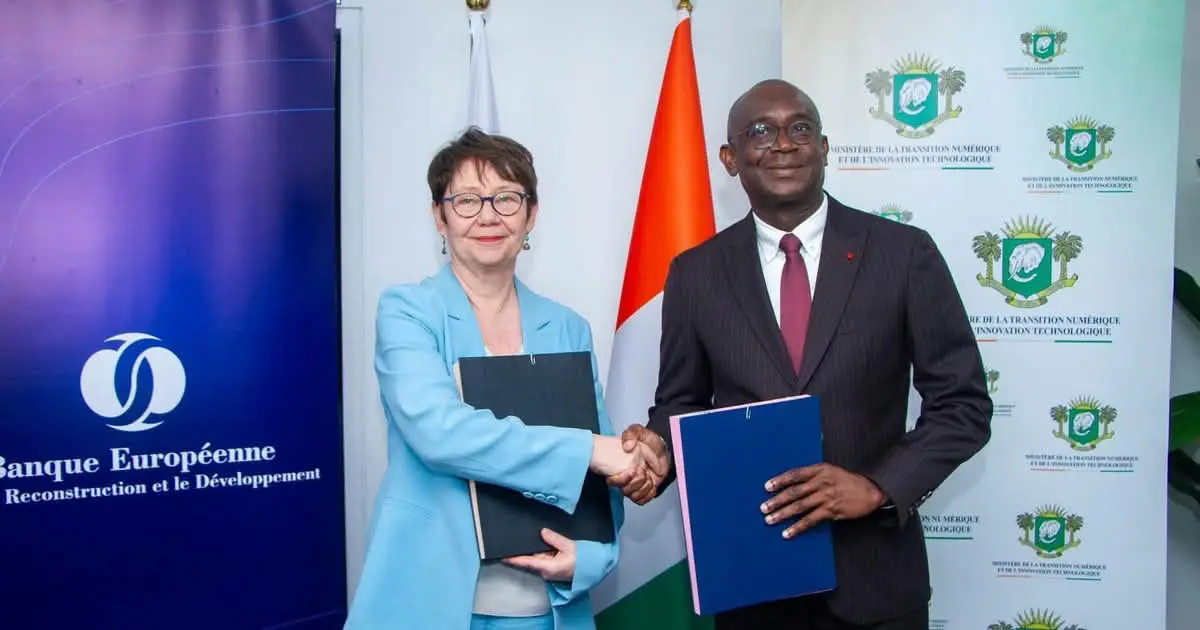
The European Bank for Reconstruction and Development (EBRD) launched financing and advisory programmes for small businesses in Côte d’Ivoire on November 24, 2026, at an event co-hosted by the African Development Bank (AfDB) in Abidjan.
The initiative introduces additional support for local financial institutions, including credit-risk sharing, trade finance and microfinance funding.
Business advisory services and policy engagement form part of the programme. The EBRD is expanding its activities in the country alongside the AfDB, which maintains separate financing partnerships with Ivorian lenders.
Côte d’Ivoire has an estimated $2.3 billion financing gap for micro, small and medium-sized enterprises (MSMEs), according to the EBRD’s Financial Sector Strategy 2026–2030.
These businesses account for approximately 98% of formal enterprises. World Bank Enterprise Survey data show that only 26.9% of Ivorian firms had a bank loan or line of credit in 2023.
The disparity between the number of smaller businesses operating in the formal economy and the share of surveyed firms using bank credit points to substantial unmet financing demand.
Collateral requirements remain a major obstacle. The EBRD’s financial-sector assessment identifies incomplete financial records, informality and perceived borrower risk among the factors restricting SME lending.
Larger Ivorian banks have expressed interest in expanding their SME portfolios but generally favour registered enterprises with established financial accounts.
Businesses unable to provide sufficient documentation or security face greater difficulty qualifying for conventional loans, limiting the reach of existing banking services.
The EBRD’s financing model relies on commercial banks, microfinance institutions and other financial intermediaries to extend credit to qualifying businesses.
Portfolio guarantees can reduce lenders’ exposure to eligible loans, while wholesale funding and local-currency investment provide additional resources for lending.
The arrangements give participating institutions greater capacity to serve smaller borrowers, but the amount of credit reaching previously underserved enterprises will be established through actual loan approvals and disbursements.
Development Banks Expand SME Lending Through Ivorian Banks
A €250 million financing package agreed between the European Bank for Reconstruction and Development (EBRD) and Société Générale Côte d’Ivoire includes three instruments for expanding business lending.
The €100 million Guarantee for Growth is expected to support up to €120 million in new loans, with at least €100 million intended for micro, small and medium-sized enterprises.
A separate €100 million risk-sharing facility will support larger loans with longer repayment periods, while a €50 million trade-finance line covers eligible import and export transactions.
The arrangements provide different forms of financing and credit protection, with the projected lending under the growth guarantee exceeding its stated coverage.
Women-owned businesses and agro-industrial enterprises are among the intended beneficiaries of the African Development Bank’s €30 million agreement with Bridge Bank Group Côte d’Ivoire, signed in September 2025.
The package includes a €10 million subordinated loan to strengthen the bank’s Tier 2 capital and a €10 million guarantee for trade-finance transactions.
Another €10 million provides portfolio guarantees for women-owned and women-led enterprises through support from the Women Entrepreneurs Finance Initiative.
The AfDB expects the latter arrangement to facilitate up to €20 million in direct financing. Bridge Bank is also receiving technical assistance to develop lending products for women entrepreneurs.
The International Finance Corporation (IFC) agreed to cover 50% of eligible principal losses on a Société Ivoirienne de Banque SME loan portfolio of up to CFA12 billion in March 2025.
Its CFA6 billion risk-sharing facility applies to qualifying loans in sectors including agriculture, trade, transport, information and communication services, and water and sanitation.
Performance-based incentives supported by the Women Entrepreneurs Finance Initiative are linked to lending targets for women-owned and women-led businesses.
The guarantee shares specified credit losses with IFC, while the CFA12 billion figure represents the maximum eligible portfolio rather than confirmed disbursements.
Local-currency funding is also entering the microfinance market through Baobab Côte d’Ivoire’s bond issuance of up to CFA20 billion. The EBRD has committed up to CFA6 billion, with IFC participating as an anchor investor.
Baobab intends to allocate 80% of the proceeds to loans for women-led smaller businesses, while affordable private education and eligible green projects are each allocated 10%.
The institution operates 38 branches and provides financing to entrepreneurs with limited access to commercial banks. The bond supplies CFA-franc funding for its planned lending activities, although published project information does not establish the number of borrowers financed from the proceeds.
Collateral and Borrowing Costs Restrict SME Credit Access
The World Bank’s Business Ready 2025 assessment found that 39% of surveyed businesses in Côte d’Ivoire cited complex application procedures, unfavourable interest rates or high collateral requirements as reasons for not seeking loans.
The reported average time required to obtain credit was 36 days. These conditions affect businesses seeking financing even where banks have funds available for lending.
The EBRD’s agreements with local financial institutions introduce additional credit capacity, but the disclosed terms do not identify reductions in collateral requirements or changes to application procedures for participating SMEs.
Financial inclusion increased from 33% in 2012 to approximately 85% in 2023, according to the IMF’s June 2025 assessment. Mobile money and digital payment services contributed to the expansion.
Private-sector credit, however, represented 22.4% of Côte d’Ivoire’s GDP in 2023. The IMF identified weaknesses in credit-information sharing, incomplete borrower records and the cost of obtaining credit information among the constraints facing lenders. Wider access to financial services has therefore developed alongside persistent difficulties in assessing smaller businesses for formal loans.
The Central Bank of West African States (BCEAO) recorded an average lending rate of 6.35% in Côte d’Ivoire in July 2026. The rate was 6.13% for private production-sector businesses and 7.14% for individuals, reflecting differences across borrower categories.
These averages do not establish the interest rates offered specifically to SMEs. Development-bank risk-sharing facilities can cover part of a lender’s exposure and support longer-term financing, but the published agreements do not specify uniform loan pricing, repayment periods or collateral conditions for the businesses receiving support.
Côte d’Ivoire’s SME Credit Guarantee Company had supported CFA114.7 billion in loans to 3,860 enterprises by April 30, 2026, according to the Ministry of Commerce.
The lending was backed by CFA59 billion in guarantees, with women receiving a reported 24.5% of the guarantee allocation. The government also authorised individual guarantees alongside existing portfolio-based arrangements.
EBRD Expands Trade Finance and SME Growth Support
Société Générale Côte d’Ivoire is joining the European Bank for Reconstruction and Development’s Trade Facilitation Programme to support eligible import and export transactions.
The programme provides guarantees through participating banks and short-term financing for qualifying trade activities. Ivorian cocoa processors, manufacturers and trading companies require financing for imported machinery, production inputs and overseas orders.
The arrangement gives SGCI access to the EBRD’s international network of partner banks for trade-related transactions. The Bank has not published transaction volumes for the new facility.
Smaller suppliers face financing demands before customers settle their invoices. At the November 24 Africa SME Business Day in Abidjan, the African Development Bank highlighted difficulties encountered by contractors supplying major manufacturers, particularly when businesses must purchase materials and complete orders before receiving payment.
The EBRD plans to introduce supply-chain financing in Côte d’Ivoire as part of its SME programme. Such arrangements can provide funding against approved invoices or other qualifying receivables. The launch announcement did not identify participating buyers, financial intermediaries or a date when the service would become available.
The EBRD is introducing its Advice for Small Businesses programme to support enterprises seeking improvements in management, operations and market access.
Star Venture is also being extended to Côte d’Ivoire, Benin and Senegal, providing selected early-stage companies with mentoring, business advice and access to investor networks.
The EBRD and AfDB are separately developing EnterpRise Africa, combining a proposed private credit fund with advisory support for growing businesses.
Côte d’Ivoire is among nine countries being considered for the initiative, which is intended to strengthen corporate governance, management and access to growth capital.
Trade finance and supplier funding would serve different financing requirements among Ivorian enterprises. Importers and exporters need facilities to complete commercial transactions, while manufacturers and smaller suppliers require working capital to purchase inputs and fulfil orders.
The EBRD’s planned advisory programmes target businesses seeking stronger management and access to investment. Société Générale Côte d’Ivoire is the named participating bank for the new EBRD trade-finance arrangement. The supply-chain programme remains under development, with no disclosed participating buyers or confirmed transaction activity.
Côte d’Ivoire’s Credit Expansion Faces Its Next Test
New lending-rate ceilings took effect across the West African Monetary Union on June 1, 2026, limiting annual rates to 14% for banks and 24% for covered microfinance institutions and other lenders.
The decision was adopted in December 2025 and applies to financial institutions operating in Côte d’Ivoire. The government is also pursuing reforms involving leasing, factoring and venture-capital financing.
These measures would broaden the available financing instruments, although their implementation and use by smaller businesses will determine their contribution to credit access.
An International Finance Corporation study published in 2026 found employment approximately 7% higher among Ivorian businesses borrowing from IFC-supported financial institutions than among comparable firms without credit.
The research examined lending programmes between 2020 and 2024, using enterprise surveys and comparative analysis. Across Côte d’Ivoire, the Kyrgyz Republic and Tajikistan, borrowers were also more likely to hire additional full-time employees.
The employment difference offers evidence of an association between formal borrowing and business performance, without establishing that the financing alone caused the increase.
During 2027, Société Générale Côte d’Ivoire and other participating lenders will face the task of converting development-bank financing into additional SME loans and trade transactions.
Guarantee utilisation, new borrower approvals and repayment performance will show how effectively banks are deploying the facilities. The EBRD’s proposed supply-chain financing and advisory programmes could extend support to suppliers and growing enterprises, subject to implementation.
The commercial outcome will depend on whether lenders can finance more businesses at manageable borrowing costs while maintaining the quality of their loan portfolios.


Recent Comments